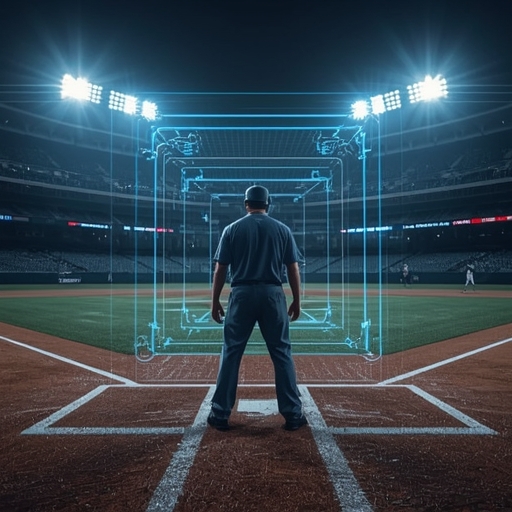
The Automated Ball-Strike (ABS) Challenge System is ushering in one of the most significant transformations baseball has seen in decades. By integrating advanced technological precision with the sport’s deeply rooted traditions, this system is reshaping both how the game is played and how it is perceived. In essence, the ABS Challenge System serves as a groundbreaking method that enables players, managers, and fans to question and review umpire decisions in real time. The implementation of this automated strike zone technology has exposed just how varied and inconsistent human umpiring can be — even among the most experienced officials.
What makes this innovation particularly compelling is the tension it creates between the long-held human judgment of umpires and the cold, exacting measurements of artificial intelligence. For more than a century, the identity of baseball has been inseparable from the nuanced calls of the person standing behind the plate. Yet, the arrival of ABS challenges that long-accepted authority. With the system’s introduction, the once-unquestioned judgment of the umpire is now open to immediate verification, often revealing differences between perception and data. This evolving dynamic not only redefines accuracy but also raises profound questions about fairness, accountability, and the evolving definition of authenticity in sports.
Furthermore, the ABS Challenge System is fostering greater transparency in how games are decided. Fans who once debated close calls based solely on television replays can now trace an umpire’s decision against the precise digital parameters of the strike zone. The result is a game driven by measurable consistency rather than interpretive discretion. For players, this shift demands adaptation — pitchers must adjust to a zone that remains stable regardless of who is officiating, while batters can take comfort in knowing that the boundary of fairness no longer changes from inning to inning.
At its core, this technological advance symbolizes a broader cultural moment in which data-driven decision-making intersects with human tradition. The ABS Challenge System is not merely a new gadget in the sport’s toolkit; it is a philosophical shift toward precision and accountability. Some purists may lament the intrusion of machinery into what has always been a human art form, arguing that baseball’s beauty lies precisely in its imperfections. Others, however, see this as a necessary evolution — one that ensures fairness and enhances integrity in a sport striving to maintain its relevance in a rapidly modernizing world.
Ultimately, the ABS Challenge System represents a fascinating convergence of progress and nostalgia. It forces players, officials, and spectators alike to reconsider what constitutes authority and legitimacy within the game. Whether technology or human intuition truly deserves the final word at home plate remains a subject of lively debate, but one truth is undeniable: baseball’s strike zone, once a symbol of inconsistency and controversy, is now being redefined with mathematical clarity. The game, perhaps more than ever before, stands at the intersection of tradition and innovation — and the conversation about its future has only just begun.
Sourse: https://www.theverge.com/entertainment/906151/mlb-abs-challenge-system-cb-bucknor-worst-umpire-baseball