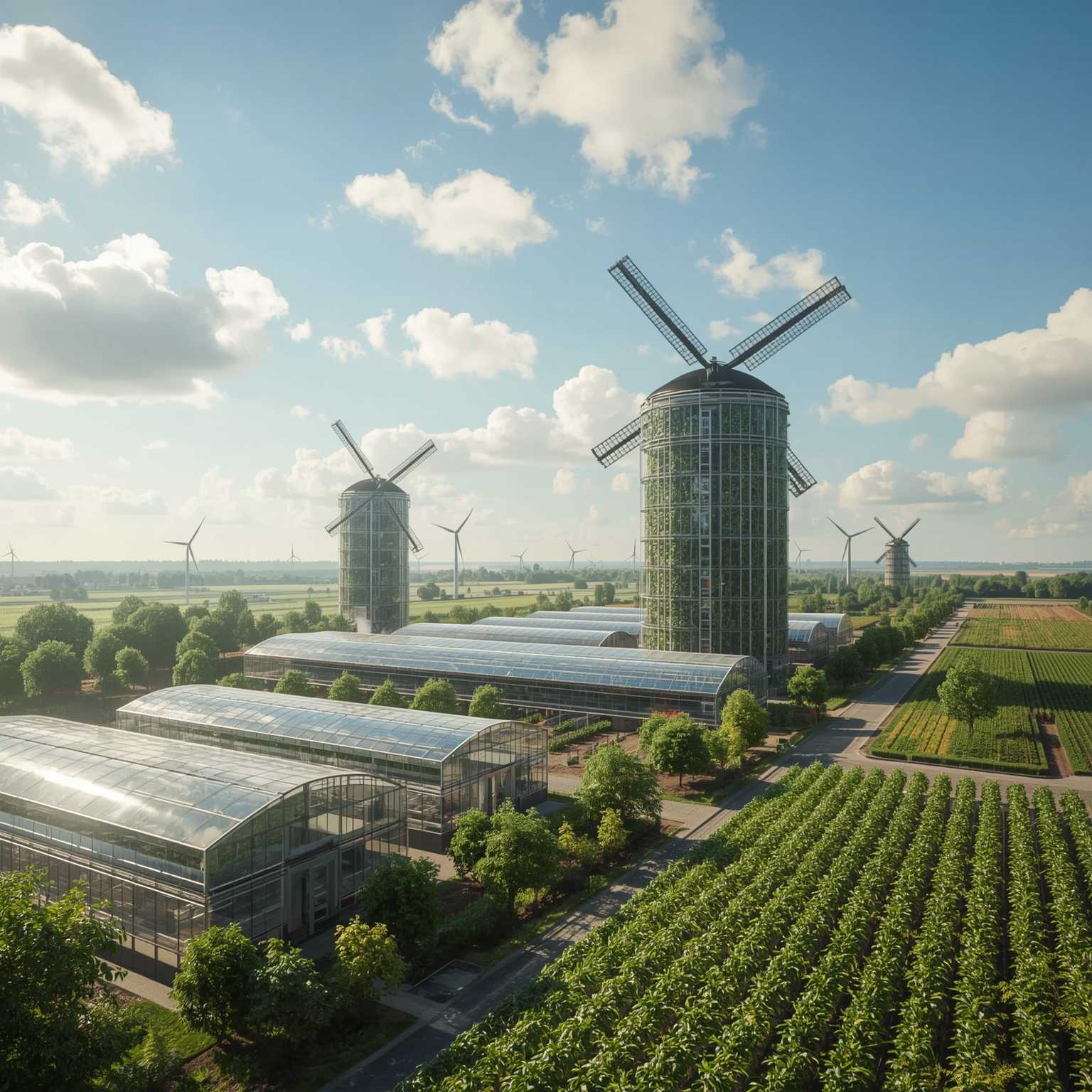
Although the Netherlands possesses only a modest landmass—comparable in scale to the U.S. state of Maryland—it has nevertheless risen to an extraordinary position as the second-largest agricultural exporter in the world when measured by value. This remarkable accomplishment illustrates how deliberate technological innovation, intensive methods of production, and decades of agricultural research can elevate a relatively small nation into a global leader in food supply chains.
Much of this success originates from the extraordinary concentration of greenhouses that dominate certain Dutch landscapes. Within these expansive structures, farmers produce millions of tons of vegetables such as tomatoes, peppers, and cucumbers under carefully engineered conditions that maximize both yield and efficiency. Rather than relying solely on traditional methods, producers employ a highly sophisticated combination of biological and mechanical aids. Bumblebees, for example, play a critical role in pollinating crops, ensuring natural fruit development without resorting to chemical substitutes. At the same time, robotics streamline repetitive tasks like planting, tending, and harvesting, thereby reducing the need for excessive manual labor and enhancing consistency. Even lighting is no longer left to chance: customized LED systems provide plants with the exact wavelengths of light needed to optimize photosynthesis, regardless of external weather conditions. The result is a finely tuned agricultural ecosystem where every variable from nutrient delivery to humidity control is precisely monitored and adjusted.
At the center of this transformation stands Wageningen University and Research—often referred to simply as Wageningen UR—a premier institution globally recognized as a hub of agricultural science. The university not only develops state-of-the-art techniques in sustainable cultivation but also disseminates them internationally, effectively turning the Dutch approach into a reference model for modern farming. International delegations regularly study Dutch methods to understand how technological ingenuity can overcome limitations of land, climate, and scale.
Yet, despite this track record of innovation and efficiency, the Dutch agricultural system now confronts a series of pressing challenges that threaten its continued dominance. One of the most immediate concerns is the escalating cost of energy, which is particularly consequential in a system so dependent on climate-controlled facilities that require vast amounts of power for heating and lighting. Parallel to this, labor shortages have emerged, making it increasingly difficult to maintain the workforce necessary to sustain large-scale production under such technologically demanding conditions. Compounding these difficulties is an environmental crisis surrounding nitrogen emissions, which have been linked to pollution and ecological imbalance. This nitrogen dilemma has sparked intense national debates about the future of farming, land use, and environmental responsibility.
Therefore, critical questions now hang over the Dutch agricultural model: how will the industry adapt to mounting economic and environmental pressures, and to what extent can this innovative framework continue to serve as a viable blueprint for feeding a rapidly growing global population? The resilience of the Netherlands in addressing these issues will determine not only its own agricultural future but also the extent to which the world can look to it as proof that efficiency, artistry in technology, and commitment to scientific progress can indeed transcend the natural limitations of geography.
Sourse: https://www.businessinsider.com/the-netherlands-is-the-second-biggest-agricultural-exporter-2025-9