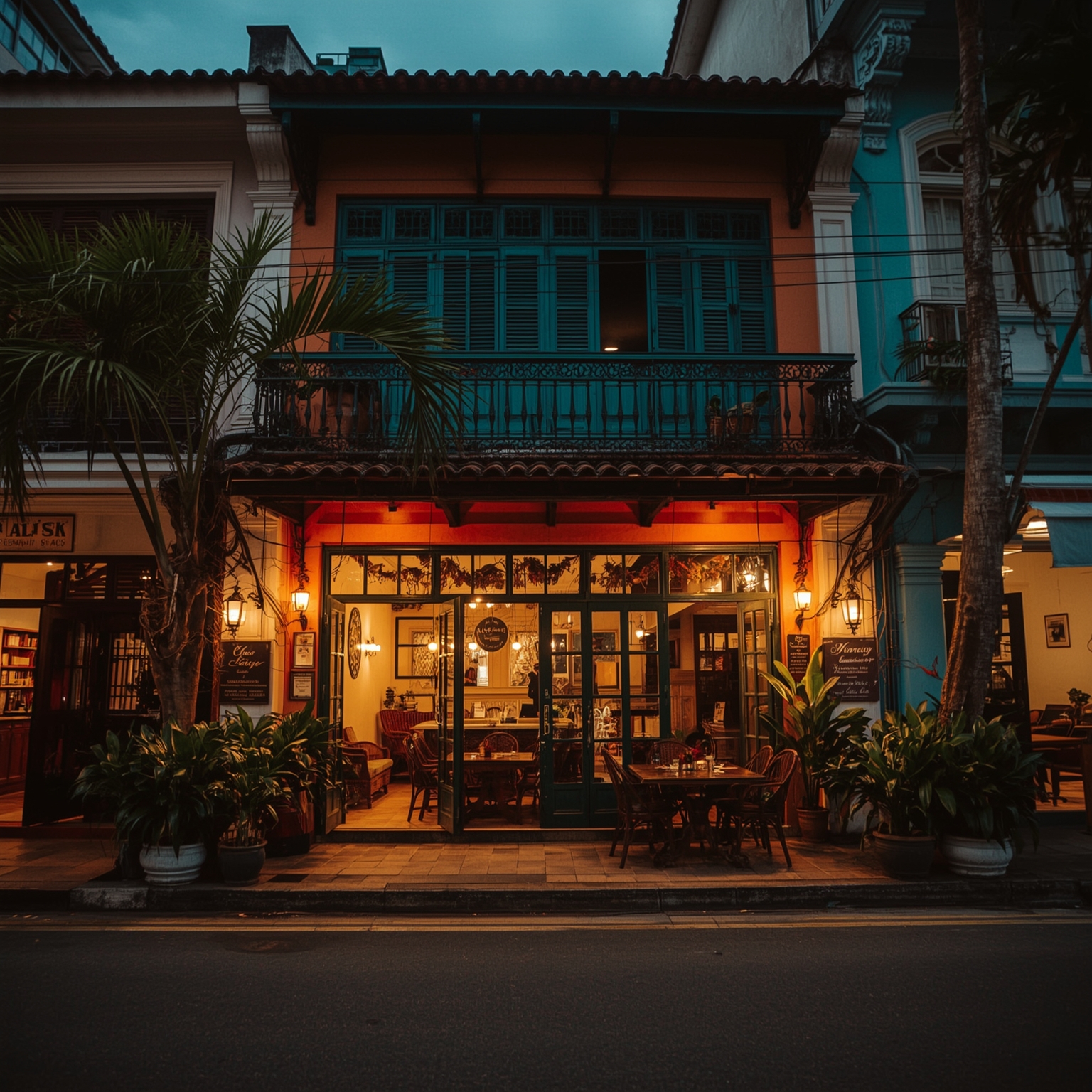
For generations, the elegant and vividly colored shophouses that line the streets of Penang, Malaysia, have captivated visitors and locals alike with their distinct architecture and historical charm. These rows of narrow, multi-functional buildings—often a blend of Chinese, Malay, Indian, and colonial influences—have long represented the architectural soul of Penang’s capital, George Town. Although travelers have traditionally admired these heritage structures from the street, entrepreneur Shane Low felt that the beauty glimpsed from the outside only hinted at the richness within. His vision was to offer guests the opportunity to step beyond the ornate facades and fully experience what life inside these storied houses feels like.
Low’s fascination with property and design is deeply rooted in his upbringing. Coming from a family long involved in property development, he grew up exposed to remodeling projects and construction sites, where he developed both curiosity and respect for built heritage. What truly inspired him, however, was observing how countries like Japan had successfully transformed traditional residences—homes steeped in centuries of local culture—into sophisticated guest accommodations that balanced authenticity with modern comfort. The idea of reimagining traditional living spaces as immersive travel experiences took hold in his mind, and it would eventually lead him back to his hometown of Penang. George Town, recognized by UNESCO in 2008 as a World Heritage Site, provided the perfect backdrop: a place where architectural conservation, cultural diversity, and tourism converge harmoniously.
In 2023, Low channeled this inspiration into concrete reality by founding Aayu Homes, a property management enterprise that merges hospitality with cultural preservation. He established the company together with his wife, Chong Xin Pei, an architect who brings an expert eye for spatial design and restoration. A year later, Low’s longtime friend, Andy Ooi, joined the venture, taking charge of daily operations and spearheading business development. The trio’s shared commitment to heritage living and their complementary skill sets formed the backbone of what would soon become a distinctive brand of boutique accommodation. “Whenever you travel,” Low explained to Business Insider, “staying somewhere deeply rooted in local culture often feels far more authentic than residing in a high-end, standardized hotel.” This philosophy underpins every aspect of Aayu Homes’ approach.
Low’s ambition for Aayu Homes goes beyond running a profitable business; he hopes to make heritage experiences both accessible and inviting. He envisions each shophouse not just as lodging but as an encounter with Penang’s past—a chance for visitors to inhabit a slice of living history. Nightly rates start around 125 to 200 Malaysian ringgit (roughly $30 to $50), while entire houses can be leased beginning at 500 ringgit, an option particularly popular among families or groups seeking privacy. The company follows two operational frameworks: one in which it rents heritage houses directly and another in which it manages them on behalf of property owners or investors through contractual agreements. This dual model allows Aayu to collaborate flexibly while remaining financially nimble.
At present, Aayu Homes oversees fifteen listings throughout George Town. “We don’t actually own any of the properties,” Low clarified. “Our model is asset-light.” Rather than acquiring real estate, the business either leases shophouses from owners or forms partnerships through management agreements. Renovations typically take about two months, as most houses require only modest refurbishment to reach hosting standards. The goal is pragmatic yet ambitious: to recover initial expenses and break even within six months of operation. Many of the owners Aayu collaborates with are local residents or overseas Malaysians who have purchased these treasured properties with future plans in mind—often as retirement homes or long-term investments—while also earning income by renting them out. This arrangement offers both sides flexibility: the owners retain personal access to their homes when visiting Penang, and Aayu gains unique, character-filled listings to attract discerning travelers.
According to Low, about half of the company’s portfolio consists of homes it rents directly, while the other half comes from partnerships with investors or individual property owners. Under the lease model, Aayu uses its own capital to fund necessary renovations. In contrast, under the management model, the team develops creative concepts for how each space could be used, presents comprehensive design and operating proposals to owners, and allows those owners to cover renovation costs themselves. This approach ensures that restoration plans align with heritage guidelines while catering to contemporary guest expectations.
Chong, Aayu’s cofounder and resident architect, finds that the most rewarding yet challenging part of her work is designing within the constraints of these centuries-old structures. “Every shophouse possesses its own personality,” she explained. “Some are unusually narrow, others feature striking courtyards or small backyards, and ceiling heights can vary dramatically. There is no formulaic solution; each property demands a tailored design response that honors its original form while improving livability.” The company’s design aesthetic deliberately emphasizes simplicity and calmness. Interiors are typically adorned with a warm, inviting palette—creamy whites, muted earth tones, and the occasional accent of local wood or rattan—which helps preserve historical character while creating a serene environment for rest. “We never want to overcrowd a space with unnecessary décor,” Low added. “Our aim is for guests to feel at ease the moment they cross the threshold.” Currently, Aayu retains roughly thirty percent of the revenue generated by each property, providing a sustainable basis for long-term growth.
Penang’s shophouses are more than architectural relics; they are physical embodiments of the island’s multicultural identity, some dating as far back as the late eighteenth century. Their intricate facades—adorned with Peranakan tiles, shuttered windows, and colorful plasterwork—stand as silent witnesses to centuries of trade and migration. These distinctive buildings were a major factor in UNESCO’s decision to designate George Town as a World Heritage Site in 2008. Today, together with Penang’s celebrated culinary scene and dynamic cultural atmosphere, these shophouses continue to draw global travelers. The Malaysian Tourism Board reported that in 2024, Penang’s hotels welcomed over 8.2 million guests, a marked increase from the previous year’s figures. Couples account for most of Aayu Homes’ clientele, preferring private rooms infused with local charm, while families often opt to rent entire houses. Many of the visitors come from Europe, drawn by the promise of experiencing a genuine connection with Malaysia’s heritage rather than the anonymity of conventional resorts.
Aayu Homes has grown organically into a team of fifteen, encompassing guest assistants, housekeepers, and senior managers who maintain each property to high standards of comfort and cleanliness. According to Ooi, the trio’s partnership works smoothly because of their longstanding friendship and mutual trust. “Being the so-called third wheel in this business marriage has its advantages,” he quipped. “I benefit from double the creativity yet only half the arguments.” For Chong, collaborating professionally with her husband feels natural thanks to their clearly delineated roles. “Each of us has final authority within our own domain,” she said, “so potential disagreements rarely arise.” This structure ensures operational efficiency while preserving a cooperative, family-like atmosphere among team members.
The company enjoys strong digital visibility, listing its accommodations on major platforms such as Airbnb and Booking.com, where it consistently maintains near-perfect scores—4.9 stars on Airbnb and 9.5 on Booking.com, with thousands of positive reviews from satisfied guests. Naturally, occasional mismatches occur between guest expectations and the inherent quirks of heritage houses. Some rooms, for instance, lack windows due to the elongated floor plans typical of traditional architecture, and the sound insulation may not equal that of modern hotels. “Heritage houses aren’t for everyone,” Low acknowledged with candor. “They offer character and atmosphere, but that uniqueness can also mean trade-offs for travelers expecting standard hotel conveniences.” Still, these imperfections are part of what makes the experience genuine—a reminder that history cannot always be neatly packaged.
Looking ahead, Aayu Homes’ ambitions extend beyond simply expanding its property portfolio. Low envisions cultivating a holistic cultural ecosystem around the brand, wherein guests are invited to connect more deeply with Penang’s way of life. The company has begun curating a variety of local experiences: cooking classes that showcase the island’s world-famous cuisine, guided heritage walks that reveal the narratives etched into George Town’s streets, and even a small in-house store featuring locally crafted pottery and artisanal running gear. “It becomes an integrated community,” Low explained. “We’re not just offering accommodation—we’re creating an entire network that celebrates what is local, from design and craftsmanship to everyday experiences.” Ultimately, Aayu Homes aims to transform tourism from simple sightseeing into genuine participation in Penang’s living heritage, enriching both travelers and the community that welcomes them.
Sourse: https://www.businessinsider.com/old-shophouses-penang-malaysia-heritage-renovating-guesthouse-stays-george-town-2025-10