Our dream of one day living amid the misty mountains and deep green forests of Washington’s Olympic Peninsula first took shape during a vacation there in 2010. What began as a casual exploration evolved into an enduring vision for a different way of life. While wandering through the area, I stumbled upon a colorful travel brochure describing the city of Port Townsend, a small coastal community brimming with maritime charm. The booklet painted a vivid picture of a place where enthusiasts could spend their days kayaking through calm waters, hiking along rugged cliffs, biking through emerald woods, and—above all—immersing themselves in a spirited sailing culture that seemed to define the region’s personality. As I read the promotional details aloud to Carol, my partner and my kindred lover of the outdoors, each sentence seemed to affirm that we had found a place ideally attuned to our shared interests and values.
Our attraction deepened when I read that Port Townsend was not only a paradise for outdoor recreation but also a haven for creativity and history. The town was renowned for its grand Victorian architecture, the legacy of an era when it had thrived as a historical seaport. It was alive with music festivals, art fairs, and a vibrant community of writers and craftspeople who celebrated local tradition while welcoming newcomers. The more we learned, the more convinced we became that this coastal enclave represented everything we had been seeking: connection to nature, access to culture, and a warm community atmosphere. It quickly became apparent that this was not simply a vacation spot—it was the perfect candidate for our long-imagined second home.
At the time, however, Carol and I were fully established in Arizona, both professionally and personally rooted in the desert landscape. Our visits to the Pacific Northwest were brief and sporadic. Yet each time we returned from those trips, we felt an ache of longing—a certainty that we wanted more than fleeting moments of escape. We wanted permanence, or at least a seasonal foothold, a place where we could live for several months each year and grow into a more enduring relationship with the region.
The practical problem, of course, was financial. Real estate values in our dream area were consistently rising, and even modest homes routinely exceeded $500,000, a figure that placed them far beyond our reach. For a while, our aspirations seemed destined to remain just that—a beautiful but impractical fantasy. Then, almost improbably, our real-estate agent sent us a listing that offered a flicker of possibility: a wooded parcel located roughly thirty minutes outside of town, framed by towering trees and dotted with wildflowers. Though it lacked the amenities of a traditional property—there was no power, sewer system, or running water— it did provide something essential: access. A small but well-maintained road connected it conveniently to Highway 101, and we were delighted to discover that the area had both reliable cell reception and a surprisingly strong Wi-Fi signal. Most important of all, the price fell comfortably within our budget.
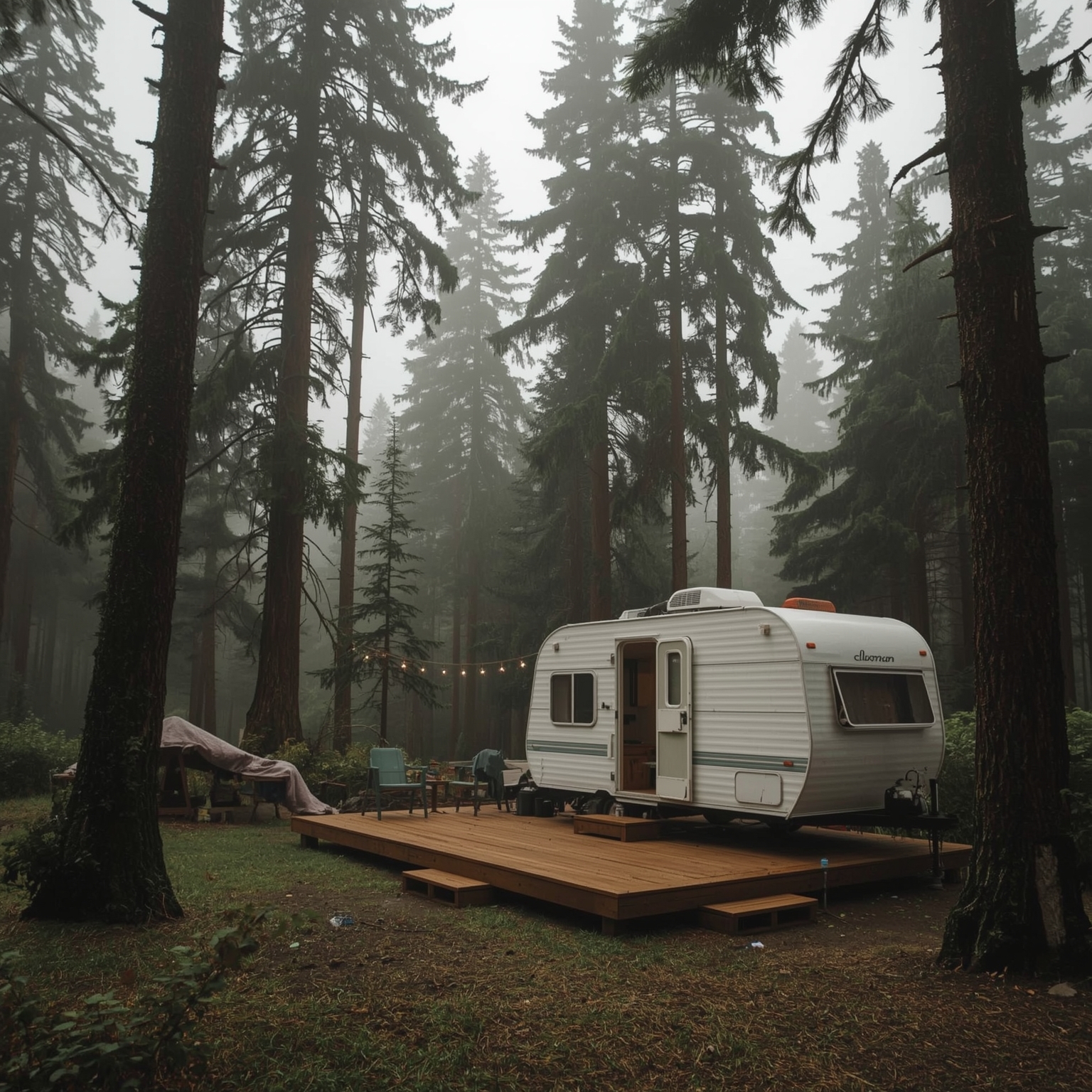
What began as a compromise soon transformed into a bold experiment in sustainable living. To make our Washington dream a reality, we resolved to embrace an off-grid lifestyle rather than pursue costly development. In 2022, we took a leap of faith and purchased the 4.6-acre property sight unseen for $160,000. To create a livable space, we ordered a compact yet durable 20-foot Airstream Basecamp trailer for $65,000—a perfect combination of practicality and comfort. Instead of clearing land or constructing a permanent home, we embraced simplicity and self-sufficiency. We invested in portable solar panels to enhance the trailer’s built-in system, ensuring we could power our essentials without connecting to the electrical grid.
Water, too, became a creative challenge. We designed a system for rainwater collection, boiling it for domestic uses such as dishwashing and hand cleaning, while transporting drinking water from a local facility about five miles away. Always inventive, Carol installed a small battery-powered pump to move water efficiently into our Airstream’s tanks, adding both convenience and a touch of engineering ingenuity.
Life off the grid demands mindfulness, so we developed careful routines for conservation. When we drove into town, we took the opportunity to charge our phones, laptops, and battery-operated tools—small efforts that collectively made a big difference in preserving energy. Because our Airstream’s compact interior could feel a bit confining, we constructed an outdoor extension to our living space: a sturdy tent equipped with a propane stove, a manual foot pump for washing dishes, and a simple dining table with chairs. It provided not only practical outdoor utility but also a comfortable setting for meals and relaxation under the open sky.
Carol, ever immersed in music, also joined a local band, transforming our outdoor tent into a makeshift rehearsal space where melodies often floated softly through the trees. Though our property was landlocked, Carol kept her kayak at a boat haven about eighteen miles away—an arrangement that not only ensured she could continue her beloved paddling but also gave us access to marina facilities just eight miles from home. There, we could enjoy hot showers and properly dispose of trash through coin-operated systems, balancing our green lifestyle with reasonable comfort. Our goal, after all, was sustainability, not deprivation; we sought harmony between simplicity and practicality, not an austere rejection of modern convenience.
Each year, we now spend approximately three to five months enveloped by the serenity of the Pacific Northwest, returning to our Arizona home for the remainder of the year. Before migrating south, we carefully prepare our property for winter—tending to our riding mower, spreading fresh gravel on the dirt pathways, lubricating door and container hinges, and pruning the trees so they will weather the coming storms. These rituals have become both practical and symbolic, representing our commitment to nurturing the land that sustains our seasonal dream.
Looking back, I am deeply grateful that we found a creative path toward making our vision achievable. By forgoing conventional homeownership, we discovered freedom—not only financial but also emotional and spiritual. Living off the grid in the forests of Washington has offered us renewal, challenge, and joy in ways we never could have anticipated. It is a reminder that sometimes, by reimagining what we think we need, we end up building exactly the life we always wanted.
Sourse: https://www.businessinsider.com/bought-land-instead-of-vacation-house-save-money-trailer-2025-11


