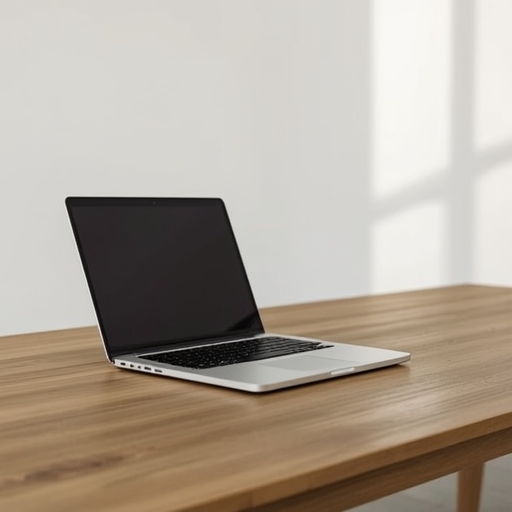
Pros and Cons
**Pros:** The HP ZBook 8 G1i stands out for its remarkable hardware capabilities, showcasing components that deliver workstation-grade performance within a sturdy and precisely engineered chassis. The laptop’s solid build quality gives it an assured sense of durability that aligns with its enterprise focus, while the typing and navigation experience—driven by a responsive keyboard and smooth, accurate trackpad—make it a comfortable machine for extended, productivity-heavy sessions.
**Cons:** Despite these merits, the device also carries inevitable trade-offs. Its battery performance can best be described as average, leaving users mindful of their proximity to a charging outlet during long workdays. The price point sits firmly in the higher tier, reflecting its professional orientation but simultaneously putting it out of reach for casual consumers. Physically, the ZBook 8 G1i is a substantial laptop—both thick and noticeably weighty—so portability may be compromised. Additionally, under high-performance tasks, the machine tends to run hot, a side effect of its powerful internals operating at full capacity.
—
HP’s ZBook series was conceived to merge workstation-level computational strength with a suite of business-oriented features, and the 14-inch ZBook G1i stands as a quintessential embodiment of that vision. Rather than prioritizing portability or style-driven design, this laptop channels its focus toward pure utility and reliability. The result is a device that, while heftier and more expensive than mainstream ultrabooks, delivers formidable processing power tailored for intensive professional workflows. The ZBook radiates a distinctly corporate aesthetic—minimalist, formal, and intentionally understated.
During comprehensive testing, the ZBook 8 G1i left a lasting impression with its sheer processing force. Equipped with an Intel Core Ultra 7 255H processor and an impressive 64 GB of DDR5-5600 memory, the 14-inch variant was designed to accommodate complex data analysis, extensive multitasking, and content creation workflows with ease. The internal data transfer speeds of up to 5600 MT/s ensure sustained responsiveness under demanding conditions. More powerful configurations are available as well, including models featuring the Intel Core Ultra 9 285H—an elite processor known for higher clock speeds, improved thermals, and a greater number of cores, providing further leverage for CPU-intensive operations.
Beyond its processor, the storage infrastructure enhances the ZBook’s productivity potential. With up to 2TB of PCIe Gen4 x4 NVMe SSD capacity, users gain both high throughput and reliability for large data sets and workloads. Naturally, this top-tier hardware pushes the price past the $3,000 mark in its most advanced configuration, though versions closer to $2,000 maintain workstation credibility at a more attainable entry point.
In real-world office environments, the ZBook 8 G1i proves swift, stable, and efficient. Though its hardware does emit noticeable warmth—particularly around the left-hand side where the battery connects—thermal performance remains well controlled and within safe operational thresholds. The cooling system works diligently to prevent overheating, striking a balance between power output and comfort.
Ergonomically, HP succeeds in crafting a keyboard and trackpad suitable for consistent daily use. The keys feature a tactile snap and subtle texturing that enhance typing precision, while the trackpad’s responsiveness allows for smooth navigation and gesture control. Complementing these input mechanisms is the 2560 × 1600 (WQXGA) display, supporting a refresh rate of up to 120Hz. While the panel isn’t designed for ultra-vivid entertainment, it provides clarity and detail fitting for professional use cases such as document editing, light design work, or multitasking across numerous windows.
For users requiring enhanced graphical processing, there is an option to integrate discrete graphics via the Nvidia RTX 500 Ada Generation Laptop GPU—a noteworthy inclusion that targets professional rather than gaming or AI-intensive audiences. This GPU’s 4GB of GDDR6 VRAM is adequate for conventional CAD modeling, 3D rendering, or other engineering tasks, though insufficient for advanced AI model training or graphics-heavy recreation. It aligns perfectly, however, with the ZBook’s core identity as a stable and predictable business workstation rather than an avant-garde or entertainment-focused machine.
On the connectivity front, the ZBook offers a generous spectrum of I/O options—to the satisfaction of professionals relying on wired peripherals or multi-monitor setups. Three USB-C ports (two with Thunderbolt 4 support), one HDMI port, an Ethernet jack, a Kensington lock slot, and a USB-A port provide commendable versatility, accommodating a full office docking scenario without extra adapters.
Battery endurance represents one of the ZBook 8 G1i’s most notable limitations. In standard productivity routines, the battery typically dips to around 20% by mid-afternoon, necessitating mindful scheduling of workloads or recharging breaks. The included 140W power adapter, however, mitigates downtime with rapid charging speeds—reaching 50% capacity in just thirty minutes. This convenience comes at the cost of mild overheating and audible fan activity when connected to power, creating trade-offs between performance, temperature, and acoustics.
In terms of security and software ecosystem, HP integrates its Wolf Pro Security Edition suite, complete with functionalities like HP Sure Admin, DriveLock, and Tamper Lock. These enterprise tools provide IT managers with fine control over data protection and system access. However, this high level of security infrastructure introduces a secondary issue: pre-installed applications, persistent pop-ups, and various HP service notifications that can periodically disrupt workflow and require user cleanup.
Given its price and positioning, the HP ZBook 8 G1i is best suited for corporate clients, engineering firms, or creative professionals handling resource-demanding tasks. Models equipped with the Intel Core Ultra 7 processor, 32GB of RAM, and Nvidia RTX 500 GPU currently retail around $3,149, which can appear costly compared to consumer-focused devices such as the MacBook Pro M5 base model available for nearly half that amount.
Ultimately, the HP ZBook 8 G1i defines itself through its commitment to performance and reliability. It is not a portable ultralight marvel, nor does it promise record-setting battery longevity. Instead, it stakes its reputation on consistent output, an abundance of security features, and a professional demeanor that appeals to serious users seeking dependable computing muscle. Weighing approximately 3.19 pounds and measuring 0.7 inches thick, it commands an unmistakable desk presence. Yet, with its support for Wi-Fi 7, its array of ports, and reinforced construction, the ZBook 8 G1i feels equally at home as a stationary workstation centerpiece or a powerful travel companion for those whose work demands nothing less than steadfast performance and precision.
Sourse: https://www.zdnet.com/article/hp-zbook-8-g1i-review/