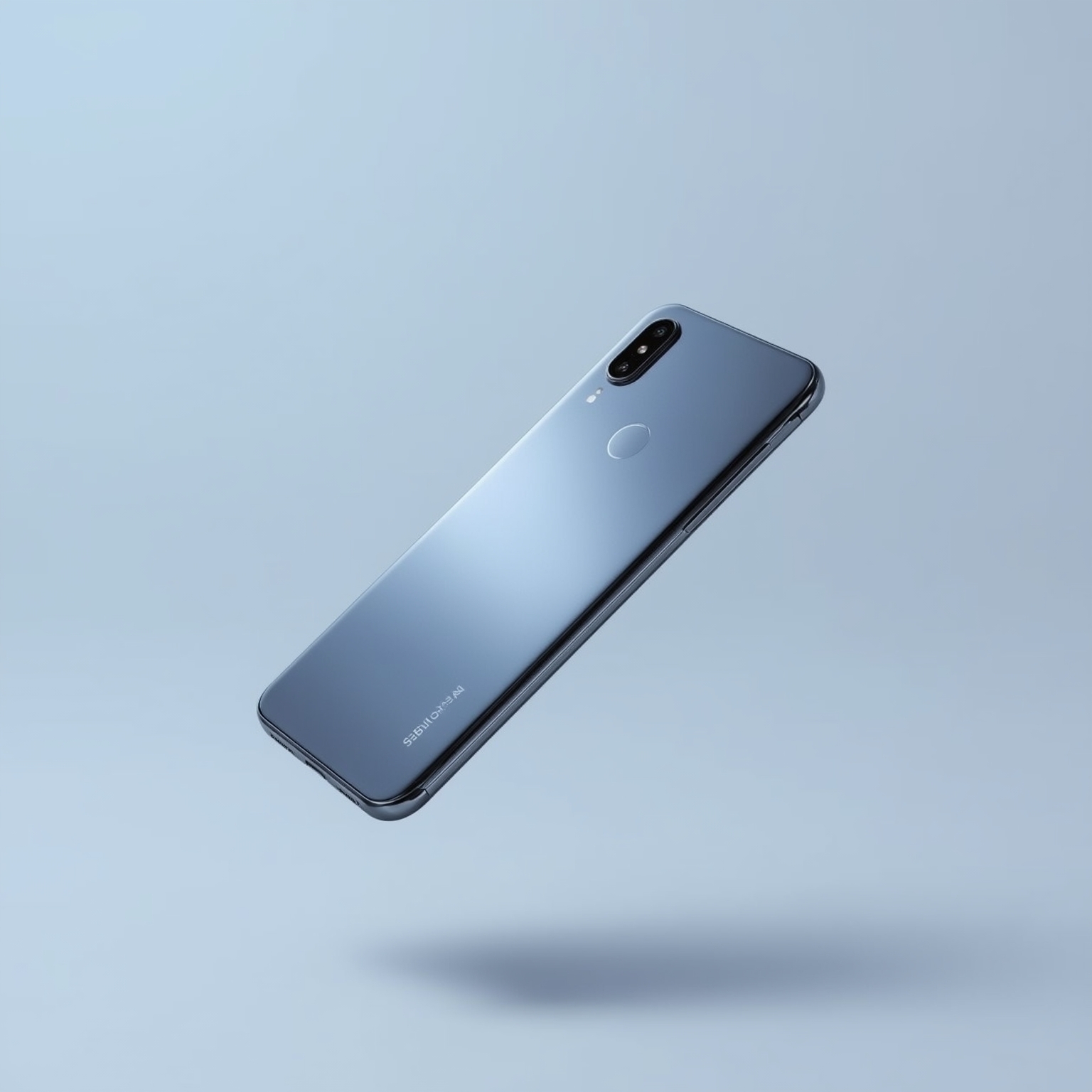
Huawei has recently become the most recent contender in the ongoing race among global smartphone manufacturers to achieve the perfect blend of elegance and engineering minimalism, introducing its newest device, the Mate 70 Air — a phone that continues the market’s fascination with ultra-thin designs. This model proudly joins the rapidly expanding ‘Air’ lineup, marking the third major release under this design label in just one year, following Apple’s own lightweight entry and ZTE’s Nubia Air. The dominance of the ‘Air’ naming convention, contrasted with only two ‘Edge’-branded models released within the same period, reflects how profoundly Apple’s design philosophy continues to shape and inspire the broader smartphone industry. Despite years of competition, Apple’s aesthetic and conceptual influence still exerts a powerful gravitational pull that even major players like Samsung cannot entirely escape.
At only 6.6 millimeters in thickness, Huawei’s Mate 70 Air is marginally less slender than the ultra-sleek designs produced by Apple and Samsung, but this modest difference in dimension conceals a surprisingly practical advantage. The device compensates for the extra fraction of a millimeter with a remarkably large 6,500 mAh battery — a capacity that exceeds many of its peers and even outpaces the 4,800 mAh battery housed within Motorola’s Edge 70, a model that recently captured reviewers’ attention. This specification sets a new standard for endurance in thin-device engineering, suggesting that Huawei aims not merely to emulate the prevailing aesthetic trends but to challenge competitors by offering tangible improvements in performance. The inclusion of such a large power source inevitably intensifies the pressure on both Apple and Samsung to revisit their own next-generation thin models and to deliver better longevity without compromising their hallmark slim design language.
Part of Huawei’s success in accommodating this substantial battery lies in the Mate 70 Air’s form factor. With an expansive 7-inch display, the phone straddles the boundary between a conventional smartphone and a compact tablet, giving it an imposing presence in the hand while preserving proportions that remain recognizably sleek. Its generous screen size not only provides a visual rationale for its internal configuration but also underscores Huawei’s intent to craft a device that excels both in portability and immersive media experience.
One of the more unconventional aspects of the Mate 70 Air is its configuration flexibility in processing power. The company offers consumers two hardware pathways: the base variant, equipped with 12 gigabytes of RAM, features Huawei’s Kirin 9020B chipset, whereas opting for the 16-gigabyte configuration upgrades the system to a Kirin 9020A processor. Both chips are, in essence, downclocked iterations of the flagship Kirin 9020, strategically adjusted to strike a balance between performance efficiency and thermal limitations imposed by the phone’s thin profile. This thoughtful pairing of components ensures that users receive a level of performance appropriate to their memory selection while maintaining system stability and battery conservation.
In terms of photography, the Mate 70 Air includes a versatile triple-camera array on its rear panel, which notably features a 12-megapixel telephoto lens — a rare and commendable inclusion for a device focused primarily on achieving minimal thickness. This design decision demonstrates Huawei’s refusal to sacrifice functionality for mere visual appeal, ensuring the Mate 70 Air remains capable in diverse imaging scenarios, from everyday shots to long-distance compositions.
For the time being, Huawei’s new device is available exclusively in China, reflecting the company’s pragmatic decision to consolidate its domestic market position before seeking broader international distribution. The Mate 70 Air starts at a base price of ¥4,199, roughly equivalent to around 590 US dollars, placing it competitively within the premium midrange category. Overall, the Mate 70 Air exemplifies a sophisticated equilibrium between form and function — a product that acknowledges the prevailing trends set by Apple, while subtly redefining the conversation about what an ‘Air’ phone can truly offer in terms of capability, endurance, and design restraint.
Sourse: https://www.theverge.com/news/815327/huawei-mate-70-air-is-a-little-thick-for-a-thin-phone


