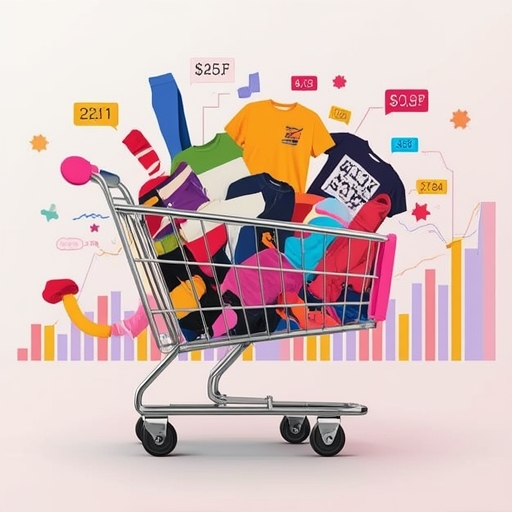
Have you ever opened your favorite online shopping cart only to find the prices suddenly transforming, seemingly overnight? Imagine placing a few everyday items—socks, leggings, and a couple of casual T-shirts—into a digital basket, expecting them to patiently wait for payday. Yet, as the days unfold, the numbers beside them begin to fluctuate as though caught in a market storm. This is precisely what one attentive shopper experienced after keeping a two-week eye on an Old Navy cart. What began as routine browsing quietly evolved into a small-scale economic experiment—a firsthand encounter with the phenomenon of dynamic pricing.
Dynamic pricing, often described as an algorithmic tug-of-war between supply, demand, and predictive data, is no longer confined to airline tickets or ride-share platforms. Retailers increasingly leverage similar models to adjust prices in real time, responding to consumer behavior, purchase history, and even timing patterns throughout each day. The observer in this experiment noticed how items would jump a few dollars higher one morning only to dip back below their original level after a weekend sale or a traffic lull. The spontaneous shifts created an uncanny resemblance to how traders monitor the zigzag patterns of stock market graphs.
The psychology behind such price movements is as intriguing as the technology that drives them. For brands, it represents an attempt to balance profitability with personalization, using analytics to forecast precisely what a shopper might be willing to pay. For consumers, however, it blurs the line between shopping and speculation. Have we, without realizing it, become casual investors, our wardrobes rising and falling with invisible algorithms rather than mere fashion seasons?
What stands out most from this story isn’t only the surprise of watching numbers dance but the realization that retail is entering a new era of volatility. Just as analysts watch financial tickers, everyday customers now find themselves tracking digital carts, comparing screenshots, and strategizing the best moment to click “buy.” The once-static price tag has become a dynamic, living signal—one that quietly measures not just the cost of goods but the pulse of digital commerce itself.
In the process, the shopper’s discovery illuminates both the promise and the paradox of modern e-commerce: convenience intertwined with complexity, transparency mixed with uncertainty. As retailers refine their strategies and algorithms grow ever more adaptive, one question lingers for all of us scrolling through fluctuating totals at midnight—are we simply shopping, or have we indeed joined the unpredictable ranks of part-time traders?
Sourse: https://www.businessinsider.com/dynamic-pricing-old-navy-challenges-traditional-shopping-habits-2026-3