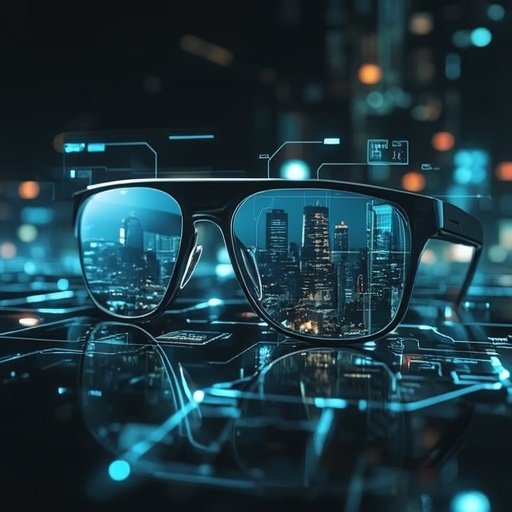
Hollywood has not merely influenced but profoundly molded the collective imagination surrounding smart glasses, constructing both our most extravagant aspirations and our deepest apprehensions toward this technology. Across decades of cinematic storytelling and television thrillers, the industry has served as both dream architect and cultural critic—painting intricate visions of a near-future where intelligent eyewear transforms ordinary existence into a seamless fusion of digital augmentation and human perception. Yet, this artful depiction, while inspiring innovation, has simultaneously distorted public expectation, frequently blurring the boundary between plausible advancement and narrative fantasy.
After immersing oneself in a recent spy series, it becomes apparent that these depictions are not simple entertainment—they are meditations on ambition, ethics, and control. Hollywood’s polished frames project dazzling interfaces that instantly interpret the world, overlaying tactical intelligence, facial recognition, and real-time communication onto every glance. But beyond the spectacle lies a deeper mirror: these on-screen illusions reflect our societal tension between technological empowerment and personal intrusion. The films may celebrate ingenuity, but they also caution against surrendering privacy and autonomy to the invisible mechanisms that enable our convenience.
In essence, the cultural narrative constructed by cinema acts as both prophecy and paradox. When audiences witness characters effortlessly interacting with data projected within their vision, they internalize the belief that such mastery should already be attainable. As a result, real-world inventors face the impossible task of manifesting fantasies originally born for visual drama rather than practical engineering. What was conceived as a metaphor for human enhancement has too often been mistaken for a blueprint of immediate reality.
Thus, the most pressing challenge for wearable technology today may not stem from mechanical design, computational limitation, or ergonomic constraint, but from our own collective psychology. We are continuously evaluating genuine progress against a fictional ideal conceived in the editing rooms of major studios. To move forward, both creators and consumers must learn to renegotiate this narrative—to admire Hollywood’s imaginative artistry without allowing its illusions to dictate the standards by which we judge innovation itself. Perhaps then, our fascination with smart glasses can mature from a glamorous obsession into a balanced understanding of how culture and invention evolve together, each reflecting and reframing the other in an ongoing dialogue between vision and reality.
Sourse: https://www.theverge.com/column/961707/smart-glasses-ai-wearables-meta-surveillance-privacy