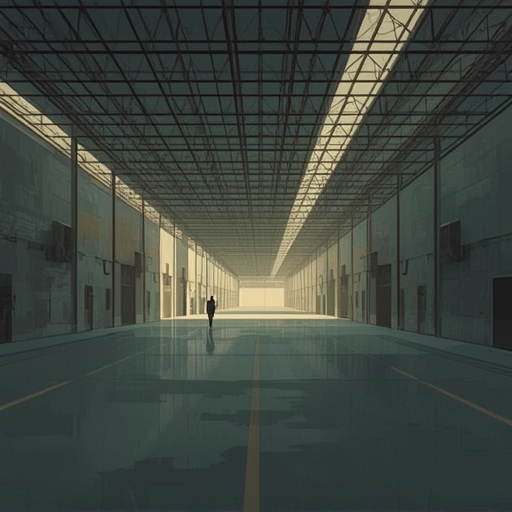
In recent years, the U.S. Immigration and Customs Enforcement agency (ICE) has embarked on a strategically ambitious — and deeply consequential — transformation of the physical landscape underpinning its operations. By directing substantial investments into commercial and industrial real estate, the agency has begun converting expansive warehouse facilities into fully functional detention centers intended to accommodate a growing volume of detainees awaiting deportation. These spaces, originally conceived for storage and distribution, are being reimagined as instruments of enforcement and control, their sheer scale emblematic of the vast logistical machinery sustaining immigration policy in the twenty-first century.
This development is not simply about the repurposing of property; it is a profound reflection on how spatial design, architecture, and infrastructure can embody political priorities and moral dilemmas. Warehouses, with their cavernous interiors and adaptable layouts, present ICE with an efficient solution for creating large-scale holding environments. Yet, behind the efficiency lies a disquieting narrative: one in which industrial architecture — once devoted to the circulation of goods — becomes a site for the containment of human beings. The sterile neutrality of these buildings conceals the weight of human experiences within, exposing the paradox of modern governance through design.
Observers and advocacy groups note that this expansion signals more than an operational upgrade; it represents a deliberate escalation in the institutional capacity to detain and deport. As the physical footprint of enforcement broadens, questions of accountability and oversight grow equally urgent. Who monitors the conditions in these converted facilities? How do such conversions alter community dynamics and regional economies? And, perhaps most importantly, what does this architectural shift reveal about national values when the spaces of industry become extensions of the carceral state?
The human dimension remains undeniable. Each repurposed warehouse symbolizes the intersection between policy intent and lived reality — the point at which legal frameworks translate into confinement, separation, and uncertainty. The functional pragmatism driving these conversions stands in stark contrast to the deeply personal and humanitarian consequences they enable. In these environments of fluorescent light and steel partitions, the abstract notion of immigration control assumes its most tangible, humanly consequential form.
Ultimately, ICE’s transformation of warehouses into detention centers serves as a chilling testament to how space can both reflect and reinforce power. It highlights the ways in which policy decisions manifest materially, reshaping not only skylines and property maps but also the moral contours of society. The expanding detention infrastructure forces a collective reckoning: to confront how national security, administrative efficiency, and human rights coexist — often uneasily — within the same walls of institutional design.
Sourse: https://www.businessinsider.com/ice-buying-warehouses-to-make-detention-centers-2026-4