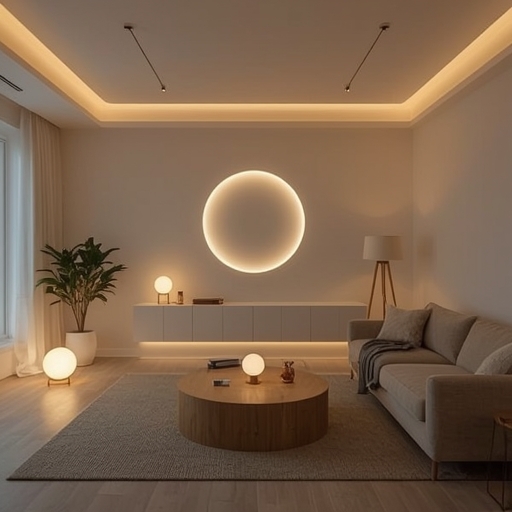
Ikea once envisioned a future where the dream of a fully connected, intelligent household would no longer belong exclusively to the realm of luxury consumers or tech enthusiasts. Instead, it sought to translate the smart home into a domain of simplicity, affordability, and universality—values that have long defined the company’s design philosophy. Through ventures like Matter-over-Thread technology, Ikea promised a platform where lights, thermostats, and devices from countless manufacturers could coexist in seamless harmony, all operating beneath the umbrella of an accessible and intuitive ecosystem.
Yet as this ambition has unfolded, reality has proven that simplicity in technology is rarely simple in execution. The very mission to make advanced interconnectivity feel effortless has revealed the intricate web of technical and logistical complexities that underlie the modern smart home. Thread connectivity and Matter protocol, though breakthroughs in compatibility, require tight synchronization between software, firmware, and hardware standards—an undertaking where even the smallest discrepancies can lead to disruptions in everyday user experience. What was meant to be plug-and-play often becomes plug-and-pray when users encounter limitations in device pairing, inconsistent app performance, or cross-brand communication failures.
For a company synonymous with the clarity of instruction manuals and the efficiency of flat-pack design, these growing pains expose a paradox: designing a bed frame that anyone can assemble is not the same as designing a digital ecosystem where every brand, device, and router functions in perfect unity. In balancing technological innovation with consumer accessibility, Ikea faces the same friction that challenges tech leaders worldwide—the gap between theoretical interoperability and its tangible, reliable manifestation in the home.
Still, the Swedish giant’s endeavor offers a broader reflection on the evolving landscape of connected living. It underscores how democratizing technology demands not only innovation but patience and iterative refinement. Ikea’s continuing experiments, setbacks, and adjustments illuminate the truth that progress in smart home development is a marathon, not a sprint. Each firmware patch, each systems update, brings the brand a step closer to its vision of a world where smart living feels as natural and universal as turning on a lamp from the shelf of a local store.
In the end, Ikea’s pursuit is more than a technological narrative—it is a story about translating complexity into comfort, about the human desire for seamless control and design simplicity within an increasingly digital fabric of life. Their journey reminds us that creating an inclusive smart home is not only a feat of engineering but an experiment in empathy, design thinking, and resilience. #SmartHome #Ikea #Technology #Innovation
Sourse: https://www.theverge.com/tech/896006/ikea-matter-thread-smart-home-problems