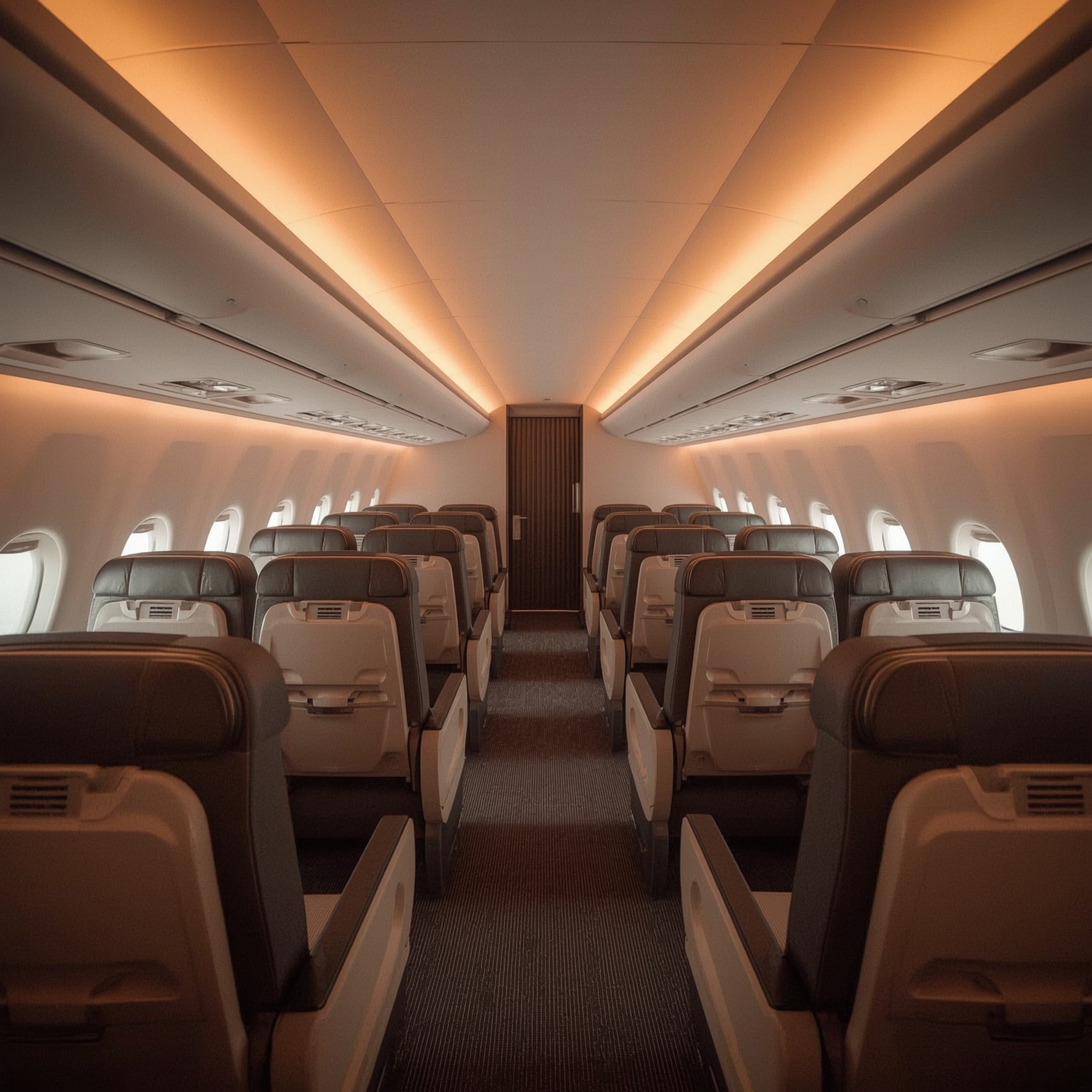
A new arrival has soared into the American skies, signaling a major shift in the nation’s aviation scene. On Wednesday, American Airlines celebrated the touchdown of its very first Airbus A321XLR at Dallas–Fort Worth International Airport, completing an impressive 11‑hour transatlantic delivery flight from Hamburg, Germany. This milestone marks the introduction of an entirely new aircraft type to U.S. carriers and heralds a transformative period for long‑distance travel using narrowbody jets — aircraft that combine the operating efficiency of smaller planes with ranges traditionally reserved for widebodies.
The A321XLR, an abbreviation for “extra‑long‑range,” is engineered to reach farther than any previous member of the A321 family. American will officially launch its first passenger service with the jet on December 18, operating the 11 a.m. New York–to–Los Angeles transcontinental flight. Over time, this advanced airliner will replace the airline’s specialized A321T fleet, which has long served coast‑to‑coast routes for premium domestic travelers. The new model promises a more refined onboard experience than American’s other domestic narrowbodies, offering every economy‑class seat its own screen and providing full multi‑course dining in business class.
As of Friday morning, the initial published fares start at about $379 for one‑way tickets in basic economy. Unsurprisingly, the inaugural flight’s more luxurious premium‑economy seats and lie‑flat business‑class suites have already sold out. For travelers looking one day beyond the maiden voyage, prices hover around $1,050 in premium economy and approximately $1,850 in business, underscoring strong demand for higher‑end travel options even on domestic routes.
Although American will begin deploying the A321XLR on U.S. routes, the aircraft has been meticulously designed for journeys far longer than that. A newly integrated additional fuel tank extends its range to roughly 5,400 miles — nearly 800 miles farther than the A321neoLR, its previously most capable long‑range narrowbody sibling. This major improvement allows carriers to serve thinner or lower‑demand markets, particularly across the North Atlantic, where some routes cannot sustain the larger, heavier widebody aircraft yet exceed the reach of most standard narrowbodies such as the Airbus A320neo or Boeing 737 MAX. American anticipates launching international routes with this model by the first half of 2026, though specific destinations have not yet been officially identified.
United Airlines, another major U.S. carrier, is also set to begin receiving its own fleet of A321XLRs around 2026. United’s strategy includes replacing aging Boeing 757s and inaugurating new transatlantic connections to secondary destinations — for instance, potential flights between the United States and smaller cities in Northern Italy or selected markets in West Africa. Globally, numerous airlines — from full‑service legacy operators to ultra‑low‑cost carriers — have adopted the A321XLR. The aircraft’s remarkable adaptability is reflected in its multitude of cabin configurations, from American’s high‑end suite‑equipped business‑class setup to the dense, all‑economy layouts flown by budget airlines like Hungary’s Wizz Air. This design flexibility demonstrates Airbus’s intention to provide a single platform versatile enough to support vastly different commercial strategies.
American’s decision to equip the aircraft with lie‑flat business‑class suites signals a deliberate focus on capturing growing demand for premium travel products, a segment now expanding at twice the rate of standard economy offerings. American’s Chief Executive Officer, Rob Isom, noted during the company’s third‑quarter earnings call that international lie‑flat seating is projected to surge by fifty percent before the decade concludes — a powerful indicator of both market appetite and strategic opportunity. Appropriately, the A321XLR features a premium‑heavy configuration. Of the jet’s total 155 seats, twenty are dedicated business‑class suites arranged in an elegant single‑aisle 1‑by‑1 pattern, occupying around thirteen percent of total capacity. Including twelve premium‑economy recliners, roughly one‑fifth of the cabin is devoted to high‑revenue seating — a ratio that underscores the aircraft’s profitability potential. Demand for premium travel, particularly across transatlantic markets, has been a significant driver of airline financial performance, as many passengers remain willing to invest in superior onboard comfort and service.
The newly introduced Flagship Suite Business Class made its first appearance earlier this year on American’s latest Boeing 787 Dreamliner and is now being implemented on the A321XLR, extending a consistent premium identity across the fleet. The suite’s cocoon‑style layout, complete with sliding doors, delivers greater personal privacy — a modern design approach comparable to JetBlue Airways’ Mint Suites on the A321neoLR. American’s older business‑class cabins, still operating on various widebodies, lack such enclosures, marking this rollout as a substantial upgrade in passenger experience. Beyond the privacy door, travelers are greeted by an array of thoughtful amenities: a wireless charging pad, an individual entertainment screen, generous personal storage, and an elevated multicourse dining service curated to reflect fine‑dining standards at altitude.
Heather Garboden, American’s Chief Customer Officer, emphasized in a statement that the A321XLR represents the airline’s commitment to delivering premium quality on every route. She highlighted that whether a traveler is journeying between coasts or flying across oceans, this next‑generation aircraft consistently delivers top‑tier comfort and convenience. Business‑class guests also receive an enriched ground experience: exclusive priority at check‑in counters, expedited security screening, preferred boarding, and accelerated baggage delivery. Furthermore, they gain access to select premium lounges including the Greenwich Lounge at New York–JFK and the Flagship Lounge at Los Angeles International Airport — tranquil, upscale spaces that reinforce the continuity of comfort from curb to cabin.
The premium‑economy section has been equally well considered, offering two seats per side rather than the one‑across business suites or the traditional three‑across economy configuration. This ensures that every traveler enjoys either a window view or convenient aisle access. Though the seats do not convert into beds, they feature generous recline angles, extendable calf and footrests, and wide, winged headrests providing privacy and support. Passengers in this cabin also receive upgraded dining, pillows and blankets, and curated amenity kits, creating a bridge between economy affordability and business‑class indulgence. In pricing and comfort, it occupies what many travelers affectionately call the “Goldilocks zone” — comfortably in between the extremes of economy and business, offering a compelling balance of value and luxury.
At the rear of the aircraft lies the standard economy cabin, seating 123 passengers in a familiar three‑by‑three formation. Despite its mainstream designation, this section maintains the line’s commitment to comfort on longer flights: each seat includes an adjustable headrest, multiple charging options, and a seatback entertainment screen. The inclusion of in‑seat TVs aligns with the equipment found on American’s current A321T transcontinental fleet, ensuring a sense of continuity for passengers accustomed to onboard screens — an amenity notably absent from most of American’s other domestic narrowbodies, where tablet holders are provided instead. While many of American’s widebody aircraft already feature individual screens, on shorter routes the airline has traditionally prioritized streaming entertainment via passengers’ own devices. By contrast, competitors such as Delta Air Lines and United offer personal screens more broadly throughout their domestic operations, a point that American appears poised to address with this new generation of aircraft.
In every respect, the Airbus A321XLR embodies a bold step forward for American Airlines. By blending extended range, fuel efficiency, and a refined cabin product, the carrier is positioning itself to better serve both premium leisure travelers and transatlantic business markets. As aviation technology evolves, this aircraft stands as a tangible reflection of American’s long‑term goal: to unite performance and passenger satisfaction in a single, sophisticated flying experience.
Sourse: https://www.businessinsider.com/see-inside-americans-new-a321xlr-complete-lie-flat-business-europe-2025-10


