Concorde, the world’s first and thus far only supersonic passenger jet, remains one of the most remarkable feats in the history of aviation. Operating between 1976 and 2003, this magnificent aircraft not only broke speed barriers but also redefined the meaning of luxury in air travel. Often reserved for royalty, celebrities, business magnates, and political leaders, Concorde functioned simultaneously as a technological marvel and a status symbol. However, despite its glamorous aura and unrivaled velocity, the aircraft’s story is equally one of ambition, expense, tragedy, and ultimate legacy.
The project began in 1962, when the British and French governments, in an unprecedented act of multinational collaboration, signed the Anglo-French Agreement that united their resources, expertise, and funding toward the creation of a commercial jet that could fly faster than sound. The name ‘Concorde’—derived from the English and French word meaning harmony and unity—epitomized this partnership. After several years of intricate design and testing, the prototype took flight for the first time in 1969, and by 1976 the aircraft entered commercial service. At its cruising speed of Mach 2—roughly 1,350 miles per hour—it could traverse the Atlantic Ocean in under three hours, cutting traditional travel times by more than half. Such efficiency and elegance attracted an elite clientele that included Queen Elizabeth II, musical legends like Paul McCartney and Phil Collins, and numerous influential executives who viewed Concorde as the ultimate expression of modern refinement.
Nevertheless, despite its groundbreaking performance and celebrity clientele, the Concorde’s operation proved financially unsustainable. Both British Airways and Air France, its sole operators, found the running costs astronomical. Fuel consumption was prodigious, maintenance complex, and ticket prices—sometimes reaching as high as $12,000 for a round trip in the late 1990s—placed the experience far beyond the reach of ordinary travelers. The plane’s journey came to a tragic turning point in July 2000, when an Air France Concorde departing from Paris burst into flames following the rupture of its fuel tank, caused by debris on the runway. The resulting crash killed all 113 people aboard. Although the fleet was subsequently refurbished with reinforced fuel tanks and briefly returned to service, public confidence and the economics of operation had irrevocably deteriorated, culminating in the jet’s official retirement in 2003.
A total of twenty Concorde aircraft were constructed, and fourteen entered commercial service, primarily on transatlantic routes linking London and Paris to New York City. Because the sonic boom created by breaking the sound barrier disturbed populated areas, most flights were confined to paths over the ocean. One of the surviving jets now rests on display at New York’s Intrepid Sea, Air & Space Museum, situated aboard a 900-foot aircraft carrier along the Hudson River. Visitors can purchase a timed-entry ticket for the ‘Concorde Experience’, which allows them to tour the narrow yet luxuriously appointed cabin, imagine the thrill of Mach 2 travel, and explore artifacts that capture the artistry and sophistication of the jet’s heyday.
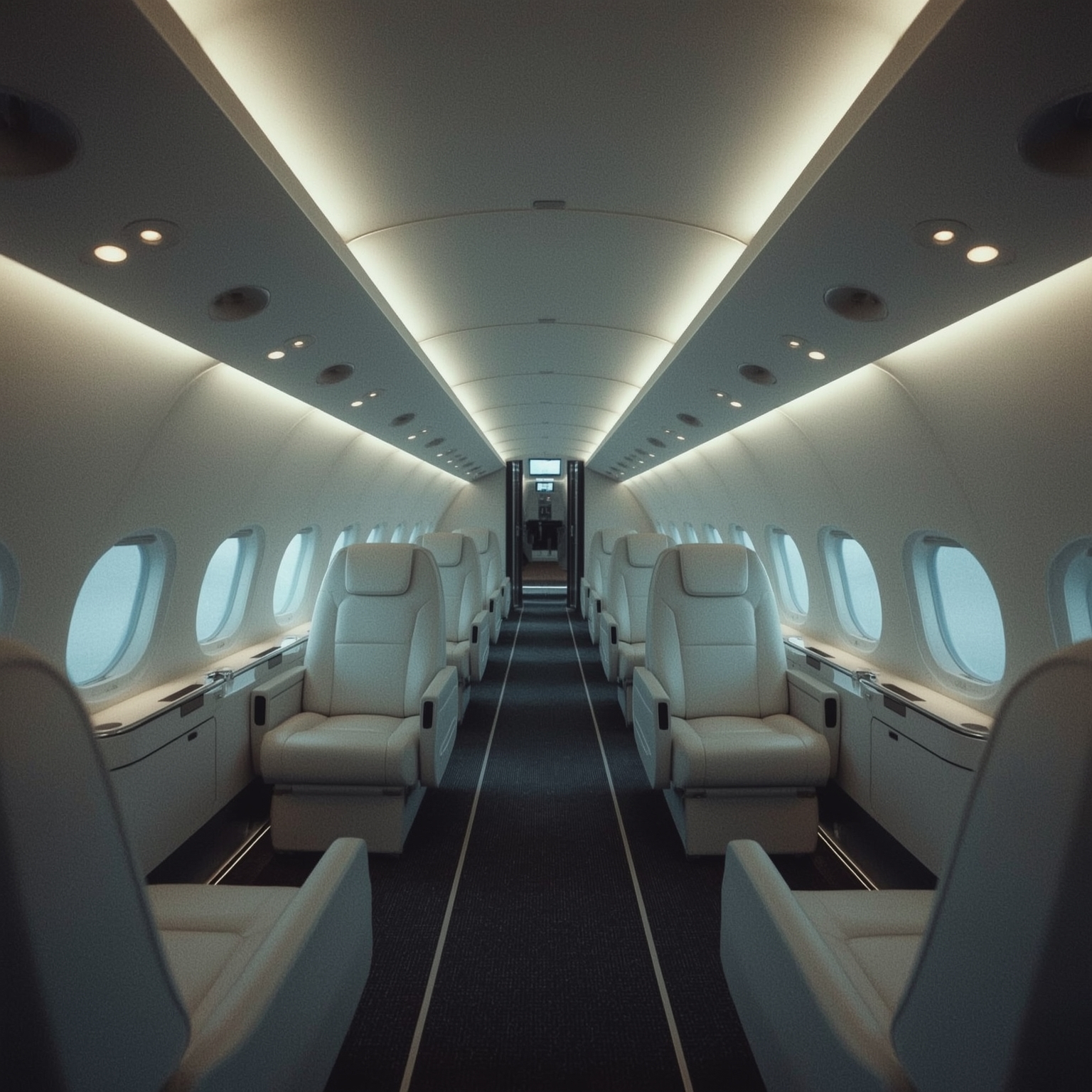
During one such visit in May 2024, the author describes arriving at the museum and unexpectedly missing a scheduled viewing while exploring the USS Growler, a nuclear-missile submarine nearby. Fortunately, a manager graciously rebooked the next available tour—a testament to the museum’s commitment to providing visitors with an opportunity to relive air travel’s most opulent chapter. Boarding the plane today feels strikingly similar to boarding a modern jetliner, though devoid of roaring engines or bustling gates. In its prime, passengers would have checked in at a private Concorde lounge, enjoyed Champagne and a buffet of gourmet delicacies, and then reclined in spacious leather seats that resembled armchairs more than typical airline accommodations. Although the fuselage measured a slender 9 feet 5 inches across and stretched 204 feet in length, the aircraft held a maximum of 100 passengers, ensuring an intimate atmosphere of exclusivity.
Inside the cabin, lavish details abound. Queen Elizabeth II herself regularly occupied seat 1A—the first window seat on the left side, offering maximum privacy. The onboard cuisine matched the clientele’s refined palate, often featuring dishes such as beef Wellington or quail, artfully paired with wines selected by professional sommeliers. The custom china, silver cutlery, and glassware reflected a time when air travel epitomized sophistication rather than convenience. Even the lavatories, adorned with faux-marble finishes and stocked with high-quality toiletries, echoed the overall ethos of elegance and discretion.
Technologically, Concorde stood in a category of its own. Each of its four powerful Rolls-Royce/Snecma Olympus engines could generate an extraordinary 38,000 pounds of thrust, propelling the aircraft from zero to 250 miles per hour in less than thirty seconds. Yet such performance came with a cost: the plane burned approximately two tons of fuel just while taxiing on the runway and carried more than 200,000 pounds of fuel on takeoff—over half its total weight. As guides at the Intrepid Museum explain, the windows were deliberately small, designed to withstand the immense pressure encountered at supersonic speeds. Every design choice served the dual purposes of precision and safety, a balancing act that defined Concorde’s technical brilliance.
The cockpit—accessible to passengers in the pre-9/11 era—is another highlight of the tour. Visitors can now peer into the flight deck where a full crew once orchestrated the delicate dynamics of supersonic flight. The captain and first officer shared duties with the flight engineer, an exceptionally skilled specialist responsible for monitoring all critical systems including fuel regulation, hydraulics, and electrical circuits. Their combined expertise operated a machine so complex that few outside the aviation world fully understood its sophistication. As one guide quipped, a seasoned flight engineer “had forgotten more about Concorde than most people would ever know.”
With commercial flights having ceased more than two decades ago, Concorde’s spirit lives on through exhibits and modern enterprises striving to reignite supersonic passenger travel. New startups promise quieter engines and improved fuel efficiency, though persistent challenges—economic feasibility, environmental impact, and safety regulations—continue to hinder a revival of its former glory. For now, visitors to the Intrepid Museum can walk the narrow aisles, glance out the diminutive windows, and marvel at the cockpit of a machine that once outran the sunset itself. Standing beneath its sleek delta wings, one cannot help but feel a sense of awe for the audacity of human innovation that dared to make the impossible—commercial supersonic flight—a fleeting but unforgettable reality.
Sourse: https://www.businessinsider.com/concorde-supersonic-plane-tour-photos-2024-10