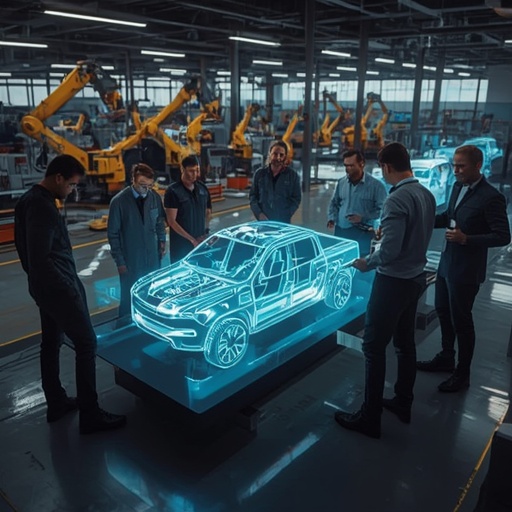
Inside the walls of Ford’s research and manufacturing facilities, a confidential initiative is unfolding—one that may well redefine the future of accessible electric transportation. The company has discreetly assembled an elite collective of talent, an interdisciplinary fusion of Silicon Valley technology experts and veteran automotive engineers, who share a single, audacious objective: to reconstruct the very concept of the assembly line in order to design and build an entirely new kind of electric vehicle. Their mission extends far beyond incremental improvement; it seeks to produce a fully electric truck priced around $30,000, an ambitious figure that represents not merely affordability, but the democratization of cutting-edge clean mobility.
This effort is not a simple revision of existing procedures or a minor upgrade to current production capabilities. Rather, it is a fundamental rethinking—a daring reinvention of manufacturing itself. By integrating digital automation, advanced materials science, and intelligent design processes usually found in high-tech startups, this clandestine team is bridging the historical gap between traditional carmaking methods and the rapid, iterative innovation culture that defines modern technology companies. Ford’s undertaking symbolizes what happens when the steadfast legacy of industrial craftsmanship converges with the disruptive mindset of Silicon Valley’s experimental ethos.
The stakes are high. Every redesign of the assembly line represents a confrontation with global competitors in the electric vehicle race—companies across continents vying to dominate the next era of sustainable transportation. Yet, Ford’s approach distinguishes itself through pragmatism and purpose: to create a product not only impressive in its engineering sophistication but also attainable to the average consumer. In doing so, Ford challenges the assumption that electric mobility must come with a premium price tag, aiming instead to make the future of transportation tangible, inclusive, and economically viable for millions.
Beyond its technological ambition, the project carries symbolic weight for American industry. It signifies a revival of domestic ingenuity and the capacity to reinvent manufacturing from within, using both the wisdom of experience and the imagination of innovation. As this secretive team pushes boundaries and redefines the limits of what is achievable on the assembly floor, they are simultaneously shaping a new narrative—one in which electric vehicles are not merely futuristic ideals, but a practical reality driving us toward a cleaner, smarter, and more connected world.
Sourse: https://www.wsj.com/business/autos/ford-ev-electric-truck-7fdb0e0a?mod=pls_whats_news_us_business_f


