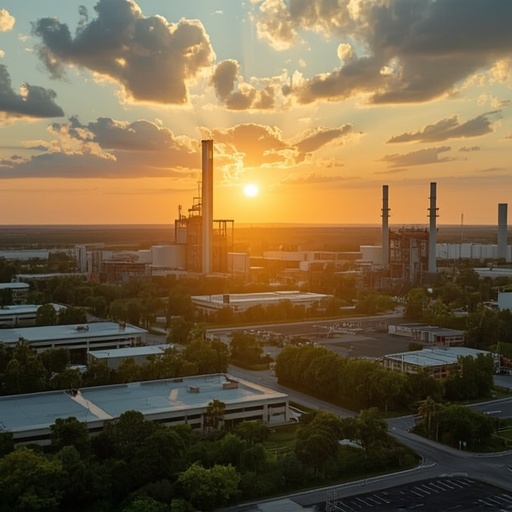
Across the contemporary American landscape, few regions are witnessing transformation on the same scale as the South. Once primarily recognized for its agricultural heritage and slower economic rhythms, the Southern states are now emerging as the epicenter of a sweeping industrial renaissance. This renewed wave of development is not simply a matter of factories opening their doors; it represents a comprehensive social and economic reawakening that is reshaping everything from population dynamics to community structures and cultural identity. Driven by a surge of investment, innovation, and human ambition, the South is effectively reinventing itself as a center of progress and opportunity.
Over the past decade, industries that once clustered around coastal metropolitan areas have steadily migrated toward Southern territories. Major corporations, advanced manufacturers, and logistics networks have discovered in the South a unique combination of advantages—affordable land, strategic infrastructure, and a rapidly expanding labor force eager to participate in new economic ventures. As a result, once-quiet towns are evolving into thriving hubs of commerce, while new cities are rising to meet the practical and aspirational needs of a growing population. Each newly constructed facility, distribution center, or research complex signifies more than business expansion; it marks the redefinition of the region’s identity on the national stage.
Equally compelling is the human dimension driving this transformation. Millions of individuals from across the country are relocating to Southern communities, drawn by the promise of stable employment, lower cost of living, and an increasingly vibrant cultural environment. These migrations are accelerating demographic diversity and enriching local economies with fresh ideas and entrepreneurial energy. Families settling in newly built neighborhoods are finding not only financial stability but also a renewed sense of belonging within local networks that balance traditional Southern hospitality with modern aspirations for innovation and inclusivity.
This industrial surge extends far beyond economic statistics—it signifies a shift in perception and purpose. Where the South was once defined by its historic industries of agriculture and resource extraction, it is now claiming its place as a future-facing region of technological progress, manufacturing excellence, and sustainable development. New energy projects, automotive plants, and advanced logistics operations are intertwining to form a dynamic ecosystem that aligns efficiency with environmental awareness. Governments, private investors, and local communities are collaborating to ensure that this newfound prosperity fosters long-term resilience rather than temporary gain.
For professionals, business leaders, and residents alike, the Southern boom symbolizes the arrival of new opportunities and a fresh narrative of growth. As industrial skylines rise beside oak-lined neighborhoods and innovation centers emerge where farmland once stretched, the South’s story evolves from one of tradition to one of transformation. The region’s renaissance is both a revival and a reinvention—a clear testament to how vision, investment, and collective purpose can redefine an entire segment of a nation. The industrial boom transforming the South is not merely economic progress; it is the dawn of a modern identity that blends history, ambition, and possibility into a future that feels both innovative and unmistakably Southern.
Sourse: https://www.businessinsider.com/why-companies-move-california-new-york-europe-southern-states-2026-6