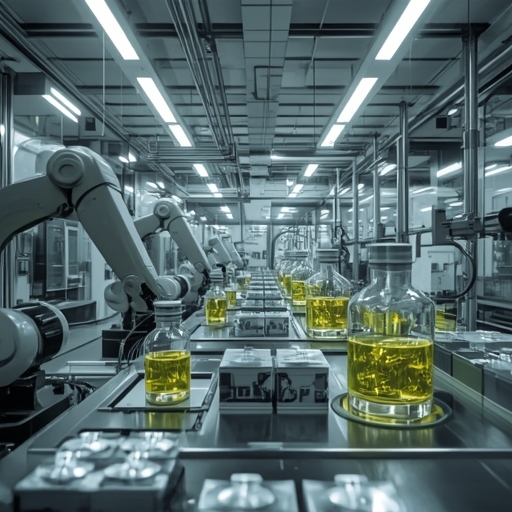
The global supplement industry is undergoing an extraordinary transformation, expanding at an unprecedented rate as consumer demand for wellness and performance continues to rise. Inside state-of-the-art manufacturing facilities, precision-engineered machinery now operates tirelessly to produce the powders, capsules, and tablets that stock the shelves of gyms, pharmacies, and online marketplaces around the world. These technologically advanced spaces, filled with gleaming stainless steel mixers and automated conveyor systems, represent the core of a multibillion-dollar economy built on the modern desire for enhanced health, endurance, and vitality.
Yet beyond the glossy surfaces and efficient production lines lies a more complex narrative. As factories increase capacity and innovation accelerates, medical professionals are urging a careful approach, warning that enthusiasm for supplementation should be grounded in science rather than solely in marketing appeal. Experts remind consumers that while many supplements—such as creatine for muscular strength, magnesium for recovery, and electrolyte blends for rehydration—can offer measurable benefits, excessive or uninformed use may undermine rather than support wellness goals. Their caution underscores a fundamental tension between commercial growth and medical prudence.
Within these production facilities, rigorous testing protocols aim to ensure purity, dosage accuracy, and compliance with international health regulations. Laboratories equipped with precise analytical instruments verify that each batch meets established safety and potency standards before packaging. Engineers collaborate closely with researchers to refine formulations, experimenting with bioavailability improvements and sustainable ingredient sourcing. The process from formulation to shipment is a testament to industrial precision fused with emerging health science.
At the same time, the cultural fascination with supplements reveals something deeper about contemporary society’s relationship with health. Consumers increasingly view wellness as both a lifestyle and an investment, turning to nutritional science as a means of self-optimization. This dynamic has propelled the supplement market into a space where commerce, technology, and human aspiration converge. The result is an industry simultaneously celebrated for its innovation and scrutinized for its bold claims.
Standing inside these advanced factories offers a window into this delicate balance—one in which ambition meets caution, and where the pursuit of better health intertwines with the imperatives of global production. As the supplement boom continues to expand, its future will depend not only on technological innovation and consumer enthusiasm but also on a sustained commitment to scientific integrity and responsible health practices.
Sourse: https://www.businessinsider.com/thorne-supplement-factory-charleston-2026-2