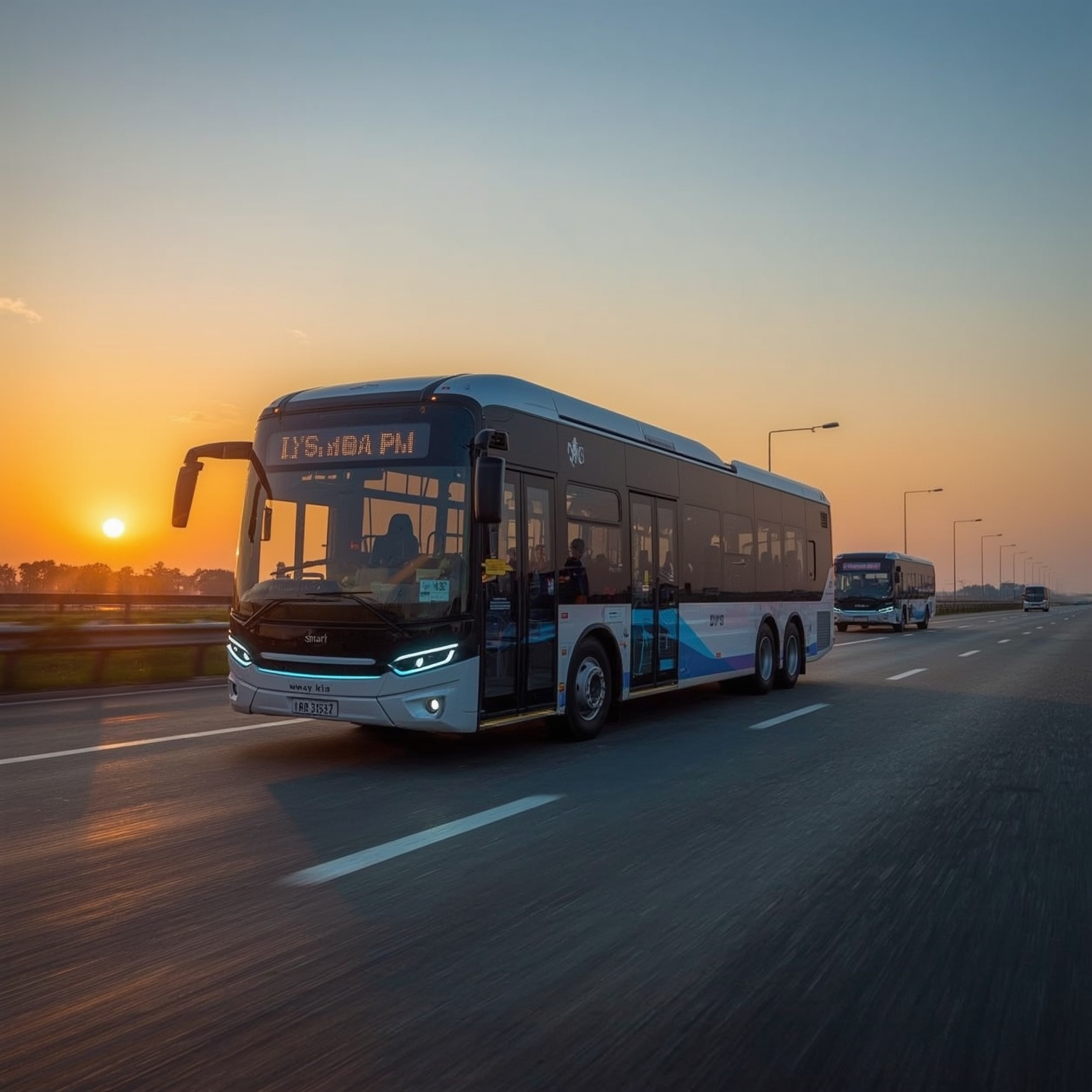
IntrCity SmartBus, an Indian technology-driven intercity mobility platform, has successfully secured $30 million in new funding with the explicit goal of accelerating its network expansion into India’s vast landscape of smaller cities and semi-urban towns. This all-equity Series D round, which was primarily led by growth investor A91 Partners, values the rapidly scaling Noida-based startup at approximately $140 million post-money. The latest investment is not simply a financial milestone but a strategic endorsement of IntrCity’s expanding role in reshaping how millions of Indians travel between distant cities each day.
Intercity travel across India is undergoing a significant transformation as migration trends strengthen. With an increasing number of individuals leaving smaller hometowns to seek employment or higher education in bustling metropolitan centers such as Delhi, Mumbai, and Bengaluru, the demand for dependable and comfortable long-distance transportation options has surged. To accommodate this mobility shift, the Indian government—particularly through initiatives driven by New Delhi—has implemented an extensive modernization and expansion of the nation’s highway infrastructure. According to official government data, India’s national highway network has grown by more than 60% in the last decade alone, stretching from 56,723 miles to an impressive 90,847 miles. This dramatic improvement in physical connectivity has opened up new avenues for private players like IntrCity to serve regions that were once poorly linked.
While India’s railway system remains a vital component of the country’s public transportation infrastructure, it continues to face pressing capacity constraints and operational bottlenecks. Despite its immense scale, the rail network has been unable to fully accommodate the soaring inter-state travel demand. Consequently, the importance of road-based transit has become increasingly evident. However, many state-run intercity bus services still fall short in terms of reliability, punctuality, comfort, and passenger safety—a void that IntrCity SmartBus has strategically positioned itself to fill. The company envisions bridging this service gap by providing a seamless, tech-enabled alternative that merges efficiency, convenience, and affordability.
Unlike the traditional model of bus operators who bear the heavy financial burden of maintaining fleets, IntrCity SmartBus has opted for an innovative asset-light approach. In this model, rather than owning all vehicles, the startup forms partnerships with local bus proprietors across India. Through these collaborations, each partner’s bus is enhanced with IntrCity’s proprietary hardware systems that enable real-time tracking and operational monitoring. Co-founder and President Kapil Raizada explained in an interview that this approach allows the company to maintain high technological control while minimizing capital expenditure, thus ensuring scalability and agility.
Complementing this technology backbone is IntrCity’s centralized digital platform, which handles everything from ticket reservations and route management to determining optimal frequency, stop locations, and seat configurations. These insights are generated by continuously analyzing demand data patterns. For instance, the system may determine how often a bus should operate between two cities during peak hours or how passenger preferences might vary between sleeper and semi-sleeper layouts. By applying intelligent routing and scheduling, the platform ensures operational efficiency while enhancing user comfort.
Passenger safety and service uniformity form another pillar of IntrCity’s offer. Each bus is staffed with trained onboard professionals known as “captains,” whose primary responsibility is to ensure a smooth and secure journey. These captains not only manage passenger queries but also handle emergency protocols and quality assurance. IntrCity has also paid considerable attention to the pre-departure phase by creating air-conditioned passenger lounges equipped with well-trained staff. Many buses feature clean onboard washrooms—an amenity that remains rare among traditional intercity services—further elevating the comfort level.
Raizada elaborated that the company’s vehicles are deeply integrated through cloud connectivity. An internally developed “bus operating system” constantly monitors key operating parameters—ranging from temperature and ambient noise to CCTV camera feeds—to ensure safety and passenger satisfaction. Founded in 2019, IntrCity SmartBus initially operated under a different segment known as RailYatri, an online train ticketing platform. This earlier experience provided the founding team with crucial insights into traveler behavior patterns, entry barriers, and the persistent unmet needs in India’s broader intercity mobility segment. Over time, as market trends favored more flexible and reliable road-based options, the company transitioned its focus toward its SmartBus vertical, which now contributes approximately 90% of total revenue, compared to RailYatri’s modest 10% share.
Currently, IntrCity SmartBus runs about 600 daily intercity trips, transporting between 20,000 to 25,000 passengers every day—roughly equivalent to a monthly ridership nearing 700,000 individuals. Its collaborative network includes over 50 regional bus operators, allowing it to sustain trip distances that average more than 311 miles per route. Approximately 95% of these journeys take place overnight, primarily addressing essential travel linked to employment commitments, academic pursuits, business responsibilities, and other unavoidable personal appointments. The company’s core customer base typically falls between 20 and 45 years of age and frequently includes small enterprise owners, government employees, educators, sales representatives, and university students.
Operating through a hub-and-spoke model, IntrCity has pinpointed 15 to 16 pivotal commercial hubs across India—centers that serve as the backbone of its intercity operations. The network currently maintains active routes in 13 to 14 of those hubs, spanning 15 Indian states. Its footprint encompasses virtually all of northern India—from Jammu and Kashmir to Uttarakhand—as well as large swaths of the southern regions, including Karnataka, Tamil Nadu, and Andhra Pradesh. According to co-founder and CEO Manish Rathi, enormous effort is dedicated to data-driven decision-making. The team employs detailed analytics to anticipate consumer expectations—not limited to scheduling but extending into the physical design of the buses themselves, determining whether a particular region’s routes favor full-sleeper setups or mixed configurations.
The startup’s financial metrics underscore its impressive growth trajectory. IntrCity SmartBus achieved a year-over-year revenue increase of 67%, reaching ₹5 billion (approximately $57 million) in the last fiscal year. Projections suggest that revenue could exceed ₹7 billion (roughly $79 million) during the current year. Having maintained EBITDA-positive operations for the past couple of years, the company is now on track to reach full profitability within the present fiscal cycle. The newly raised capital, therefore, is intended not only for territorial expansion—what Raizada describes as going both “deeper and wider” across the nation—but also for continual enhancement of passenger safety measures, technological sophistication, and operational quality.
Despite its strategic progress, IntrCity recognizes a cultural barrier: a long-standing perception among Indian travelers that bus transport is a less prestigious or comfortable option compared to trains and flights. “We want to make buses the preferred mode of travel in India,” Raizada asserted, emphasizing that the company’s mission extends beyond operational growth—it seeks to fundamentally change how Indians view long-distance road travel by elevating its standards of comfort, safety, and dependability.
The broader industry data further validates this opportunity. In the financial year 2025 alone, Indian travelers undertook more than 223 million intercity journeys, according to a recent report released by online ticketing major RedBus. During that period, the sector expanded by adding approximately 72,000 new intercity bus routes along with 6,400 new vehicles, effectively boosting capacity by an estimated 265,000 daily passenger seats. This market dynamism has attracted a wave of modern intercity transport startups, including competitors like ZingBus, LeafyBus, and FreshBus, while international entrant FlixBus—an established European player—has also entered India’s market. Even amid this crowded field, IntrCity emphasizes that executional excellence, not aggressive expansion or network size, remains its foremost priority. As CEO Rathi succinctly put it, “India is a very different beast when it comes to road travel—if something can go wrong, it often will. That’s why we are, above all else, an operational-excellence-first company.” Through this philosophy, IntrCity SmartBus is steadily driving India toward a new era of connected, intelligent, and comfortable intercity movement.
Sourse: https://techcrunch.com/2025/10/29/intrcity-smartbus-lands-30m-at-140m-valuation-to-deepen-its-grip-on-indias-intercity-travel-market/


