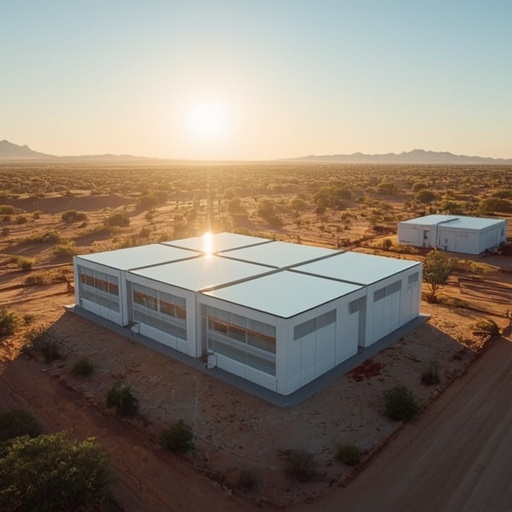
Responding directly to substantial public opposition and concerns raised by local policymakers, a prominent investor has announced a significant revision to his ambitious Utah data center proposal—reducing the overall scope of the project by a full fifty percent. This decision, while seemingly pragmatic, carries far deeper implications for the evolving relationship between major corporate developers and the communities in which they operate. It illustrates a compelling example of how collective civic engagement and sustained dialogue can redirect even the most capital-intensive undertakings toward a more balanced and respectful outcome.
Originally envisioned as a massive technology hub designed to bolster regional data infrastructure, the Utah project had drawn criticism from community members who voiced apprehension over its potential environmental impact, strain on local resources, and the broader question of sustainable urban growth. The investor’s willingness to reconsider the project’s footprint demonstrates an acknowledgment that innovation must coexist with accountability—a principle becoming increasingly central to contemporary business ethics.
By agreeing to reduce the development by half, the investor not only mitigates some of the ecological and logistical concerns but also sets a strategic precedent for future initiatives within the tech industry. In an era where companies are scrutinized for their environmental stewardship and social transparency, this recalibration underscores that profitability and progress need not exclude community wellbeing. Instead, it exemplifies a tangible shift toward sustainable growth, collaboration, and shared responsibility.
This episode further highlights the power of informed citizen action. Public forums, advocacy groups, and digital campaigns collectively amplified awareness, compelling decision-makers to reassess the balance between technological advancement and environmental preservation. The outcome suggests a maturing dialogue between industry leaders and local stakeholders—one that has the potential to redefine how large-scale infrastructure projects evolve in the future.
Ultimately, this revised approach to the Utah data center embodies more than a mere cut in square footage; it symbolizes a broader transformation in corporate decision-making. Through open communication, social accountability, and an appreciation for ecological boundaries, the project now represents a more conscientious vision for progress—one in which growth and sustainability advance hand in hand, guided by the voices of the communities most affected by development decisions.
Sourse: https://www.businessinsider.com/kevin-oleary-data-center-project-smaller-2026-6