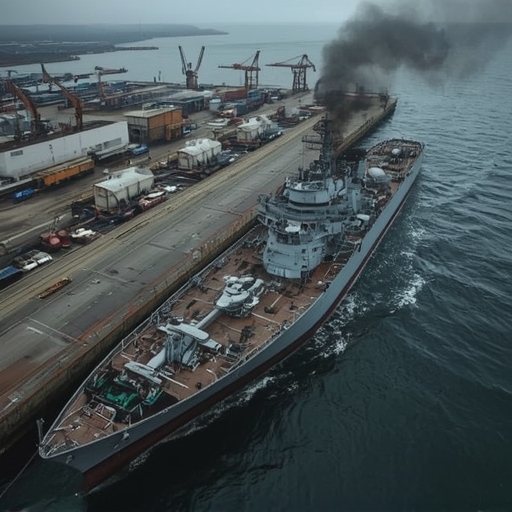
Recent high-resolution satellite imagery has captured an exceptionally detailed view of Iran’s most significant naval vessel, a former oil tanker that has been strategically transformed into a formidable warship. In the image, the immense structure of the ship is clearly visible, enveloped by billowing plumes of smoke rising from multiple sections of its deck. This haunting scene not only highlights a critical episode in the ongoing regional tensions but also serves as a vivid example of how modern surveillance technology reveals unfolding conflict zones in real time.
According to reports from U.S. defense sources, this particular vessel held high strategic importance within Iran’s naval fleet, functioning both as a symbol of maritime capability and as a logistics hub for wider naval operations. Such a designation made it a likely priority in the early stages of any active combat engagement, particularly given its size and potential operational range. The fact that smoke now pours from its hull suggests it may have sustained serious damage—possibly from precision strikes or onboard accidents precipitated by combat conditions.
The vessel’s transformation from a civilian oil tanker into a warship underscores a recurring theme in contemporary military adaptation: the repurposing of commercial or obsolete assets into instruments of power projection. Iran, much like other nations with limited access to large-scale maritime production, has invested heavily in this practice as an avenue to expand its presence at sea without constructing new warships from the ground up. In an era of tightened sanctions and escalating tensions, such ingenuity reflects both constraint and resilience.
This event also carries far-reaching geopolitical implications. As global observers evaluate these images, questions emerge about the broader security dynamics at play across the Persian Gulf and beyond. The region, already strained by years of military stand-offs and proxy conflicts, faces renewed uncertainty as this targeted vessel becomes an emblem of potential escalation. The heavy smoke rising from its decks symbolizes more than physical damage—it signals the volatility of a region where maritime routes remain crucial to the global energy network.
For analysts and policymakers alike, the image serves as a sobering reminder that the intersection of technology, strategy, and regional rivalry continues to shape the future of modern warfare. As this story unfolds, international attention remains sharply focused on how Iran and its counterparts will respond, both militarily and diplomatically, to a development that may alter the balance of power along one of the world’s most contested waterways.
In essence, the satellite capture goes beyond a simple visual record—it crystallizes a moment of strategic vulnerability for Iran’s naval forces and exemplifies how 21st-century surveillance exposes the realities of war with unprecedented clarity.
Sourse: https://www.businessinsider.com/satellite-image-show-iran-warship-smoking-airstrikes-2026-3