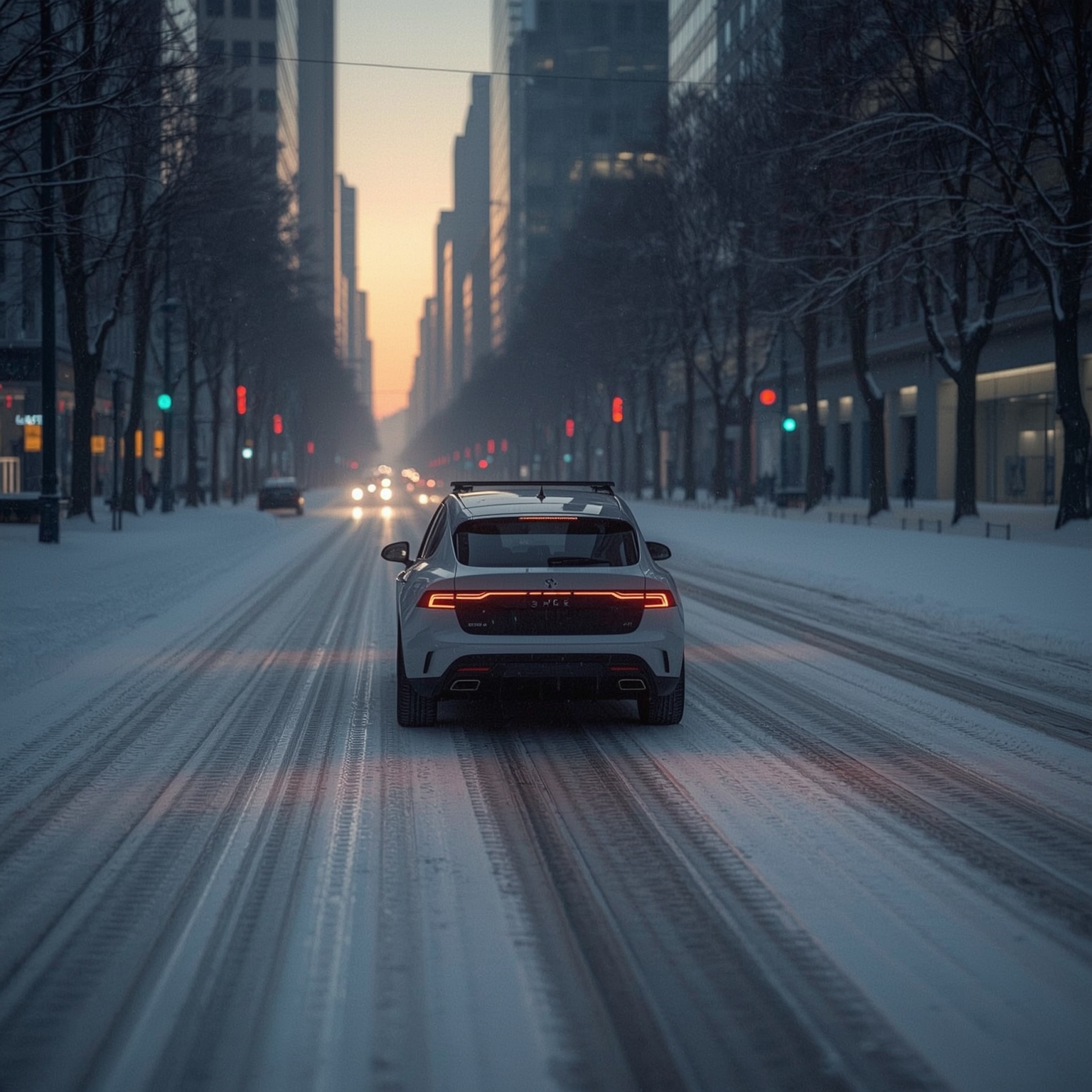
At a recent all-hands gathering, Waymo’s foremost authority on winter weather intricately detailed the formidable challenge that stands before the company’s engineers and product teams. The message was both clear and urgent: if Waymo wishes to broaden its footprint into new metropolitan regions and emerging markets, its autonomous fleet must master the art of navigating snow-covered and icy streets with unwavering confidence and flawless safety. In essence, the ability to operate in harsh winter conditions is not a peripheral goal but a central prerequisite for sustained expansion and future viability.
Since its inception, Waymo has purposefully confined its operations to sunnier, more predictable climates—cities such as Phoenix, Los Angeles, Atlanta, and Austin—where rainfall is rare, temperatures stay moderate, and visibility remains high. This calculated strategy enabled engineers to refine the Waymo Driver in a stable environment relatively free from extreme meteorological interference. Now, however, the company’s ambitions are shifting eastward. Places like Boston, New York City, and Washington, DC—urban centers known for their unpredictable nor’easters and seasonal snowfalls—represent the next frontier. The company’s capability to endure and excel under such demanding conditions will serve as both a test of technological sophistication and a decisive factor in its commercial success.
When questioned about the timeline for verifying the Waymo Driver’s readiness for winter deployment, Robert Chen, the firm’s product leader for weather-related operations, responded with a tempered sense of optimism and confidentiality. “This winter season,” he remarked, “will be an exceptionally critical period for us. Beyond that, I can’t say much at the moment.” His understated response revealed much about the company’s cautious anticipation: the months ahead will provide essential data, validation opportunities, and lessons that could determine how successfully Waymo transitions from fair-weather pioneer to year-round mobility provider.
There exists within the organization a deep recognition that failure to perform reliably on snow-laden streets could significantly curtail the robotaxi’s usefulness and profitability. Human-operated ridehailing services already function through rain, sleet, and blizzards alike, and consumers expect similar consistency from any transportation option competing for their trust. Thus, for Waymo to compete credibly, its service cannot be limited to seasons of mild weather. “At Waymo, we aspire to deliver a product and service that people can depend on—not just for eight or ten months of the year, but every single day, regardless of the conditions,” Chen emphasized.
In principle, autonomous vehicles behave much like their human counterparts: they perform most effectively when their surroundings are clear, well-illuminated, and unobstructed by environmental noise. When visibility diminishes or when snow and ice obscure crucial visual cues, performance degrades sharply. Waymo has already encountered and adapted to challenging phenomena—flash floods, torrential rains, even the vast sandstorms known as ‘haboobs’ in the deserts around Phoenix—but snow presents a different and multifaceted threat. It simultaneously alters traction, visibility, and the reliability of sensor data, testing the vehicle’s perception and decision-making systems in tandem.
Phil Koopman, an eminent researcher in autonomous vehicle safety from Carnegie Mellon University, articulated why snowy conditions remain particularly vexing. Human drivers possess contextual understanding: even when only part of a stop sign protrudes above a snowbank, they infer its full meaning. However, machine learning systems, unless rigorously trained on such obstructed images, may misinterpret or fail to recognize these partial cues. Snow, in short, challenges not only the robotaxi’s physical operation but also its perceptual cognition.
Koopman further observed that Waymo’s hardware configuration—featuring an integrated suite of lidar, radar, and camera sensors—offers an inherent advantage. Multimodal redundancy enables cross-verification when one sensory input becomes unreliable. Systems solely reliant on cameras, such as those implemented by Tesla, may falter amid blowing snow or reduced illumination. “For a multi-sensor platform like Waymo’s,” he explained, “radar becomes indispensable; it can pierce through snowflakes and return accurate distance readings where vision falters.”
Beyond these hardware hurdles lies a formidable data problem. Because Waymo has spent its formative years operating in dry environments, the proportion of recorded real-world driving data that includes active snowfall or icy conditions is minuscule—sometimes representing less than five percent or even fractions of a percent of the company’s total driving dataset. This data scarcity complicates the training of machine learning models, forcing engineers to supplement real experience with sophisticated artificial augmentation driven by advanced AI methodologies.
In response, Waymo has deployed experimental data-enhancement techniques and broadened testing in colder regions such as Truckee in California’s Sierra Nevada mountains, parts of Michigan, and Upstate New York, while continuing ongoing trials in Denver and Seattle. These test routes provide controlled yet variable contexts where engineers can observe traction management, sensor resilience, and machine learning inference under real winter stressors. Although measurable progress has been made, Chen acknowledges that substantial work remains before the system achieves full operational maturity in deep snow.
The company’s fifth-generation Waymo Driver already demonstrates competence in freezing temperatures and light snow conditions. However, the forthcoming sixth-generation version represents a purpose-built evolution—meticulously engineered to withstand and intelligently react to harsher, more volatile climates. Complementary to software improvements, the design team has incorporated physical modifications such as minute mechanical wipers to keep lidar lenses clear and stronger heating systems to defrost optical sensors. In field tests, the fleet functions almost like a coordinated network of mobile climate observatories, each vehicle independently sensing and reporting localized weather and traction data. “If one vehicle encounters an icy stretch,” Chen explained, “that information is transmitted across the network, allowing other cars to anticipate danger before reaching the same location.”
In extremely adverse conditions—when roads are treacherous and most residents stay indoors—Waymo reserves the right to temporarily suspend operations for safety reasons. These pauses are infrequent but reflect a pragmatic philosophy: if ordinary drivers avoid travel, keeping autonomous vehicles on the road serves little practical benefit. Moreover, the impact of snowfall varies widely by region. A light dusting that paralyzes traffic in one city might barely disrupt activity in another, and Waymo’s algorithms will eventually need to consider these regional behavioral norms.
The challenge posed by limited winter data extends beyond immediate testing; it influences Waymo’s long-term research pipeline. Even after each snowy season ends, engineers continue to advance their algorithms using high-fidelity simulation environments that replicate rare and hazardous conditions. These virtual worlds allow AI systems to experience millions of snow-related scenarios—slush accumulation, black ice formation, or snowbanks obscuring lane markers—without the constraints of real-world timing. Generative AI and layered perception models now help differentiate between snow varieties—wet, powdery, dense, or granular—improving the precision of both perception and planning software.
For customers hoping to hail a Waymo robotaxi amid winter flurries, patience may be required. The company plans to begin service in Washington, DC, within the next year, though official launch timelines for other East Coast hubs remain undisclosed. Long-term ambitions stretch even further, including eventual deployments in London and Japan—markets that each bring unique environmental tests. As temperatures drop and flakes begin to fall, Chen and his team remain steadfast, meticulously preparing their systems for what may prove evolution’s most demanding trial in autonomous mobility. As Chen succinctly summarized, “Developing a self-driving vehicle is already an incredibly complex undertaking. Add in unpredictable winter weather, and the difficulty increases exponentially.”
Sourse: https://www.theverge.com/transportation/805471/waymo-robotaxi-winter-snow-weather-testing


