In October, Istanbul Airport achieved a remarkable milestone, earning the distinction of being named the world’s best airport in a prestigious CN Traveler survey. This recognition, however, did not come without considerable effort, meticulous foresight, and years of strategic planning. The airport’s journey from conception to global acclaim is a narrative of resilience, innovation, and logistical mastery. The hub officially opened six years ago, intended to replace Istanbul’s aging Atatürk Airport — an infrastructure that had served the nation since the mid-twentieth century. Atatürk, though historically significant and vital to Turkey’s aviation development, was increasingly overstretched. It had been engineered for a maximum annual capacity of approximately 40 million passengers, yet it frequently accommodated nearly 60 million travelers. This chronic overextension led to longer queues, persistent delays, and operational bottlenecks, all compounded by the physical impossibility of further large-scale expansion within its urban footprint.
Discussing the magnitude of this transition, Selahattin Bilgen, the CEO of Istanbul Airport, explained in an interview with *Business Insider* at London’s renowned Savoy Hotel that the decision to construct an entirely new facility was both inevitable and ambitious. Despite the conceptual clarity of building a new airport, the practical challenge was monumental: how to transfer all flight operations, staff, passengers, and infrastructure from Atatürk without paralyzing air traffic. Yet, through an extraordinary feat of coordination, this migration occurred within just 33 hours. In slightly more than a day, Atatürk Airport was completely decommissioned, and the new Istanbul Airport received its inaugural passengers. Bilgen emphasized the detailed orchestration behind this process, noting that years of preparation, scenario modeling, and contingency planning made such an audacious move possible. “We spent extensive time and effort on planning,” he remarked. “One day, we closed the airport; the next, we were fully operational in the new one.”
The airport’s execution and ongoing operations were not devoid of early skepticism. Many questioned the feasibility, environmental impact, and economic prudence of the project. Public opinion was divided during the planning phases, with critics raising concerns about sustainability and accessibility. Yet, time has vindicated much of the vision behind Istanbul Airport. A recent survey indicates that approximately 91% of Istanbul residents now express approval of the new facility — a striking turnaround from the initial skepticism. Today, the airport stands as Europe’s second-busiest, trailing only London’s Heathrow, welcoming nearly 80 million passengers last year. While the United Kingdom continues to debate the addition of a third runway at Heathrow, Istanbul is already pressing ahead with ambitious expansion projects that could soon make it the largest airport on the continent. According to Bilgen, the ongoing phase-two investment plan aims to elevate the annual capacity from 90 million to 120 million passengers — a figure that would surpass even Hartsfield-Jackson Atlanta International Airport, currently the world’s busiest with 108 million passengers in the same year.
The airport’s rapid growth is intimately linked to the parallel expansion of Turkish Airlines, the nation’s flag carrier. The airline’s growing global fleet and increasingly dense route network have propelled Istanbul to become a pivotal connector between East and West. Geographically straddling Europe and Asia, the city naturally lends itself to serving as a global transit hub, similar to how carriers such as Emirates leverage Dubai’s strategic location. Yet, as Bilgen pointed out, Istanbul’s appeal extends far beyond mere convenience. “On top of it, we have our own attraction,” he said. Unlike many transit-focused airports, Istanbul itself is a world-class destination — a city steeped in history, culture, and vibrant modernity. The dual identity of the airport, functioning both as a connector and a gateway to a destination of immense allure, contributes significantly to its success. Currently, about 40% of airport traffic consists of international transfer passengers, while Turkey ranks fourth globally in international tourist arrivals, following only France, Spain, and the United States.
When asked how Istanbul Airport managed to secure the top spot in CN Traveler’s rankings for the second consecutive year, Bilgen highlighted the deliberate advantage of starting with a blank slate. Constructing an airport entirely from scratch allows its design to align perfectly with twenty-first-century aviation demands. “Designing and building a brand new airport comes with its own challenges and risks,” he explained, “but we have worked very hard and been thoroughly prepared for every eventuality. That, in turn, becomes a unique advantage when every system and process is conceptualized from the ground up.”
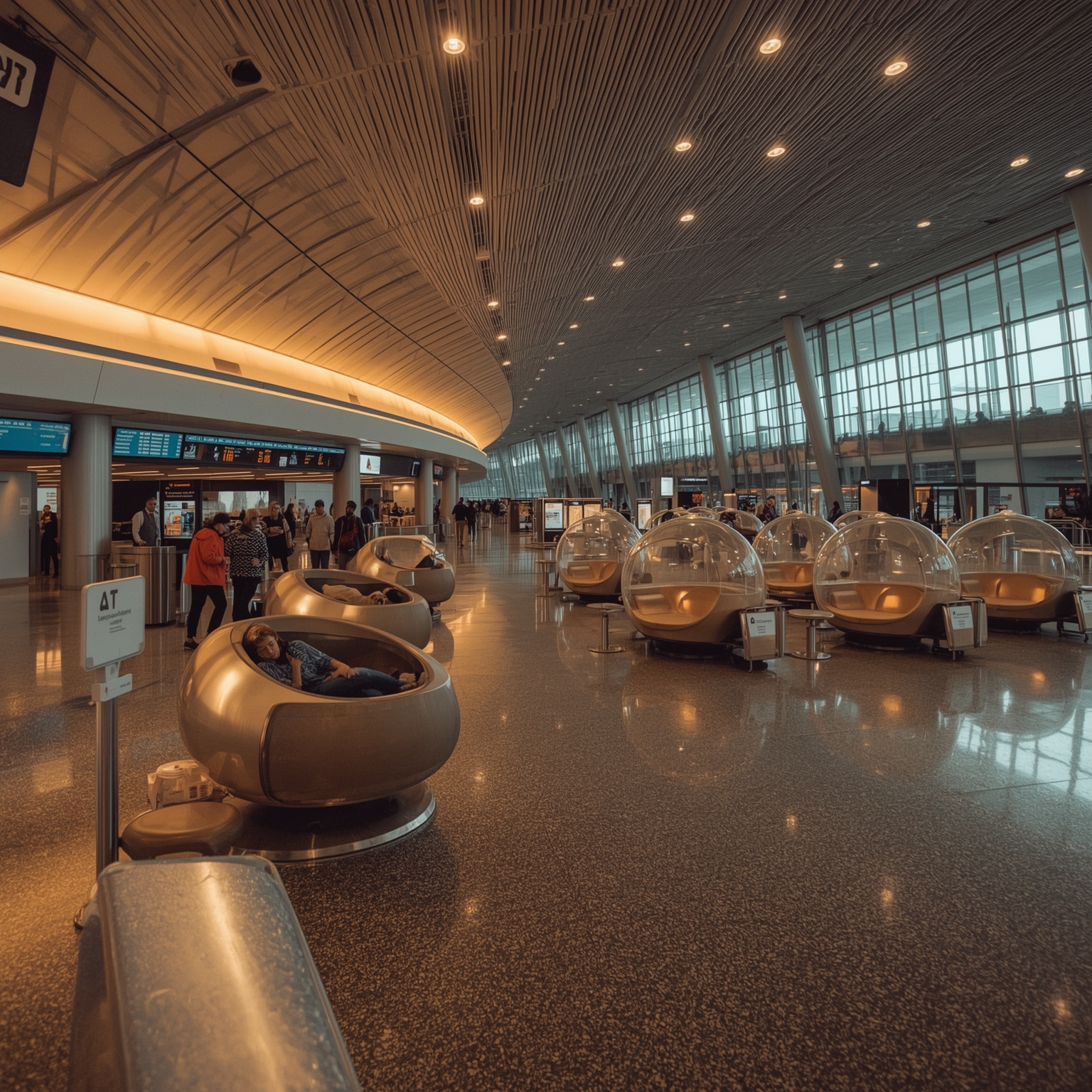
The airport’s sheer physical size is dazzling. Encompassing roughly fifteen million square feet, Istanbul Airport houses the world’s largest terminal under a single roof — a colossal structure that dwarfs even New York’s upcoming JFK New Terminal One, anticipated to span 2.4 million square feet. This immense expanse allows for an array of amenities designed to make travel not only efficient but genuinely enjoyable. Inside, passengers encounter extensive retail zones, luxurious lounges, and unexpected touches such as private sleeping pods available for rent, well-designed play areas for children, and therapy dogs who roam the terminal to ease traveler anxiety. According to Bilgen, the design team placed particular emphasis on facilitating accessibility and comfort for every demographic: travelers with disabilities, families with young children, pet owners, and elderly passengers. These considerations ultimately gave rise to specialized experience programs tailored to unique passenger needs, ensuring the airport could cater inclusively to all.
Technology also plays a crucial role in Istanbul Airport’s continuing excellence. Bilgen noted that the facility integrates advanced digital systems — including artificial intelligence — to enhance operational performance. Such implementations have helped the airport achieve leading scores in Europe for punctual flight departures and minimal baggage loss. These metrics underscore the airport’s focus not merely on size or aesthetics but on precision, reliability, and user satisfaction.
Nevertheless, even with such accomplishments, Istanbul Airport acknowledges there is room for further enhancement. According to Skytrax rankings, it recently placed fourteenth worldwide — a slight drop in comparative standings, with Singapore’s Changi Airport and Qatar’s Hamad International maintaining first and second positions respectively. Both remain formidable benchmarks in global aviation excellence, and Istanbul continues to evolve in pursuit of matching or surpassing them. As Bilgen and his team expand infrastructure, refine passenger experiences, and integrate next-generation technologies, their goal remains clear: to transform Istanbul Airport from an extraordinary regional success story into an enduring icon of modern global aviation.
Sourse: https://www.businessinsider.com/istanbul-airport-ceo-how-it-became-the-worlds-best-2025-11


