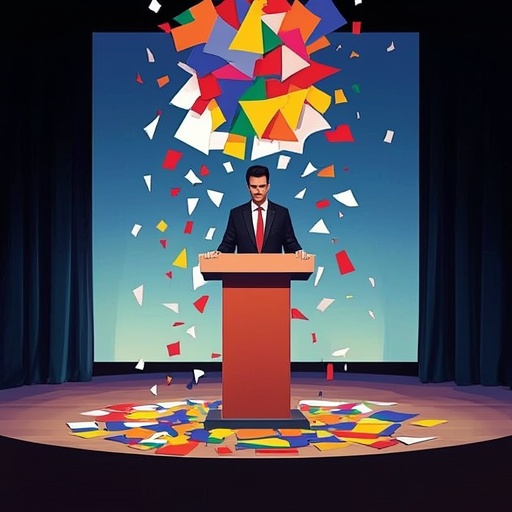
At the Kansas City Art Institute’s recent commencement ceremony, renowned fashion designer Jeremy Scott captivated the audience with a striking and symbolic gesture that pushed far beyond the conventions of a typical graduation address. Standing before an assembly of eager graduates, faculty, and families, Scott began his speech in an unorthodox manner—by holding in his hands a script produced not by human imagination, but by artificial intelligence. Moments into the ceremony, he dramatically tore the machine-generated text to shreds, releasing the fragments like confetti into the air. The act itself was intentionally theatrical, yet deeply profound: a deliberate and artful repudiation of the notion that creativity, emotion, and originality can ever be truly synthesized or replaced by algorithms.
In that singular, vivid moment, Scott made his message unmistakably clear. He reminded the next generation of artists and designers that while digital systems can mimic form, analyze trends, and even generate prose, they will always lack the ineffable essence that defines human creation—the spark of spirit, empathy, and lived experience that inspires authentic art. His statement resonated as both an act of rebellion and a heartfelt affirmation, encouraging the graduates to defend their individuality and to approach technology not as a threat, but as a tool to serve human intention.
Scott’s message extended well beyond fashion or design; it spoke to the broader cultural tension between innovation and identity. In an age when artificial intelligence infiltrates nearly every dimension of creative work—from music composition and digital illustration to architectural planning—his symbolic action underscored the irreplaceable value of emotion, intuition, and imperfection. He did not condemn AI outright but contextualized it as a mirror of human ingenuity rather than its successor. Through his gesture, he urged the students to embrace the rapidly changing landscape with courage and discernment—to collaborate with technology without surrendering the deeply human core of their artistic vision.
The crowd’s reaction was immediate and electric. Murmurs turned into applause, and what might have been a conventional commencement transformed into an unforgettable moment of reflection on what it means to be human in the digital era. Scott’s performance, equal parts fashion statement and philosophical protest, left the graduates not only inspired but challenged: to create with purpose, to lead with empathy, and to trust the irreplaceable power of the human imagination. It was, at its core, a masterclass in artistry, reminding everyone that the future of creativity belongs not to machines—but to hearts and minds willing to dream, to risk, and to feel.
Sourse: https://www.businessinsider.com/jeremy-scott-fashion-graduation-speech-commencement-ai-student-backlash-2026-5