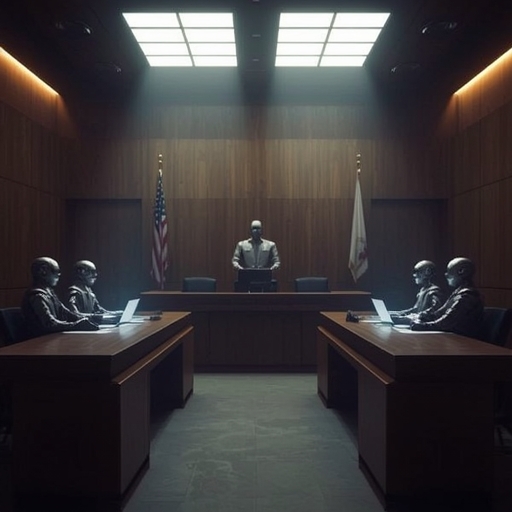
In an unfolding legal spectacle that has captured the attention of both the technology sector and the broader public, the long-anticipated courtroom confrontation between two leading pioneers in the artificial intelligence industry has officially commenced. What initially appeared to be a straightforward legal proceeding centered on innovation, competition, and intellectual property has quickly evolved into a psychological and cultural challenge: the process of selecting an impartial jury. As the trial opens, the most formidable obstacle is not the intricate arguments over algorithms or commercial agreements, but rather the difficulty of identifying jurors who have not already formed strong opinions about the key figures or the technological revolution they symbolize.
This challenge underscores how deeply artificial intelligence, and by extension its creators, have become woven into the public imagination. In an era when technology leaders function as modern celebrities—revered by some as visionaries, criticized by others as monopolists—expecting juror neutrality becomes increasingly unrealistic. The courtroom, therefore, transforms into a stage where issues of bias, trust, and reputation intersect with complex technical and ethical questions. The task of the court is not only to sift through evidence and testimony, but also to navigate the powerful influence of public narratives surrounding ambition, innovation, and the moral weight of shaping the future through AI.
Observers note that this case represents more than a dispute over patents, intellectual property, or broken promises. It is a symbolic confrontation that exposes the tension between progress and accountability in an industry advancing faster than society can fully comprehend. The proceedings will likely explore not just what each party has done, but what they represent: competing philosophies about transparency, control, and the human cost of technological leaps. The implications extend far beyond the courtroom walls, touching on how we as a society choose to interpret the motives of our innovators and the consequences of their creations.
The difficulty of seating an unbiased jury serves as a reflection of our collective relationship with technology itself—marked by fascination, dependency, skepticism, and hope. It reveals that in matters of groundbreaking innovation, public perception wields nearly as much influence as the science itself. As jurors wrestle with their preconceptions and as lawyers build their narratives, this trial becomes a mirror through which the culture of modern innovation, hero worship, and ethical responsibility is scrutinized. The outcome, whatever it may be, will reverberate not only within the legal community but throughout the ongoing global debate on how artificial intelligence should be governed, trusted, and judged.
Sourse: https://www.theverge.com/tech/919469/elon-musk-dont-like


