For more than half a century, the enduring icon known as Kamen Rider has thundered through the cultural imagination like an ever-revving engine of justice, its masked champions astride motorcycles battling grotesque, rubber-suited monsters in a spectacle that seamlessly fuses camp, courage, and the grit of defiance. Each era has seen the franchise reborn, renewing its mythic spirit through cycles of reinvention while keeping its essence—righteousness on two wheels—vibrantly alive in the hearts of fans across generations. Now, that same engine roars into an entirely new domain with Kamen Rider ZEZTZ, the latest visionary collaboration between Toei and Ishimori Productions. This entry propels the saga into the dreamscape itself, steering its narrative deep into the subconscious world where imagination and terror intermingle.
At the story’s center stands Baku Yorozu, an unassuming dreamer whose ordinary existence collapses into the extraordinary when he is granted the power—and burden—to traverse corrupted dreams. There, under the mantle of Kamen Rider ZEZTZ, he must confront twisted manifestations of human anguish, purify nightmares tainted by despair, and rescue those ensnared by their own subconscious torments. Each mission allows only three attempts; failure risks allowing those dream-born horrors to seep into the waking world, distorting reality itself. When victory comes, ZEZTZ delivers it with cinematic flair—a gravity-defying rider kick that detonates his monstrous foes into oblivion, sending them into what might be described as an eternal, combustive slumber.
In an in-depth conversation with producer Hideaki Yanaka, io9 delved into the creative conception of this dream-hopping saga and explored how its surreal premise is reshaping what audiences expect from the Kamen Rider mythos. The dialogue ranged from the conceptual genesis of the series to its technical choices, global distribution strategies, and the delicate balancing act between tradition and innovation that defines this new chapter.
When asked about the origin of setting ZEZTZ within the realm of dreams—whether as an intentional homage to Western nightmare cinema or as an allegorical study of human escapism—Yanaka explained that the idea originated with screenwriter Yuya Takahashi. To develop it further, the production team initially undertook extensive research, consulting scholarly materials on the science and philosophy of dreaming. As discussions unfolded, the creatives decided not to anchor their storytelling to any single theoretical framework. Instead, they shaped a setting elastic enough to accommodate visual experimentation, crafting dream logic that would support both symbolic depth and striking imagery.
For longtime fans, ZEZTZ’s stylistic tone evokes both nostalgia and modernity. The series’ colorful campiness and tactile grit recall the grounded heroics of early Heisei-era entries like Kuuga, yet its polished presentation gives it an unmistakably contemporary flair. Yanaka emphasized that, while there was no deliberate homage to any specific Rider installment, the production consciously sought to honor the franchise’s accumulated legacy. In particular, the design philosophy aimed to resonate with viewers encountering the Rider universe for the first time internationally, distilling the heroic essence into visual and narrative clarity.
The series’ audio design, with its kinetic pachinko-inspired effects and the resonant “ZZZ” that punctuates each triumphant rider kick, appeared to allude to gacha game aesthetics. However, Yanaka clarified that the resemblance to such motifs was coincidental rather than intentional. In similar fashion, when asked about parallels to the dream logic of the Persona series, he noted the fundamental difference between game or animated abstraction and the demands of live-action choreography and physical form—underscoring that Kamen Rider ZEZTZ’s surrealism emerges from its own cinematic vocabulary rather than borrowed influence.
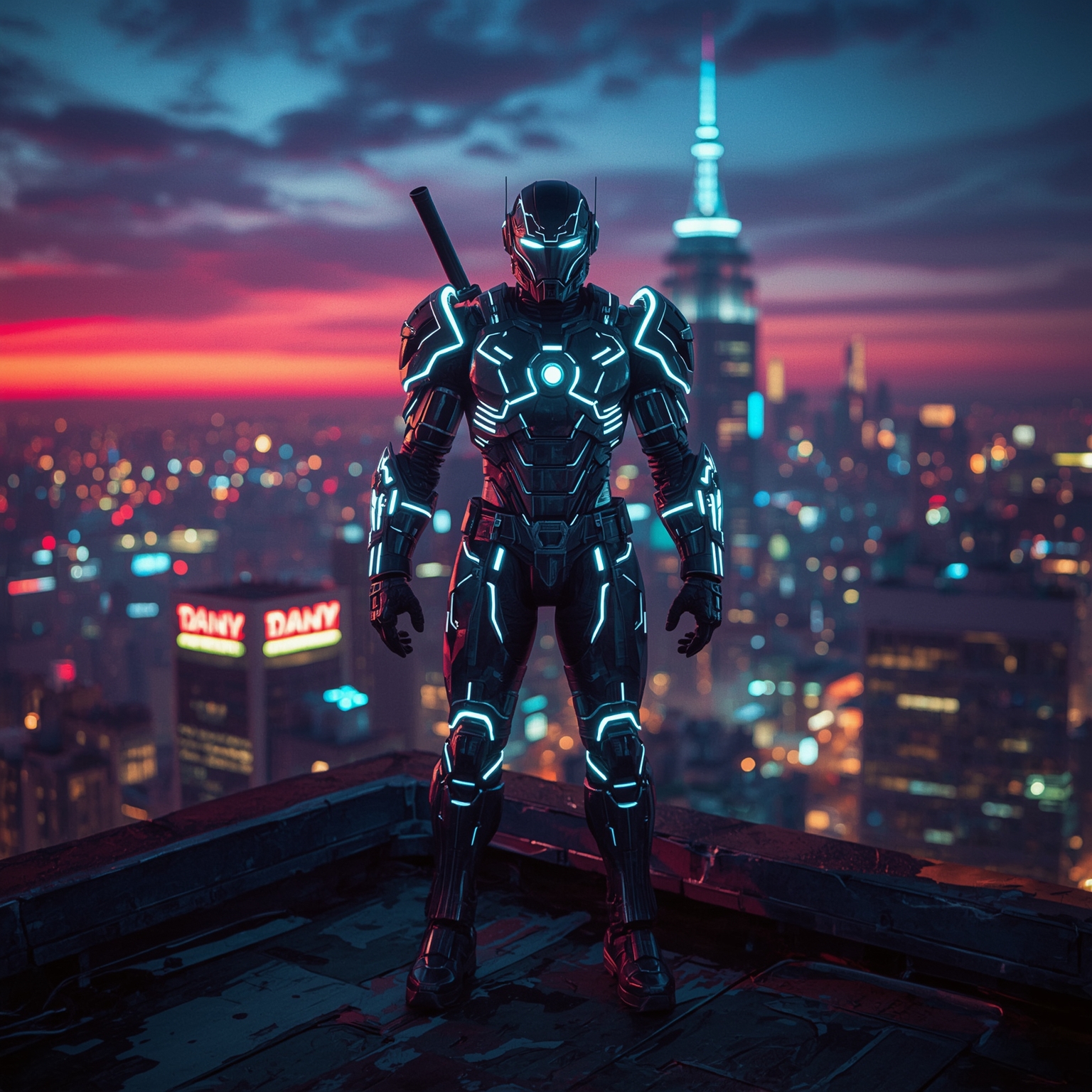
A striking element of the show lies in its protagonist’s suit: an elegant redesign that bridges the past and future of tokusatsu design. The armor retains the instantly recognizable silhouette of a Kamen Rider but incorporates sleek, futuristic detailing, some viewers comparing its aerodynamic belt and angular motifs to the aesthetics of Batman Beyond. Yanaka explained that the design’s simplicity was intentional—it had to convey, at a single glance, what kind of hero Kamen Rider is to a global audience unfamiliar with its deeper history. The creative team’s goal was thus to craft a form both universally legible and aesthetically refined.
Another inventive feature appears through Zero, the transforming robot companion who functions as both sidekick and evolution of the traditional Rider motorcycle. Possessing bilingual personality and a witty temperament, Zero quickly became a fan favorite, capturing attention as a dynamic blend of charm and utility. Yanaka revealed that while the mechanical companion might seem like a creative workaround to Japan’s stringent motorcycle laws, the intent was actually to reassert the bike’s narrative prominence within the franchise. Robot helper figures are not new to Toei’s tokusatsu lineage, but giving the motorcycle an expressive character merges nostalgia with spectacular innovation.
Small yet memorable improvisations also enrich the production’s identity—such as the unscripted moment in which Zero mimics engine sounds or the humorous recurring scene where characters dramatically roll into their van. While the latter began organically between cast and director during filming, it has already cemented itself as a beloved running gag. Yanaka, with characteristic humor, admitted that while the van may not persist, the quirks of its human passengers certainly will.
The conversation also touched upon the controversy surrounding the promotional trailer, which sparked online speculation regarding possible AI-generated background imagery. Yanaka refrained from confirming whether generative tools were employed, citing corporate confidentiality, but acknowledged Toei’s awareness of the broader debate around AI ethics and legality. His comments implied a measured stance: one that recognizes both the technological promise and the moral complexities of integrating machine creativity into human storytelling traditions.
Of equal significance is ZEZTZ’s global release strategy. For the first time in Rider history, new episodes are premiering simultaneously in Japan and across international platforms such as YouTube and Shout TV through TokuSHOUTsu. Yanaka explained that this historic shift stems from years of feedback from overseas fans yearning for synchronized official access. The producers’ commitment to simulcasting marks a step toward a more unified global tokusatsu community, ensuring that fans everywhere can share the experience together rather than waiting for delayed localizations.
Finally, reflecting on the series’ thematic contributions, Yanaka articulated his hopes that Kamen Rider ZEZTZ will serve as both a bridge and a renewal: an adventure that rekindles enthusiasm among Heisei-era veterans who long for creative daring and simultaneously invites Reiwa-era newcomers into the fold. By weaving surreal horror, psychological depth, and universal heroism into a modern myth, ZEZTZ aspires to extend the franchise’s storied legacy into an expansive, dreamlike future—one in which the Rider’s spirit, much like the engine that propels him, never ceases to roar.
Fans can watch new episodes of Kamen Rider ZEZTZ every Saturday on TokuSHOUTsu’s official YouTube channel, joining audiences around the world in witnessing the next evolution of masked heroism in motion.
Sourse: https://gizmodo.com/kamen-rider-zeztz-toei-tokushoutsu-simulcast-interview-2000669289