The current White House is widely regarded by many critics as being populated with individuals whose intellectual competence appears remarkably limited, leaving even seasoned political observers bewildered at times. Yet, amid the troubling implications of such ineptitude, there are moments when the sheer absurdity of their public statements provides an almost comedic reprieve from the gravity of the issues at stake.
A prime example of this dynamic unfolded when President Donald Trump’s principal spokesperson, the relatively inexperienced 28-year-old Karoline Leavitt, faced questions from reporters concerning newly adopted federal policies that will make it more difficult for Americans to access COVID-19 vaccinations. Rather than deliver a clear and informative response, she offered an unintended display of linguistic clumsiness. In an awkward turn, she committed a textbook malapropism—substituting an incorrect but vaguely similar-sounding word for the one she intended. With misplaced confidence, she announced: “What I will tell you is that the FDA recently revoked the emergency youth authorizations for three COVID vaccinations while simultaneously green-lighting four new COVID-19 vaccines with 2025 and 2026 formulas.”
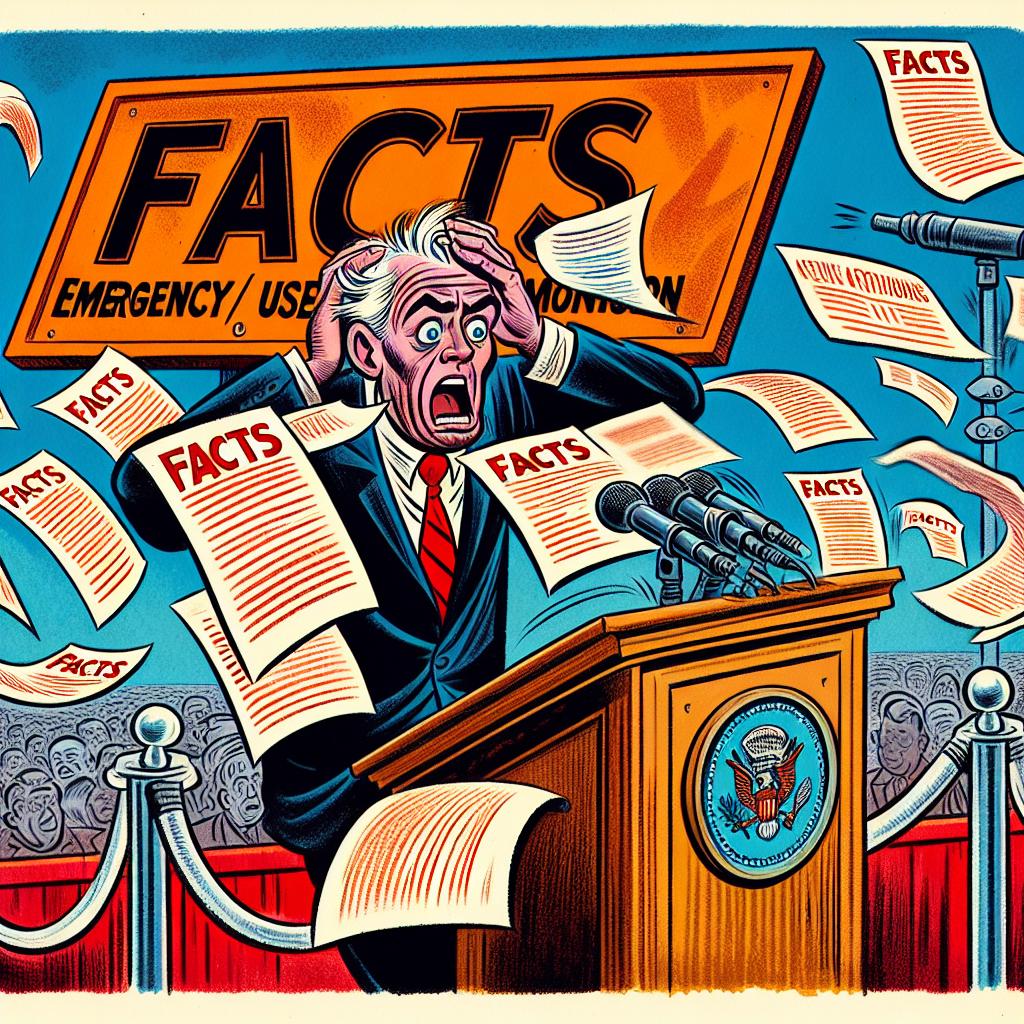
The humor in her mistake stems from the fact that the term she so earnestly delivered—“emergency youth authorization”—is entirely nonsensical in the context of federal vaccine policy. What Leavitt had clearly intended to reference was the well-established concept of an “emergency use authorization,” the regulatory mechanism that allowed COVID-19 vaccines to be deployed rapidly amidst the public health crisis. Yet the slip of the tongue, which she repeated later in the same briefing, undercut the professionalism expected of a White House press secretary. She doubled down, declaring once again, “The reason for the revocation of that emergency youth authorization is because obviously the COVID pandemic and the public health emergency is over.”
Her performance grew even more problematic when she addressed what she described as the need to “correct the record” in response to so-called misinformation originating from Robert F. Kennedy’s Department of Health and Human Services. Kennedy, a longtime and outspoken opponent of vaccines, now wields significant power as Health Secretary and, in the eyes of public health advocates, has sought to significantly erode the nation’s health infrastructure. Attempting to project authority, Leavitt asserted: “But just to correct the record, because there’s been a lot of misinformation on this, the FDA’s decision does not affect the availability of COVID vaccines for Americans who want them. We believe in individual choice. That’s a promise both the president and the secretary have made, and it’s a promise they have now delivered on.” While her polished tone suggested she was offering reassurance, the content was misleading, as it ignored the tangible obstacles that had just been put in place.
Just the day before, President Trump abruptly dismissed the director of the Centers for Disease Control and Prevention, Susan Monarez, whose principled opposition to Trump’s regressive vaccination policies had apparently reached a breaking point. Her departure, swiftly followed by the resignations of four additional senior CDC officials, signaled profound unrest within the agency. Observers interpreted these resignations as principled acts of resistance against new federal policies designed to deliberately reduce vaccine access. Indeed, the changes announced midweek established stricter eligibility requirements: going forward, only adults over the age of 65, or individuals with specific underlying health conditions rendering them highly vulnerable to severe illness, would qualify to receive vaccination. Although the long-term practical implications remain uncertain, the immediate takeaway is clear—millions of Americans who previously had access are now being excluded.
Nevertheless, rather than acknowledge these substantial roadblocks, Leavitt instead clung to a narrative that ordinary Americans faced no such barriers, insisting that “anyone who wants the shot can get it.” The disconnect between rhetoric and reality was so glaring that it underscored not only her lack of precision but also her habitual tendency to attempt damage control through sheer bluster. Such contradictions, though deeply consequential, can paradoxically offer moments of dark humor when the incompetence reveals itself so brazenly.
This was not an isolated incident for Leavitt. She has cultivated a reputation for verbal missteps—frequently employing the wrong term with unwavering confidence, as was the case when she bizarrely referred to the Indo-Pacific region as the “Indo-specific.” The press corps, long accustomed to her gaffes, now appear to endure them almost stoically, rarely breaking decorum despite the temptation to laugh aloud at what often resembles parody. Her pronouncements in defense of Trump’s policies, laced with glaring errors, read more like unintentional satire than deliberate messaging.
One only has to recall a memorable episode in April, when she triumphantly proclaimed that the employment rate was “at an all-time low.” In reality, she was clearly attempting to reference the historically low unemployment rate, yet her catastrophic stumble inverted the meaning entirely. Whether this was simply another example of her chronic carelessness or an unintentional preview of a future characterized by failing labor metrics remains an open question. In an administration that consistently defies expectations and openly disregards expertise, such uncertainty no longer seems implausible.
In sum, Karoline Leavitt continues to embody the hazards of pairing political loyalty with inexperience and shallow command of essential policy details. While the stakes of her words could not be higher—reflecting life-saving issues of public health—the defective manner of her communication reduces even grave subject matter to an occasion for ridicule. For observers, it is a troubling yet almost inevitable byproduct of an administration that elevates spectacle above substance.
Sourse: https://gizmodo.com/karoline-leavitt-makes-hilarious-mistake-while-defending-bullshit-on-covid-vaccines-2000649938