Seven months after unveiling its inaugural semi‑solid‑state battery—a breakthrough that merged the safety and longevity advantages of solid electrolytes with the flexibility of liquid components—Kuxiu has once again pushed the boundaries of portable energy storage. The company now introduces an enhanced successor, a refined iteration that not only builds upon the earlier model’s foundation but also integrates a series of thoughtful upgrades designed to improve both performance and user experience.
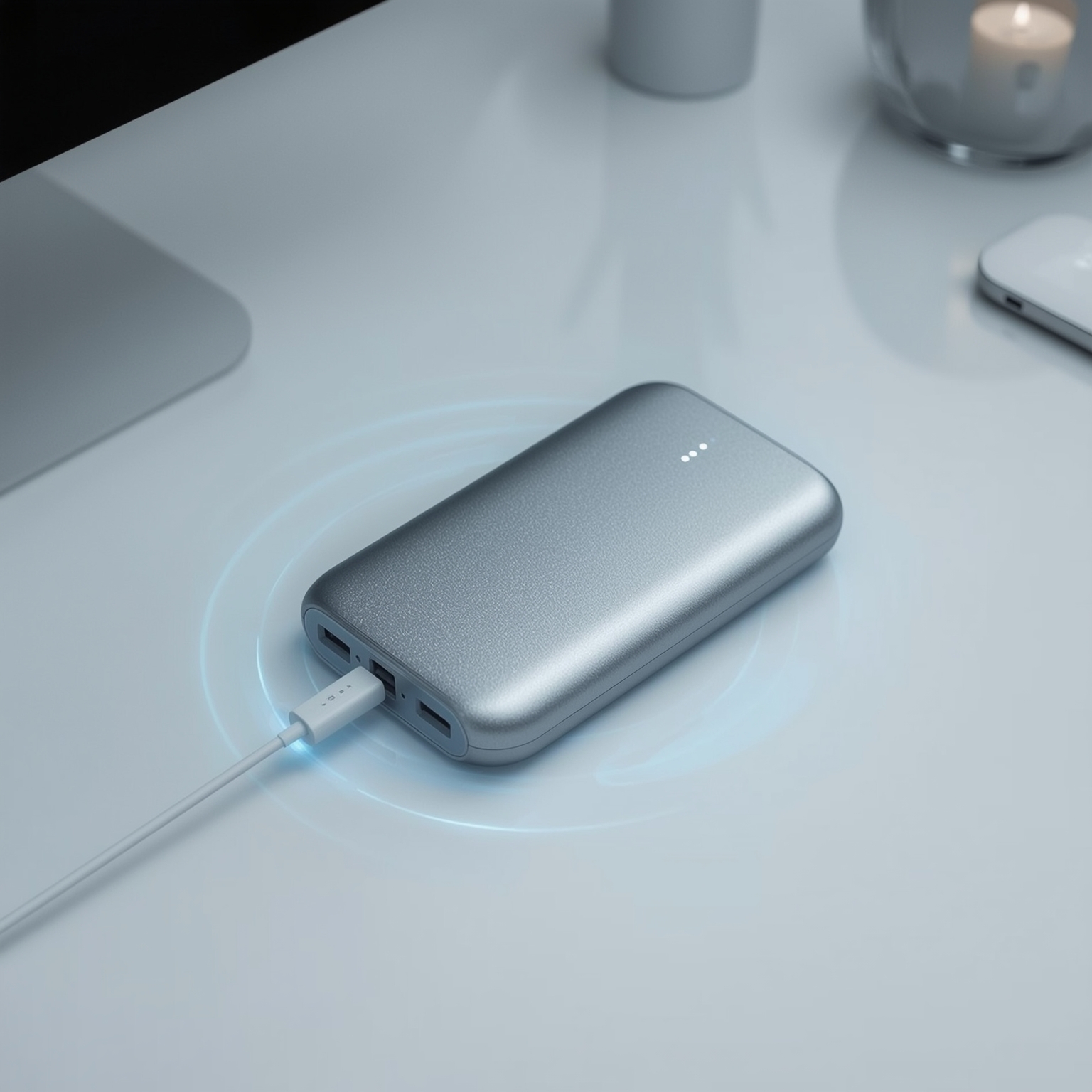
This new generation, known as the Kuxiu S3, delivers a remarkable advancement in capacity. At 10,000mAh, which corresponds to 5,000mAh at 7.7 volts for a total of 38.5 watt‑hours, the S3 effectively doubles the energy reserve previously found in its predecessor, the S2. According to Kuxiu’s internal estimates, this increased capacity can nearly double the operational life of an iPhone on a single charge—although, as with any battery‑dependent technology, the exact results will naturally vary across different iPhone models and usage patterns. This combination of higher capacity and efficiency continues Kuxiu’s commitment to optimizing energy density without compromising safety.
Beyond its larger energy reserve, the S3 adopts the Qi 2.2 standard, ensuring compatibility with the current generation of inductive wireless‑charging technologies. This specification allows it to deliver up to 25 watts of wireless power to devices that support the standard. In practical terms, users can expect faster top‑ups and reduced waiting time while maintaining the convenience of cable‑free charging. The upgrade reflects Kuxiu’s focus on aligning its products with the evolving ecosystem of modern smartphones and other electronic devices.
Naturally, the power portion comes with a physical trade‑off. Because of its greater battery capacity, the S3 weighs over 100 grams more than the earlier 145‑gram S2 model. Recognizing that this added mass could influence the attachment and handling of the device, Kuxiu compensated by enhancing its magnetic design: the number of robust N52‑grade magnets has been increased from 16 to 18. This subtle yet effective modification significantly strengthens the magnetic hold, reducing the likelihood that the power bank could be unintentionally dislodged from a phone during everyday use. Such attention to small structural improvements underscores the company’s engineering precision.
Additional refinements elevate the S3 beyond a simple portable charger. It now features an integrated kickstand, allowing users to prop up their phones conveniently for viewing or video calls while charging. A secondary practical enhancement is the inclusion of a miniature display that reports both the remaining charge capacity and the live charging status—an intuitive visual aid that eliminates any guesswork about how much power remains. Furthermore, the unit incorporates a built‑in USB‑C cable capable of delivering up to 35 watts of output power through Power Delivery protocols, enabling efficient wired charging of phones, tablets, or even lightweight laptops when needed.
As with its predecessor, the Kuxiu S3 occupies a premium price segment compared with conventional wireless power banks that offer similar capacities and basic charging speeds. However, this price differential reflects the underlying technological sophistication and the high cost of producing next‑generation semi‑solid‑state cells. Kuxiu anticipates that these production costs will gradually decline as the manufacturing process matures and scales, ultimately making the technology more accessible. At launch, the S3 is listed for $149.98, though an introductory promotional discount reduces the price to $68.99—a temporary offering designed to accelerate early adoption.
For potential buyers hesitant about the initial cost, Kuxiu emphasizes the superior longevity of the S3’s battery chemistry as a key factor in its long‑term value. While traditional lithium‑ion power banks typically begin to degrade noticeably after roughly 300 to 500 charging cycles, the S3 maintains about 80 percent of its original capacity even after approximately 1,000 cycles. This extended lifespan not only offers better performance over time but also represents a more sustainable investment, reducing the need for frequent replacements. Furthermore, the semi‑solid architecture renders the S3 considerably more resistant to the hazards of overheating, fire, or thermal runaway that can occur if a device is dropped or physically damaged. In essence, Kuxiu’s latest creation combines efficiency, durability, and safety in a single, elegantly engineered form, marking another decisive step forward in the evolution of portable energy technology.
Sourse: https://www.theverge.com/news/831365/kuxiu-magsafe-semi-solid-state-wireless-power-bank-s3