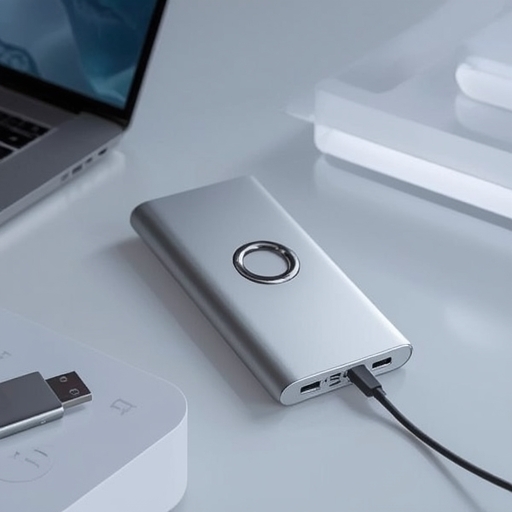
Kuxiu has made a notable return with the unveiling of its new S3 portable battery, a direct successor to the earlier S2 model that the company proudly marketed as the “world’s first” semi-solid-state power bank. The S3 serves as both a resolution to many of the shortcomings identified in the S2 and an introduction to a few fresh complications that come hand in hand with its expanded features. Among the newly incorporated capabilities, noteworthy additions include a cleverly integrated USB-C cable and a practical fold-out metal kickstand designed for convenience during use. Together, these refinements suggest Kuxiu’s intention to deliver not merely an incremental upgrade but a more thoughtfully designed and functionally comprehensive evolution of its product.
It is important, however, to recognize what these devices are and are not. Despite the bold marketing claims, the S3—like its predecessor—does not qualify as a fully solid-state power bank. Instead, it employs the same innovative hybrid chemistry as the S2, utilizing a semi-solid electrolyte composed of both liquid and solid components. This design choice makes the 10,000mAh Kuxiu S3 considerably less susceptible to the dangerous phenomenon known as thermal runaway, a major risk associated with the entirely liquid lithium-ion batteries commonly used in conventional power banks. Consequently, the S3 promises enhanced safety and improved stability during extended use. Furthermore, according to Kuxiu, its proprietary semi-solid architecture offers remarkable longevity, capable of delivering approximately twice the lifespan of a standard lithium-ion cell. This translates to about 1,000 full charging cycles before the battery’s effective capacity diminishes to roughly 80 percent—an endurance metric that far surpasses the 300–500 cycle expectancy typical of similar-capacity competitors.
While the S3 occupies a higher initial price bracket than many rival power banks of identical nominal capacity, the economics shift when longevity and safety are taken into account. Officially listed at $149.98, the model is frequently found at reduced prices—around $70 at the time of writing—making the long-term cost of ownership potentially lower than shorter-lived alternatives. This financial calculus, combined with the increased reliability and safety advantages, positions the S3 as an unusually sensible investment for those who rely heavily on mobile power solutions.
The argument for taking safety claims seriously is further strengthened by recent events across the portable power industry. In just the past year, high-profile recalls have underscored the very real dangers of lithium-based energy storage. For instance, Anker recalled nearly half a million units following reports of fire and explosion hazards, while INIU removed over two hundred thousand power banks from circulation after incidents linked to property damage exceeding several hundred thousand dollars. These examples vividly illustrate why Kuxiu’s pursuit of safer, semi-solid-state alternatives feels not only timely but necessary. It has, by all accounts, been an eventful period for power bank manufacturers—a reminder that safety assurances in this category should never be dismissed lightly.
Beyond durability and chemistry, the S3’s design refinements deserve close attention. In addition to providing twice the battery capacity of the earlier model, it integrates a sturdy folding kickstand for hands-free use, a new digital display that conveys precise charge levels and battery status, and a detachable USB-C cable that neatly conceals itself along the device’s perimeter when not required. Charging performance has also been improved, now offering 30W input capability for faster replenishment and up to 25W Qi2-certified output for wireless charging of compatible devices. For Apple users, the S3 supports MagSafe connectivity, and its strengthened arrangement of magnets provides a secure attachment that ensures proper alignment throughout the charging process.
Practical use confirms these upgrades’ value. The S3’s display communicates essential information—battery percentage and charging state—at a glance, while the flexible integrated cable eliminates the inconvenience of carrying separate cords. Though it lacks the power to fully charge larger laptops such as a MacBook Pro, it can supply several additional hours of runtime in a pinch, demonstrating versatility for everyday carry scenarios. The 35W maximum charging rate aligns with expectations for its class, striking an effective balance between power output and thermal efficiency.
However, with capacity comes compromise. The enhanced energy storage, while beneficial, introduces additional bulk and noticeable weight. Measuring 106.9 by 71 by 22.15 millimeters (4.20 × 2.79 × 0.87 inches) and weighing approximately 245 grams (8.65 ounces), the S3 adds significant heft to devices like the iPhone 15 Pro, itself around 187 grams. Thus, although perfectly reasonable for travelers or desk use, it is less pocket-friendly when functioning as a MagSafe charger. Still, the inclusion of 18 high-grade N52 magnets compensates by maintaining a stable, well-aligned attachment that prevents accidental disconnections during daily use.
Performance testing reveals real-world efficiency consistent with expectations for this type of product. Using a ChargerLAB POWER-Z C240 power meter connected between the S3 and an iPhone 15 Pro, the device managed a complete charge from empty to full, and an additional charge up to 92 percent before depleting its internal battery. This corresponds to an actual energy delivery of 31.12Wh, translating to a conversion efficiency of about 80.8 percent—an entirely typical figure considering the inherent limitations of DC/DC circuitry in compact power systems.
Functionality aside, small touches reinforce its practicality. The perimeter-embedded USB-C cable remains one of the most unexpectedly convenient features. Many modern power banks tend to emphasize style-oriented or gimmicky innovations, but the simple presence of a reliable, always-available cable arguably provides more genuine usability than any decorative enhancement could. For those who primarily recharge smartphones, wireless earbuds, or compact accessories, such thoughtful integration dramatically simplifies on-the-go energy management.
For consumers seeking a lighter, more compact option, Kuxiu continues to offer the S2 model at 5,000mAh capacity for roughly $49.99. Yet, for those requiring more endurance and modernized features such as enhanced charging speeds, a real-time display, stronger magnets, and the combination of kickstand and built-in cable, the larger S3 currently retails near $68.99—effectively doubling available power in exchange for a modest increase in cost and size. When compared to offerings from well-known brands such as Anker or EcoFlow, as well as countless lesser-known manufacturers, Kuxiu’s semi-solid-state chemistry delivers a persuasive combination of improved safety, longer operational lifespan, and total ownership value. Altogether, these qualities make the S3 an exceptionally competitive option for users searching for a reliable and forward-leaning portable battery solution that merges innovation with practicality.
Sourse: https://www.theverge.com/reviews/846094/kuxiu-s3-solid-state-power-bank-review