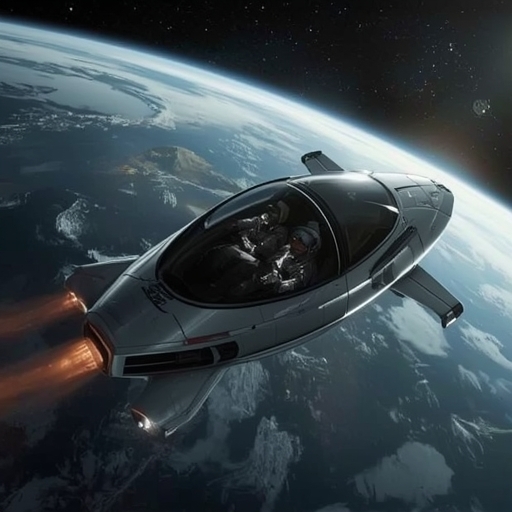
NASA is currently experiencing a profound moment of turbulence following the recent Starliner mission, as the organization’s leadership comes under intense scrutiny alongside its engineering teams. The mission, once hailed as another step forward for human spaceflight collaboration, devolved into crisis when two astronauts were left stranded in orbit longer than planned. What initially appeared to be a purely technical malfunction has evolved into a broader commentary on decision-making, communication, and accountability within one of the world’s most respected scientific institutions.
While NASA’s engineering and operations divisions are accustomed to navigating mechanical setbacks and risk management during space expeditions, this particular incident has exposed cracks beyond the hardware. The agency’s chief has publicly expressed frustration and disappointment, pointing not just to operational errors but to deeper organizational shortcomings. Such criticism signifies that fundamental leadership concerns—ranging from oversight, mission readiness evaluation, and interdepartmental coordination—may have contributed to the escalation of the problem.
The Starliner situation serves as a striking reminder that leadership in complex scientific enterprises must extend beyond technical expertise. In an environment where precision defines success, a lapse in executive judgment can ripple outward, magnifying each technical issue into a political and organizational crisis. The astronauts’ predicament has become both a literal and symbolic representation of what happens when leadership decisions fail to anticipate cascading consequences. NASA’s director, acknowledging this uncomfortable truth, has amplified a narrative of responsibility that transcends the immediate fault lines of engineering and protocol.
Historically, space exploration has thrived on interdisciplinary unity—scientists, engineers, mission planners, and directors working in synchrony under enormous pressure. This balance depends on transparent communication channels and a culture where concerns can surface early without fear of undermining optimism or institutional momentum. The difficulties surrounding the Starliner launch might therefore push NASA to revisit how authority and accountability are distributed across its vast bureaucratic structure. Leaders, in this sense, are being compelled to confront not just technical failure but the organizational climate that allows critical warning signs to be missed.
The lesson emerging from this crisis is one that extends far beyond NASA itself. In any high-stakes mission, the most sophisticated machinery cannot compensate for a lapse in leadership or a failure of judgment. Effective leaders operate as the gravitational force that holds the technical, human, and strategic elements of a project together. They create the equilibrium between ambition and caution, innovation and discipline. When that balance wavers, even the most advanced technology can falter.
Thus, the Starliner episode stands as a profoundly instructive event—an opportunity for introspection, structural renewal, and cultural growth within NASA. At its heart, the chief’s criticism encapsulates a universal truth: in the realm of discovery, courage in leadership is not only about daring to reach further into the unknown but also about recognizing the moment to pause, reassess, and address the weaknesses within. For NASA, this reckoning symbolizes not merely a technical pause but the possibility of relaunching its mission ethos with greater integrity, foresight, and unity.
Sourse: https://www.businessinsider.com/nasa-boss-boeing-starliner-failures-jared-isaacman-letter-2026-2