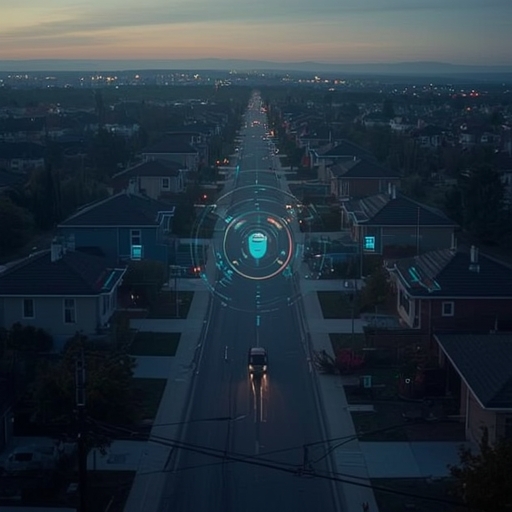
Internal communications obtained through a recent leak indicate that Ring’s upcoming artificial intelligence initiative, known as “Search Party,” could evolve into something far more complex than the original concept of recovering lost pets. According to the implications of these messages, the technology might be capable of analyzing movement and behavior patterns across entire residential areas, effectively transforming the familiar Ring ecosystem into a vast, neighborhood-level monitoring network. What began as a seemingly compassionate application—helping families locate missing dogs or cats—could become a powerful tool of pervasive observation.
The notion of community assistance has always been central to Ring’s branding, presenting its devices as tools to strengthen neighborhood bonds through shared awareness and protection. However, this latest revelation invites a deeper reflection on how far that vision should extend. If ‘Search Party’ grants users or corporate operators unprecedented access to collective visual data, its deployment could blur ethical boundaries between public safety, convenience, and mass surveillance. For instance, while one resident might celebrate faster pet recoveries or improved crime detection, another could reasonably fear constant observation, data collection, and algorithmic assessment of private life.
Such concerns go beyond the technical sphere and enter the realm of societal trust. Artificial intelligence, when implemented in public-facing systems, inherently raises questions about consent, data ownership, and misuse. In this case, Ring’s affiliation with a major technology conglomerate amplifies the debate: how might this expanded capability influence policing, insurance assessments, or corporate profiling of neighborhoods? Ethical frameworks for smart devices often lag behind innovation, leaving regulators and consumers struggling to define acceptable boundaries only after the technology is already in use.
From a design standpoint, ‘Search Party’ demonstrates the dual nature of AI-driven tools—simultaneously beneficial and intrusive. The same algorithms that could swiftly locate a missing dog may also interpret patterns of human activity, potentially associating specific behaviors with security risks. When AI begins contextualizing such data at scale, it becomes increasingly difficult to claim that the system merely “assists” users without also “evaluating” them.
Hence, as this technology nears potential release, the central question for both developers and society becomes clear: at what point does intelligent connectivity transition into monitored dependency? Maintaining community safety should never come at the expense of autonomy or privacy. To navigate that thin margin responsibly, companies like Ring must commit to transparency, informed consent, and independent oversight. The future of smart neighborhoods may depend on how sincerely these principles are upheld—not by technology’s capability, but by humanity’s restraint in wielding it.
Sourse: https://www.theverge.com/tech/880906/ring-siminoff-email-leak-search-party-expansion