At seventy-two, I find myself kneeling in the raw chill of my November garden, my old jeans soaked through with damp earth as I wrestle stubborn bishopweed from the cold soil. The scene feels almost symbolic—me, digging through the hardened ground, trying once again to uproot what continually returns. Some things in life, I’ve learned, are indefatigable in their persistence: invasive weeds, old griefs that refuse to fade quietly, inherited family dynamics that echo through generations, and those quietly haunting internal narratives that insist life should have unfolded according to some grander design.
I pause for a moment, my knees pressed into the dirt, and glance toward the brown paper bag beside me, heavy with tulip, crocus, and daffodil bulbs whose planting I had postponed weeks past their ideal season. I’m late, as usual. That phrase captures so much more than tardiness—it describes a lifetime of best intentions slightly out of sync with reality, of carefully imagined plans colliding with the ungovernable nature of human life. Four generations of my family have endured divorce: my parents before me, my own marriage once upon a time, my son’s, and now my grandchildren who must navigate the lingering ripples of loss and reconstruction. It’s not the tidy lineage any of us envisioned, yet it’s the story we inhabit—tenderly, with humor when we can manage it, and with acceptance when laughter fails.
I have grown into the matriarch of this sprawling, chaotic constellation of relatives. Our family map extends outward in every direction—nephews and nieces, their children, in-laws, ex-spouses, half-siblings, and step-grandparents. Once, I believed I could serve as the glue holding each fragment together, as though bound by some unspoken Sicilian covenant that blood and loyalty override all discord. Family, I thought, meant endurance—through divisions, betrayals, clashing beliefs, and political disagreements alike. In those days, I mistook unity for control.
Now, with another holiday season drawing near, I find myself in the familiar logistical labyrinth of determining who will host and when. Will the gathering take place at my first husband’s house, presided over by his current wife? Or perhaps at my former daughter-in-law’s, where my son’s children feel most at home? I navigate endless digital conversations—one chain of emails, another web of text messages—each thread representing yet another piece of our far-flung family puzzle. I try to ensure that no one, whether through oversight or quiet resentment, feels intentionally excluded. It’s a careful balancing act: competing calendars, emotional landscapes, and multiple households all requiring their share of attention.
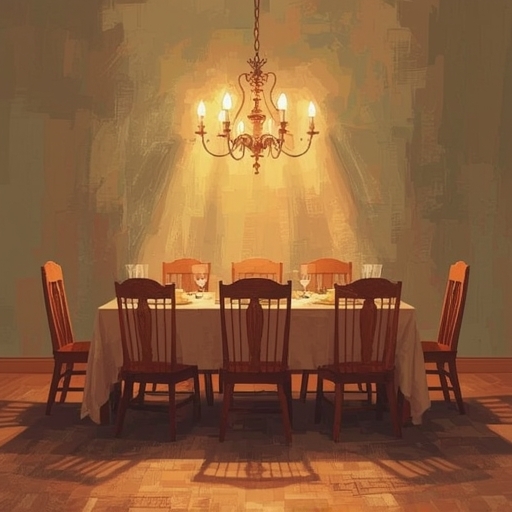
In my own childhood during the 1950s, things appeared simpler, or perhaps only seemed so through the soft focus of nostalgia. Our extended family gathered around a holiday table so long it had to snake from the dining room into the living room, supported by folding tables and chair mismatches pulled from the basement. Uncle Tony’s booming voice had to traverse the entire length of the feast to reach Aunt Lee at the other end. My mother, exhausted but dutiful, would sigh aloud from the steamy kitchen, questioning why she always ended up as the host. I remember lifting the velvet-lined silverware box—heavy in my child hands—while my father raked leaves outside, chatting companionably with the neighbors over the yard fence. Back then, divorce was rare enough to feel almost unthinkable.
Today, the familial landscape looks nothing like that single continuous table of my youth. Instead, our tables have multiplied and migrated, stretching across different houses, cities, and emotional terrains. The holidays have become an intricate choreography of coordination and compromise, of redefined togetherness. Over time, I’ve learned that expectations must be held loosely, like something fragile that can easily break under pressure. The images of idealized family harmony that Norman Rockwell once painted have given way to something far less symmetrical but more real. Love, I’ve discovered, doesn’t always look idyllic—it often appears in patched-up forms, imperfect gestures, and resilient attempts. Even when the planning leaves me dizzy, I take a quiet pride in knowing that despite it all, we continue to gather—somewhere, somehow, around some table.
When the complexity becomes too dense to bear—the overlapping group texts, shifting expectations, and the muted weight of shared sadness—I retreat outdoors. The garden, steadfast and forgiving, expects nothing of me. It requests no RSVPs, no apologies for lateness, no logistical precision. It simply welcomes me back to the soil, asking only for my presence and labor. Among roots and stems, I’m reminded that life doesn’t demand orderliness to remain alive.
Still, I struggle with change, perhaps more than I care to admit. Part of me longs for a world in which traditions remain constant and the people I love never alter or drift. As a child, I believed that if I could just discern the right formula for goodness and love, life would unfold without pain or risk. I didn’t understand then how self-contradictory that hope was. Even as the years gathered behind me, I harbored the illusion that aging would deliver serenity, that one day the turbulence of emotion and loss would finally quiet. But denial, I’ve come to see, has a deceptive strength.
The therapist within me still seeks meaning in every rupture, still hungers to impose psychological order where chaos reigns. Yet healing, both personal and familial, defies neat conclusions. At best, we tidy up after each emotional storm, sweeping the debris and gathering the fallen leaves, knowing full well another tempest will come.
Grief often sits beside us at every family table. My instinct is to protect everyone from sadness, to wrap the entire clan in a blanket of comfort so soft that no one feels the bite of pain. I dream of transmuting all sorrow into security and calm, sculpting a collective peace out of fractured pieces. But life teaches otherwise: the only way to reach a true sense of “it’s all right” is by acknowledging when it isn’t, by accepting vulnerability as a form of courage, and by allowing those who love me to witness my imperfection. My task now isn’t to manage or fix the people I love, but to stand beside them—to let go of control without fading into disconnection.
My grandchildren observe everything. With their alert eyes, they study the complex ballet of our relationships—how we argue, reconcile, and choose tenderness despite history. They are learning, perhaps unconsciously, how love behaves after its supposed endings. At times, I think they confront emotional ambiguity with more grace than the adults do, though I sometimes wonder whether their quiet acceptance is grace or simply youthful helplessness in the face of inherited complexity. I worry about what lessons they’ll carry forward, what stories will endure in their recollections.
Yet what I do know with growing certainty is that their instinct to connect, to keep reaching toward one another, endures. Their love seems independent of tidiness; it relies instead on presence and on the belief that affection can stretch to include the unruly and the unexpected. They make space for everyone, not out of duty but out of intuitive understanding. Perhaps that is the quiet wisdom born of growing up amid blended histories—that when perfection isn’t expected, love is freer to expand.
What strikes me most deeply isn’t the breaking apart of families—that has become almost ordinary—but the steadfast refusal to give up, the continual striving to knit some new version of connection. The family I belong to is wide, imperfect, and beautifully human: ex-spouses who still appear with homemade pies, step-grandparents welcomed to the table, gatherings spread over multiple homes none of which contain everyone but all of which hold someone who loves.
As I gaze across my garden, aware that the bishopweed will inevitably return no matter how thorough my efforts, I take comfort in the predictability of nature’s resilience. The roses bloom according to their own calendar, indifferent to mine. The bulbs, even those I plant late, will eventually push their tender green through the cold ground when spring arrives. There’s solace in that ungovernable rhythm—a steady reminder that neither life nor love obeys our timetables but continues, with persistence and grace, all the same.
Virginia DeLuca, therapist and author of *If You Must Go, I Wish You Triplets*, reflects on the evolving forms of family, the art of acceptance, and the ways love reshapes itself through time.
Sourse: https://www.businessinsider.com/why-im-rethinking-traditions-as-divorce-reshapes-my-family-2025-12