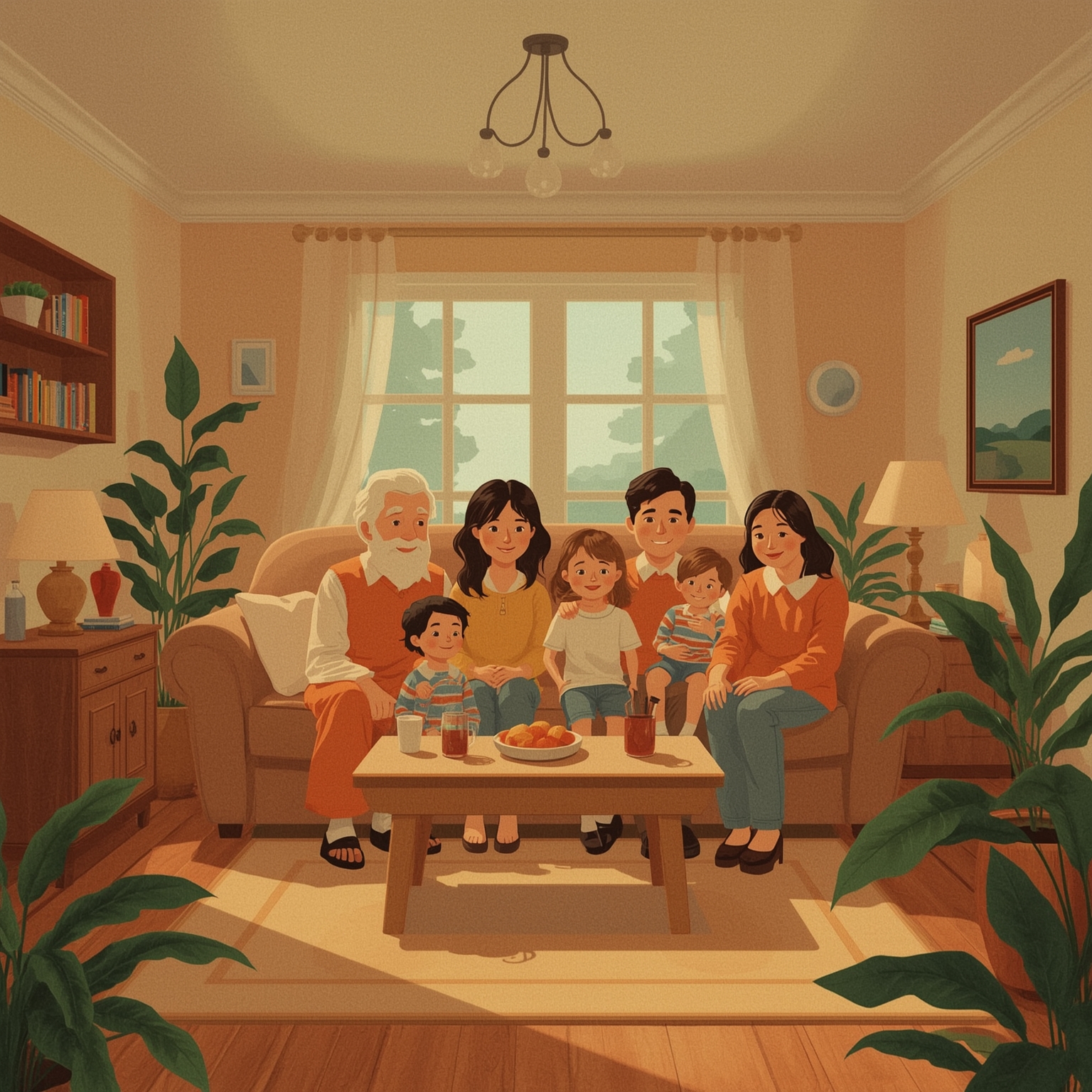
Just two months after I had brought my fifth child into the world—a delivery that was anything but calm or predictable, marked by the terrifying complications of a placental abruption, the premature arrival of my tiny baby, and an emotionally draining stay in the NICU—my parents moved in with us. Their arrival, at least in theory, was meant to be a temporary arrangement, a short bridge between selling their old house and settling into the new one they had just purchased. For a while, that plan made perfect sense. However, when the purchase of their second home fell through unexpectedly, they found themselves returning to our basement for another short-term stay. None of us could have guessed that what was supposed to be another brief period of transition would be upended by the global chaos of the COVID-19 pandemic, stretching what began as a temporary solution into a deeply transformative, two-year, on-and-off experience of shared living.
Over those two years, my parents’ presence in our home shifted from a matter of practicality into something much more profound. There were certainly moments of tension, the natural friction that arises when multiple adults share a household, but the experience ultimately became one of the greatest blessings of my adult life. I often tell people that I would welcome them back without a second thought—and I truly mean it. At the outset, their help came to me at one of the most fragile and overwhelming points in my life, right after the birth of my fifth child, when exhaustion and recovery consumed nearly every waking moment.
During that first period of living together, my parents stayed for about three months, arriving just as the school year began for my four older children. Their timing could not have been better. Although both of them maintained demanding full-time jobs, my mother always carved out time in the late afternoons and evenings to help me juggle the chaos of after-school activities, homework, and bedtime routines. The move coincided with the hectic fall sports season—a reality I had naively underestimated. Balancing a newborn’s unpredictable needs alongside four very active older children was far more than I had anticipated. My mother’s presence was nothing short of lifesaving: she folded mountains of laundry each morning, took over the baby’s first feeding so I could sleep just a little longer, and gently reminded me that I didn’t have to do everything alone. Her quiet acts of service filled in the gaps where my strength ran thin.
Some of my most cherished memories from that time are simple, heartfelt moments—like the day my daughter’s very first smile was captured not by me, but by her grandmother. I woke up to a text message from my mother with a picture of my baby beaming delightedly from the couch, a radiant grin that seemed to embody pure joy. Even though I had missed the actual moment, it became a treasured snapshot of the bond already forming between them, and it remains one of those small, golden memories that mothers and grandmothers hold dear.
After that first stay, my parents moved into the condo they had purchased, just before Christmas. By then, I had recovered both physically and emotionally, and I had at last begun to settle into a manageable rhythm as a mother of five. Their presence had coincided perfectly with my period of greatest need, and I often reflected on how seamlessly things had aligned for all of us. Yet, in a turn of events none of us expected, the condo didn’t work out. About a year later, they called with news that they were selling again and would need a place to stay for a short while—just a couple of months, they said—until they could finish building their new home.
Without a moment’s hesitation, my husband and I welcomed them back. But soon after, the pandemic swept across the world. Construction came to a screeching halt; supply chains faltered, and everything—from labor to materials—became scarce, costly, and uncertain. What had been intended as a one- or two-month stay gradually turned into an open-ended living arrangement.
This second time around was different. I no longer had a newborn consuming all my energy, the kids were older and more independent, and I had returned to work in more serious capacity. Naturally, that brought new challenges to the shared living dynamic. The most difficult adjustment for me was the loss of privacy and quiet space. I had become accustomed to early mornings spent alone, sipping coffee and settling into my writing or work before the household woke. My mother, however, was also an early riser—and a rather cheerful conversationalist even before dawn. The solitude I once treasured quietly dissolved into friendly chatter over the coffee pot at five in the morning. I also sometimes found myself silently frustrated, feeling that I carried a greater share of the cooking and tidying while she enjoyed more of the playful moments with the children. Yet, any resentment I felt rarely lasted long. My parents had generously insisted on contributing $500 a month toward household expenses—both rent and groceries—which lightened the financial load more than I had realized at the time.
And truly, the blessings outweighed any frustrations by far. These two years offered something invaluable: a rare period of multigenerational togetherness that deepened our family’s connections. My youngest daughter, who had been an infant when they first moved in, essentially grew up with her grandfather—”Papa”—becoming a daily presence in her life. Each morning, she would climb into his lap to snuggle and watch her favorite cartoons, their laughter filling the quiet corners of the living room. My son found in my father a constant basketball partner; endless driveway games became their special ritual. Evenings often ended with all of us gathered around the dinner table, sharing food, stories, and small joys that might otherwise have been lost to the rush of daily life. And as trivial as it may sound, my mother’s efficiency in the kitchen was unmatched—no one, I quickly learned, could load a dishwasher quite like her.
Eventually, the pandemic disruptions persisted, and construction of their new home remained indefinitely stalled. By the following year, my parents decided to rent an apartment of their own, believing it was time to allow everyone a sense of renewed space and independence. At the time, I agreed—it seemed like the natural conclusion to a long and extraordinary chapter. Yet, looking back now, nostalgia paints those years in a deeper light. If given the chance, I would welcome them back in a heartbeat. Those shared seasons of life were chaotic, yes, but they were also radiant with togetherness.
My children gained something irreplaceable: a daily closeness with their grandparents that few kids get to experience. I received both tangible and emotional support—from an extra pair of hands managing the endless laundry and dishes to the quiet reassurance that I wasn’t facing life’s overwhelm alone. Even the financial aspect lingers as a reminder of their generosity; in today’s world, that additional $500 a month would make an enormous difference.
Ironically, as fate would have it, my parents have since decided to sell the house they eventually built and have once again taken up residence in a basement—but this time, with my younger sister. I’ve pleaded with them to return, promising they could enjoy the freedom of travel or even purchase a vacation home, using our basement merely as a cozy landing spot. But so far, they’ve gently declined. Perhaps their memories of sharing space with us carry a slightly different flavor than mine. Even so, when I reflect on the experience, I am convinced it was one of the greatest gifts a family can share. Living with one’s parents as an adult can be challenging, yes, but it can also be profoundly rewarding—an opportunity to nurture love across generations, to create lasting memories, and to discover, once again, the immeasurable value of family. The only essential advice I would offer to anyone considering such an arrangement is simple yet vital: set boundaries clearly, especially around personal space and alone time, so that sharing a roof can truly become an experience of harmony, not tension.
Sourse: https://www.businessinsider.com/grandparents-moved-in-benefits-multigenerational-living-2025-10