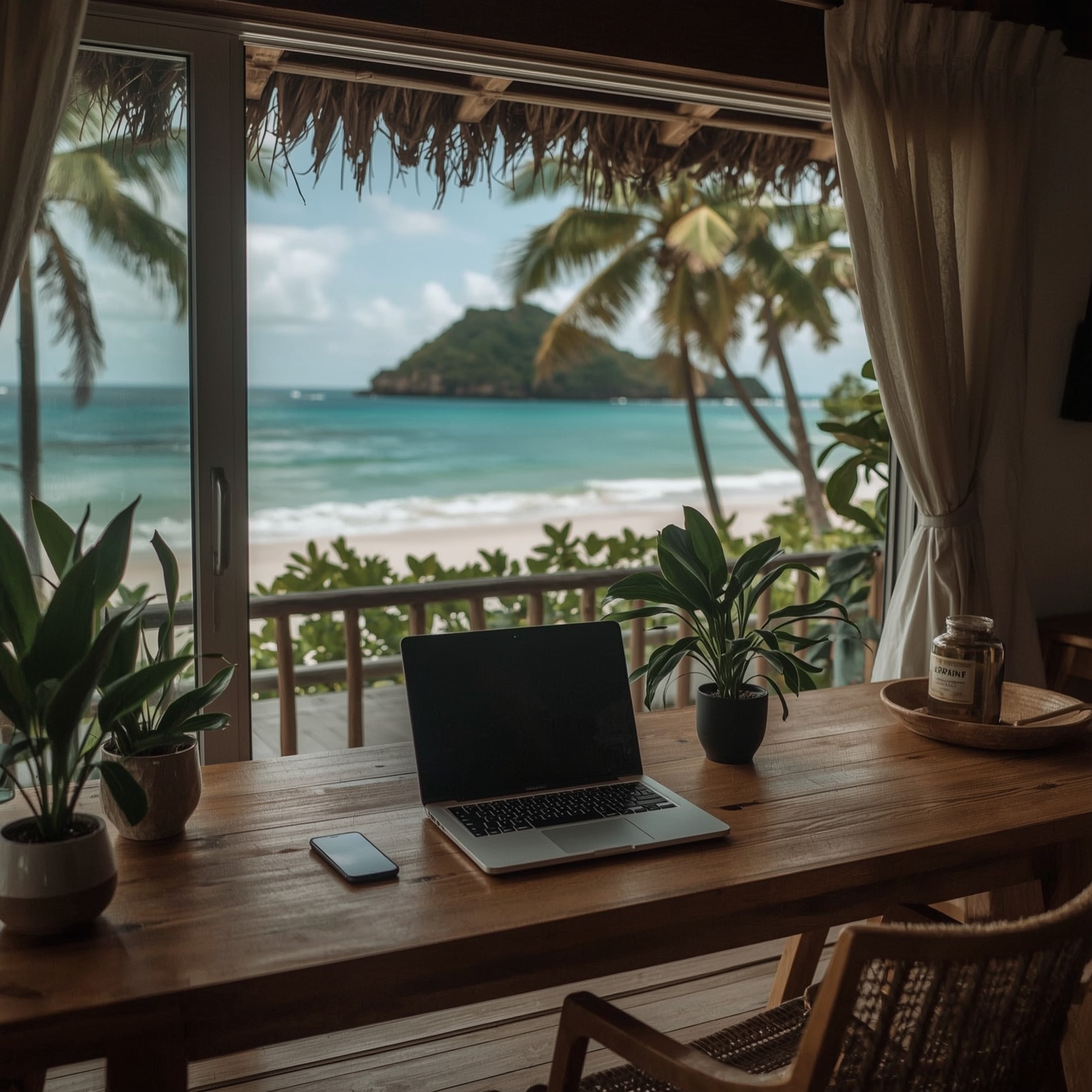
Only a year ago, I found myself drained to the core, utterly depleted of energy and inspiration. After spending decades immersed in the unrelenting editorial worlds of London, Hong Kong, and Dubai—cities that never seem to sleep and where deadlines dictate every heartbeat—I finally hit a wall. What others might casually label a midlife crisis, I consciously chose to interpret as a deliberate act of self-preservation, a necessary intervention intended to restore equilibrium to a life that had long been out of balance. That moment of reckoning ultimately carried me eastward, toward Thailand, a place that promised both serenity and renewal.
My period of recalibration began in Bangkok, a metropolis vibrating with constant motion, rich aromas, and unending noise. Yet it was not until I journeyed southward to the tranquil coasts of Phuket that I truly rediscovered stillness. There, among palm-fringed horizons and the rhythmic hush of the sea, I finally grounded myself in peace. My purpose was simple yet profound: to cease the mechanical forward rush, to reset my direction, and to reconstruct a life designed entirely on my own terms.
Naturally, as I set out to pursue this newfound autonomy, a practical question hovered persistently in my mind: How much, exactly, does such freedom cost? Determined to answer it, I plunged into hours of online exploration—poring through digital forums, expatriate testimonials, and even the advice of AI assistants. Regardless of the source, the same conclusion surfaced repeatedly: with a budget of approximately $1,500 a month, one could live not merely adequately, but quite comfortably in Thailand.
My largest expense was, unsurprisingly, accommodation. Having endured exorbitant rents in global cities for many years, I was almost startled to find how far my money could stretch in Phuket. My initial concern—where to live—quickly evolved into a delightful range of options. I could secure a simple, functional studio for as little as $200 a month, or reside in a sleek, contemporary condominium for about $1,000, complete with all modern conveniences. I settled on a middle path: a serviced apartment within a moderately priced hotel in Kathu, a verdant suburban enclave tucked away from the congested tourist areas of Patong. The setting, lush with foliage and characterized by its calm pace, suited me perfectly.
For roughly 13,000 Thai baht—about $400 per month—I enjoy a fully serviced environment that includes utilities, high-speed Wi-Fi, regular cleaning, and privileges like an infinity pool overlooking the treetops and a well-equipped gym. The rent fluctuates modestly between high and low tourist seasons, but it averages around that figure. Most liberating of all, I am not bound by a restrictive lease; with merely two weeks’ notice, I can move on whenever wanderlust calls.
Life’s small essentials are remarkably affordable. In Thailand, convenience stores such as 7‑Eleven and Tops Daily serve as miniature lifelines. These ubiquitous shops brim with nearly everything required for daily happiness and health: freshly cut fruit, yogurt and probiotic drinks, vitamin supplements, bottled water, soft drinks, and an abundance of snacks. I can fill an entire basket without the faintest anxiety over the total cost, rarely exceeding ten dollars per day. My phone credit is topped up at the counter as well, with a prepaid mobile plan offering unlimited calls and high-speed data for about $10 monthly—utterly freeing compared to the tethered contracts of Western telecoms.
Transportation in Phuket offers similar simplicity. While many residents rent motorbikes for around six dollars per day, I opted to rely on Grab—the local ride-hailing application equivalent to Uber. A short beach-bound trip on a GrabBike typically costs only a dollar or two, and for longer distances I can summon a comfortable car at minimal expense. Given that I work remotely and that most necessities lie within walking distance, my transportation outlay remains admirably low, and I benefit from the added health advantage of daily walking.
Culinary life in Thailand might be the greatest revelation of all. Eating well here is both an aesthetic and economic pleasure. As someone who never advanced far beyond simple cooking, I take profound delight in accessing restaurant-quality meals at street-level prices. A hearty plate of pad Thai from a friendly roadside vendor sets me back just two dollars. On busier evenings, I indulge in deliveries from local eateries via a food app, which often includes free delivery and enticing discounts. For around three dollars, I receive an expertly prepared meal—perhaps a crisp papaya salad or spicy basil pork, both intensely flavorsome. My monthly food budget averages $250, encompassing everything from morning fruit sourced at vibrant markets to satisfying dinners brought directly to my doorstep. Never in my life have I eaten more nutritiously or with more pleasure, all while staying firmly within a modest budget.
Maintaining physical and personal well-being in Phuket is equally attainable. The neighborhood gym I attend is not merely functional but genuinely impressive—multi-level, outfitted with advanced fitness equipment, and offering structured classes like Tabata and high-intensity interval training twice weekly. I supplement those sessions with strength training on alternate afternoons. While the standard membership runs close to $50 per month, I was fortunate to renew during my birthday month, receiving a six-month package for only $115, a bargain difficult to replicate elsewhere.
Self-care extends far beyond physical training. After intense workouts, I often indulge in a rejuvenating massage—an hour of expert muscle therapy costing around $10. Grooming, too, is attractively affordable; twice a month I visit a nearby barbershop known for its rock‑and‑roll charm, where a meticulous haircut costs about $9. Even treatments that once seemed extravagant luxuries back in the West, such as cosmetic procedures, are entirely accessible here. For instance, Korean Botox starts around $125 for 50 units, proof that a carefully managed budget in Thailand in no way precludes the pleasures of self-maintenance—or a touch of vanity.
Altogether, maintaining my lifestyle in Phuket costs roughly $1,000 a month when accounting for rent, food, utilities, and transportation. This budget comfortably leaves an additional margin for indulgences and leisure—such as spontaneous weekend escapes to enchanting nearby islands like Koh Phi Phi. In sum, a $1,500 monthly allowance not only supports a life of ease and stability but also funds experiences rich in beauty, health, and personal freedom. To live in Thailand, and particularly in Phuket, is to inhabit a world where affordability meets fulfillment, where every sunrise promises renewal, and where one can finally live—not merely exist—on one’s own precise terms.
Sourse: https://www.businessinsider.com/moved-to-phuket-thailand-affordable-living-budget-rent-low-expenses-2025-10