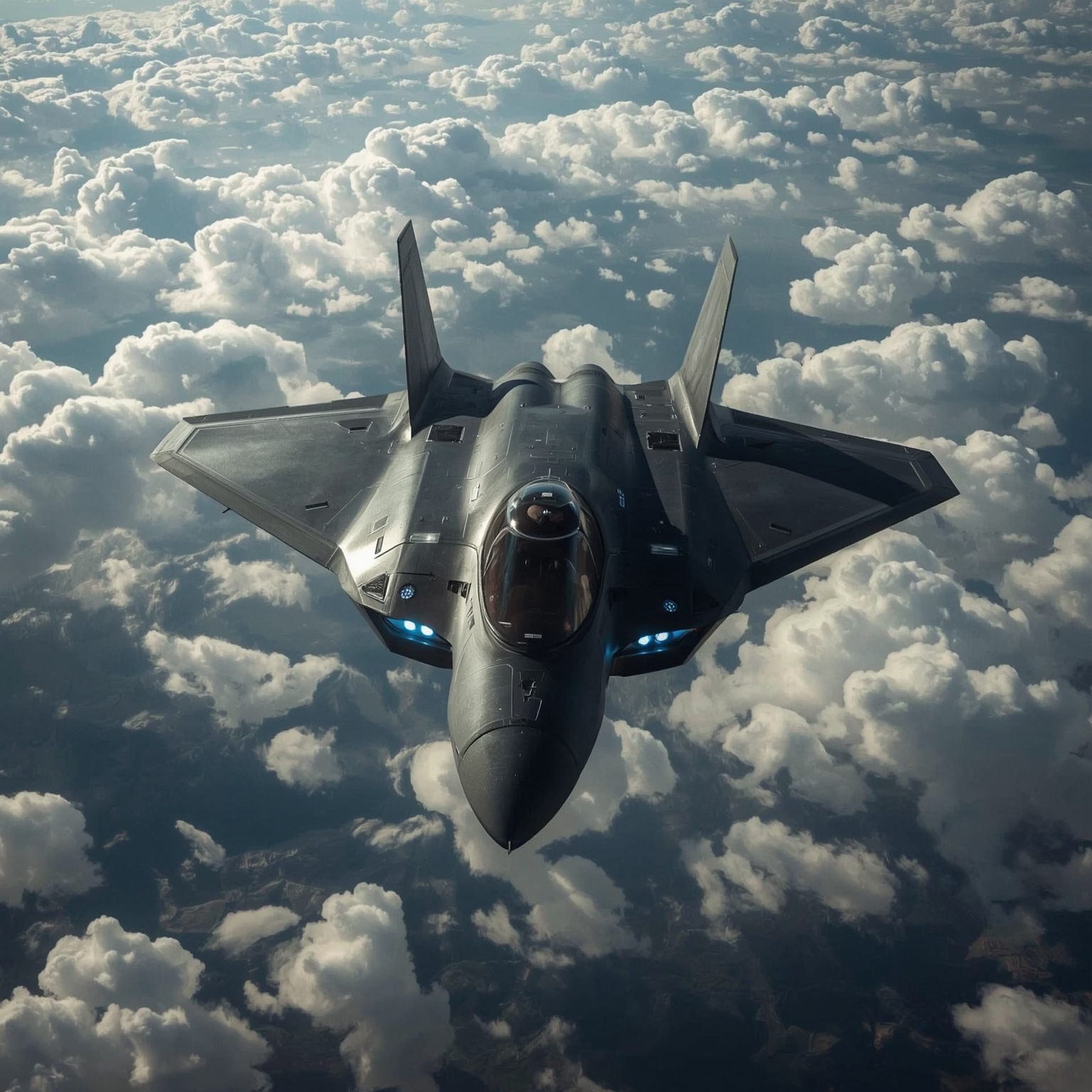
Lockheed Martin has disclosed that the United States government has expressed serious interest in what the defense contractor refers to as its “fifth-generation-plus” concept for the F-35 stealth fighter jet. This initiative envisions incorporating several sophisticated technologies initially engineered for Lockheed’s unsuccessful proposal to construct America’s sixth-generation combat aircraft. According to Chief Executive Officer Jim Taiclet, discussions with the Pentagon are currently unfolding at a remarkably high level of engagement, extending all the way to the senior echelons of the Department of Defense. He added that he expects the concept to be formally evaluated at the White House in the near future, where decision-makers may deliberate on its potential adoption.
Taiclet, speaking candidly during his appearance at the Morgan Stanley Laguna Conference, acknowledged that no contractual obligations have yet been secured. However, he stressed that if the program moves forward within the parameters of the Defense Department’s approved structure, a reengineered F-35 could, step by step, approach the performance threshold associated with sixth-generation aircraft. Among the suite of enhancements being contemplated are cutting-edge stealth coatings to improve radar evasion, more lethal and flexible weapons systems, and an advanced propulsion design. Collectively, these elements inch the jet toward sixth-generation capability, which represents the pinnacle of Western aerospace design, marked by the use of revolutionary materials and designs developed through supercomputer-powered simulations. By contrast, the so-called fifth-generation systems—such as the original F-35—reflect advancements that trace their origins back to the 1990s and the early years of this century.
Unlike the enormous costs inevitably linked to the development of a clean-sheet sixth-generation fighter, the revamped F-35 would present itself as a far more cost-efficient alternative. Taiclet highlighted this fiscal dimension at the conference, explaining that the “fifth-generation-plus” proposal could undermine the fiscal rationale for rival Boeing’s sixth-generation F-47 fighter program. Lockheed Martin’s stock prices had experienced initial volatility following the company’s defeat in the Air Force’s F-47 selection earlier in the year, but they subsequently rebounded by approximately eight percent, a recovery that reflects renewed investor confidence. While government officials have not publicly confirmed any interest in the concept, Taiclet’s remarks were the strongest signal yet that meaningful discussions are indeed taking place.
The company’s intention to pursue an upgraded F-35 was first signaled in April, when Taiclet likened the improvements to upgrading a sturdy, proven race car into a high-performance Ferrari—a metaphor designed to emphasize continuity in design alongside quantum leaps in performance. Lockheed’s unique expertise, gained through decades as a leader in stealth technology development, would enable it to repurpose advanced innovations conceived for its failed sixth-generation platform into the new aircraft. This pivot follows the Pentagon’s decision earlier in the year to award Boeing the much-coveted contract for the F-47, a stealth jet envisioned as the Air Force’s most advanced aerial asset, capable of entering service around 2029. For Lockheed, the rejection marked a major strategic setback, given its long-standing dominance in the domain of stealth fighters. Publicly, the firm expressed disappointment in losing, but it also quickly unveiled its counter-strategy: elevate the F-35 with upgrades that could deliver as much as 80 percent of the F-47’s capabilities, all while keeping overall expenses to roughly half the cost.
The conversation further widened when former President Donald Trump indicated personal enthusiasm for an improved F-35 earlier in the year. However, Trump’s description envisioned a far more radical redesign involving dual engines rather than the traditional single-engine configuration. Aviation experts, including a retired Air Force pilot with direct program experience, underscored that such a modification would, for all practical purposes, result in an entirely new aircraft, demanding extraordinary time and outlays likely spanning decades.
Lockheed Martin envisions a future where as many as 1,000 to 1,500 American F-35s could be modified to incorporate “fifth-generation-plus” features. This figure derives from the fact that roughly two-thirds of the 2,300 F-35 units ordered but not yet delivered will serve in U.S. forces, creating a vast pool of airframes eligible for technological retrofitting. Taiclet indicated that conversations with federal authorities demonstrate “substantial interest in modernization”—an engagement that extends upward to administrative and White House levels—and described the back-and-forth nature of these discussions as both responsive and energetic.
Yet, he also cautioned that any resulting contracts may not be easily observed through standard public reporting mechanisms. The sensitive and classified components of the agreement, particularly those touching on national security imperatives, will likely restrict disclosure. Nevertheless, Taiclet declared himself confident regarding the proposal’s merits, maintaining that the effort offers undeniable value. By infusing advanced digital and physical systems—hallmarks of sixth-generation technology—into aircraft that are already being manufactured, Lockheed asserts it can deliver transformative benefits without imposing the burden of full-scale sixth-generation expenses. This pragmatic strategy could prove particularly compelling in the context of an ever-tightening defense budget, where maximizing value is paramount.
The existing fifth-generation F-35 first entered operational service in 2015 and has since become a linchpin of U.S. and allied airpower. By comparison, the Air Force’s sixth-generation F-47, intended to exceed all prior stealth designs in sophistication, may not reach the operational stage until the end of this decade, potentially around 2029. Against that timeline, the Lockheed Martin “fifth-generation-plus” path represents not merely an interim solution, but arguably a bridge that sustains advanced capability while awaiting the maturation of entirely new fighter classes.
Sourse: https://www.businessinsider.com/lockheed-says-gov-interested-f-35-upgrade-fifth-generation-plus-2025-9