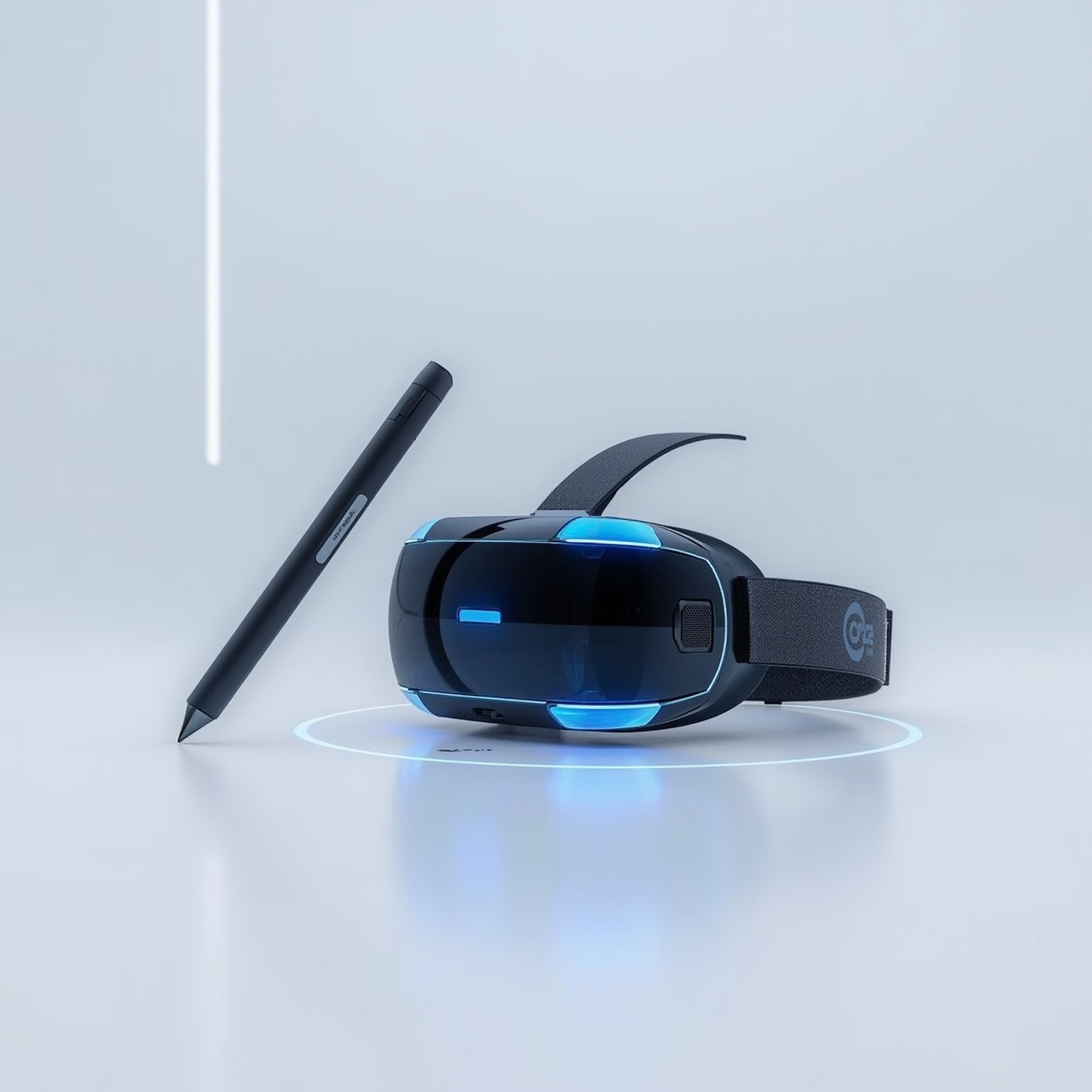
Logitech has unveiled a sophisticated new tool designed to enhance the creative possibilities of Apple’s Vision Pro headset — a digital stylus that redefines how users write, draw, and interact with three-dimensional content in mixed reality. Named the Logitech Muse, this innovation takes the familiar form of a pen-shaped controller yet is purpose-built to extend human dexterity into virtual and augmented environments. Through its intuitive design, the Muse allows users to behave as they would with a real brush or pencil: sketching detailed illustrations, painting expressive strokes in midair, making handwritten annotations within apps, or sculpting intricate 3D designs that seem to float in space. By replicating the natural gestures of traditional artistic tools, it provides a more fluid and lifelike interface than relying solely on hand-tracking gestures, greatly increasing comfort and precision during extended creative sessions.
Initially introduced to the public in June, the Logitech Muse has now transitioned from announcement to commercial availability, marking its next step in Logitech’s expanding ecosystem of spatial computing accessories. The stylus is officially available for preorder at a retail price of $129.95, with the first shipments expected to begin on October 22nd. Logitech has equipped the Muse with several notable features that enrich the immersion and tactile realism of digital artistry. Among these, real-time haptic feedback stands out — delivering gentle vibrations or pulses that mirror the sensations of drawing on various surfaces. A pressure-sensitive tip further enhances the control, allowing creators to vary their input with precise changes in applied force, whether pressing against a tabletop or drawing strokes in the air. Complementing these is a force-sensing button that dynamically adjusts line thickness or brush intensity while users sketch in three-dimensional space, empowering artists to blend technical finesse with expressive motion.
At its price point, the Muse mirrors its sibling product, the Logitech MX Ink, which the company launched in the previous year as a nearly identical stylus for Meta’s Quest headsets. While both devices share a remarkably similar form and ergonomic structure, subtle distinctions separate them. The Muse employs a slightly revised button arrangement designed to better align with the interaction model of Apple’s Vision Pro. More significantly, the MX Ink offers two distinct charging options — it can be powered via a USB-C connection or through its complementary Inkwell Charging Dock that doubles as a stylish desktop accessory. By contrast, the Muse supports USB-C charging only and does not include any docking station within its packaging. Although this simplifies its overall design, it also introduces a minor inconvenience: without a dedicated dock or holder, the stylus may be easier to misplace, a frustration many Apple Pencil owners will immediately recognize. Despite this, Logitech’s Muse represents a thoughtful attempt to blend precision engineering with artistic sensibility, bringing a more human and expressive touch to the emerging domain of mixed reality creation.
Sourse: https://www.theverge.com/news/800108/apple-vision-pro-logitech-muse-pen-price-availability