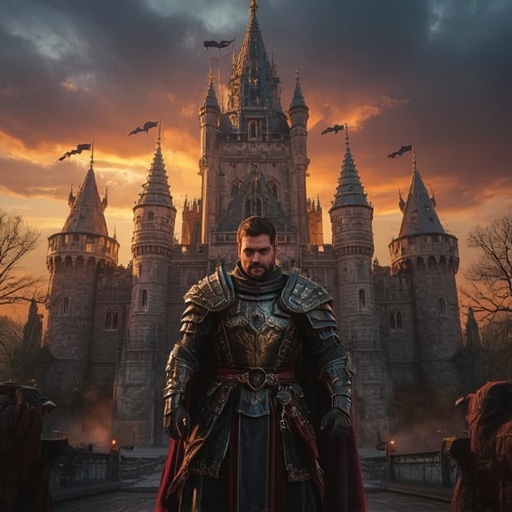
In the unfolding saga of *House of the Dragon* Season 3, the story broadens to include yet another commanding presence from the realm’s storied past — Lord Ormund Hightower. His introduction marks more than the arrival of a new face at court; it represents the reemergence of one of the most intricate houses within George R.R. Martin’s mythic tapestry. Known through the chronicles of *Fire & Blood*, Ormund’s life and eventual fate are already inscribed in the annals of Targaryen history. However, the television adaptation has often balanced fidelity to its source with daring reinterpretation — leaving audiences to wonder whether Lord Ormund’s destiny will trace familiar lines or take an unforeseen turn.
In the vast political theater of Westeros, the Hightowers are emblematic of enduring ambition and steadfast tradition. Rooted in Oldtown — the beating intellectual and spiritual heart of the Seven Kingdoms — their influence extends beyond nobility, culture, and faith. When Lord Ormund strides onto the screen, he does so not merely as a man of status but as a symbol of how heritage and power intertwine. Viewers can anticipate that his presence will recalibrate alliances, rivalries, and the delicate equilibrium already strained by dragonfire and ambition. His story, as readers well know, embodies both the heights of privilege and the inevitability of downfall — motifs central to *House of the Dragon*’s narrative philosophy.
What makes this introduction especially compelling lies in the dual awareness of the audience. Book readers, armed with the foreknowledge of Ormund’s trajectory, approach his scenes with an almost tragic anticipation, while newcomers may perceive him as a formidable strategist whose choices could redefine the series’ political landscape. This dynamic — the interplay between expectation and revelation — grants the show a rare dramatic tension. Whether the writers choose to honor the inevitability of his fate or craft an entirely different path, Lord Ormund’s arc will likely serve as a meditation on legacy: how those born into greatness navigate its burdens and how quickly power’s glow can fade into shadow.
Ultimately, the forthcoming season promises to use Lord Ormund Hightower not just as a historical figure brought to life, but as a narrative instrument through which the series deepens its exploration of loyalty, destiny, and the cyclical nature of power in Westeros. His rise — and inevitable reckoning — will remind audiences that in the dance of dragons, no family’s flame burns forever, no matter how high their tower reaches into the stormy skies of history.
Sourse: https://www.businessinsider.com/how-does-ormund-hightower-die-book-house-of-the-dragon-2026-7