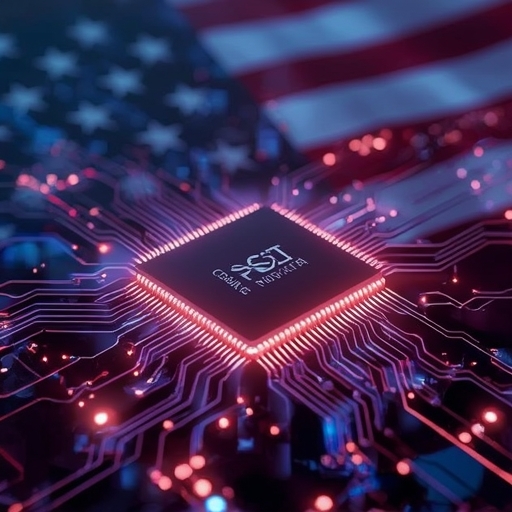
According to a recent announcement from President Donald Trump, the administration intends to authorize Nvidia to proceed with the sale of its H200 artificial intelligence chips to China, a decision publicly revealed through a new post on the president’s preferred social media platform, Truth Social. This policy shift does not include the company’s latest and more powerful Blackwell-series processors, which remain off-limits to Chinese buyers under existing export regulations. Nonetheless, the move represents a noteworthy and strategic success for Nvidia, especially since the Chinese government had previously sidelined the lesser-performing H20 models, dismissing them as insufficiently capable to meet the country’s advanced technological demands.
In his Monday statement, President Trump explained that he had personally informed Chinese President Xi Jinping of his intention to permit the sale of the H200 chips, emphasizing that the approval will occur “under conditions that allow for continued strong National Security.” Though Trump refrained from detailing what those specific national security conditions entail, he did specify a major financial component of the arrangement: Nvidia will be obligated to remit 25 percent of its revenue from chip sales to the Chinese market directly to the U.S. government.
Earlier in the year, during the summer, a similar though less lucrative arrangement was struck between Nvidia, AMD, and the U.S. government. Both companies agreed to allocate 15 percent of their China-related chip sale revenues to Washington—a highly unusual “quid pro quo” deal first reported by the Financial Times. Industry and legal experts characterized the arrangement as unprecedented, with some questioning whether it could withstand legal scrutiny, given that no previous administration had brokered comparable financial concessions from private businesses. Trump’s second presidential term has already been marked by a series of bold, often unorthodox policy decisions that continue to perplex both constitutional and economic analysts. For instance, questions have arisen over whether the president can unilaterally reinterpret or nullify birthright citizenship, an action most constitutional scholars agree is impermissible. Nevertheless, the conservative-majority Supreme Court has opted to hear a case on the matter, raising the possibility, however remote, of a reinterpretation of the Fourteenth Amendment.
Trump publicly promoted the forthcoming H200 chip sales as a meaningful victory for American labor and domestic industry, even though the agreement remains pending formal approval by the U.S. Department of Commerce, which is charged with enforcing technology export restrictions. Observers note that under Trump’s current leadership, most federal agencies have exhibited limited inclination to challenge presidential directives, suggesting that the plan will likely advance without substantial internal opposition.
“This policy will support American Jobs, strengthen U.S. Manufacturing, and benefit American Taxpayers,” Trump declared, adding that the initiative constitutes a decisive correction to what he portrayed as errors made by the previous Biden administration. He accused Biden’s policies of coercing American technology firms into producing intentionally “degraded” versions of their hardware—products designed with constrained capabilities to prevent international competitors from acquiring cutting-edge U.S. technology. According to Trump, this mandate proved counterproductive, slowing the pace of innovation and reducing profitability for American engineers and assembly workers. Ironically, such product “degradation” is itself an extension of prior U.S. policy aimed at preserving a strategic technological advantage over China, an objective Trump’s administration has continued to endorse, albeit through different means.
Declaring that “that era is over,” Trump vowed to inaugurate a new phase of policy that will “protect National Security, create American Jobs, and keep America’s lead in AI.” He further clarified that Nvidia’s domestic clients have already begun adopting the company’s next-generation Blackwell chips, and soon its Rubin models as well—products untouched by the China sales agreement and thus fully available for the American market.
Bloomberg has reported that, in recent months, Beijing’s authorities discreetly encouraged Chinese firms to reject Nvidia’s H20 chips, subtly pressuring the market rather than imposing an explicit regulatory ban. While some degree of demand for the H20 continues to exist within China, such political signaling likely pressured Washington to reexamine its policy, given the risk of alienating what is effectively the world’s second-largest consumer market for semiconductors.
Meanwhile, Nvidia’s CEO, Jensen Huang, has cultivated noticeably close relations with President Trump during his second term, mirroring the outreach efforts of nearly every other major American tech executive eager to maintain favor with the administration. This sustained engagement appears to have yielded tangible benefits for Nvidia, as the president’s new directive clearly aligns with the company’s commercial priorities. David Sacks—who currently serves as Trump’s so-called “AI and crypto czar”—also reportedly dismissed concerns from within the administration about the security implications of exporting AI processors to China. Both Sacks and Huang have argued that allowing these sales would, paradoxically, increase China’s dependence on American technology rather than empower it to develop competing domestic alternatives.
Still, the legislative landscape surrounding technology exports remains fluid and politically charged. Reuters recently reported that Congress introduced a bipartisan bill known as the SAFE CHIPS Act, designed explicitly to limit the president’s capacity to loosen export restrictions unilaterally. Sponsored by Republican Senator Pete Ricketts and Democratic Senator Chris Coons, the measure reflects an uncommon moment of cross-party convergence: both Democrats and Republicans continue to frame technological containment of China as a shared national interest. However, past experience suggests that congressional intent may have limited practical effect whenever Trump is personally invested in a particular initiative. The controversy surrounding the bipartisan TikTok ban provides a telling precedent—Trump initially supported the legislation before suddenly reversing his stance in 2024, and despite repeated expiration deadlines, he has repeatedly extended its enforcement through executive action. The current extension remains in effect until December 16, pending a negotiated settlement.
Reiterating his familiar slogan, Trump concluded his Truth Social post with the declaration, “My Administration will always put America FIRST.” He revealed that the Commerce Department is in the process of finalizing the agreement’s operational details and emphasized that similar arrangements will be extended to other major U.S. semiconductor firms, including AMD and Intel. These deals, Trump asserted, collectively exemplify his broader effort to “MAKE AMERICA GREAT AGAIN” by intertwining nationalistic economic policy with global technology leadership.
Finally, in a gesture signaling a broader diplomatic agenda, President Trump is expected to travel to Beijing in April to meet personally with President Xi Jinping—a meeting that may further clarify how trade, technology, and diplomacy will intersect in this newest chapter of the U.S.–China relationship.
Sourse: https://gizmodo.com/trump-says-nvidia-can-sell-the-h200-chip-to-china-2000697013