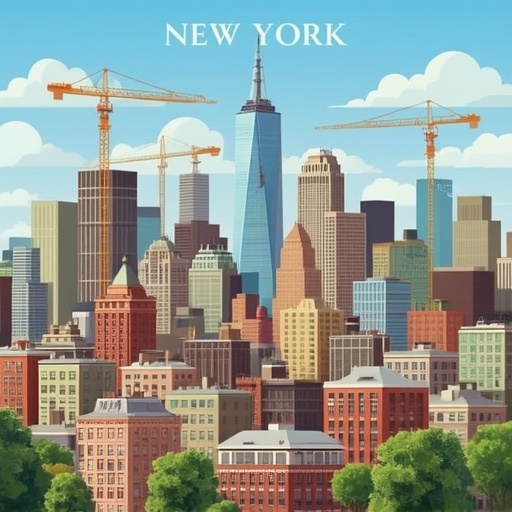
In an effort to address one of the most pressing challenges facing New York City, Assemblymember Zohran Mamdani has introduced a broad and multilayered plan designed to make urban housing both fair and affordable for all residents. At the core of this initiative lies a comprehensive three-part strategy that aims not only to expand the supply of homes across the city but also to safeguard tenants’ rights and ensure that low- and middle-income families have meaningful access to sustainable and reasonably priced housing options.
The first component of Mamdani’s proposal emphasizes the urgent necessity of increasing housing production throughout New York City. Recognizing the chronic shortage of available units and the intense competition that drives prices upward, the plan encourages the city to invest strategically in the construction of new residential buildings. This expansion would focus on developing higher-density zones while incorporating inclusive zoning policies that guarantee a portion of units remain affordable. For instance, mixed-use developments—integrating residential and community resources such as parks, local businesses, and cultural spaces—are envisioned as catalysts for both growth and neighborhood vitality. By promoting responsible construction, the city can stimulate economic activity while simultaneously addressing the scarcity of available housing stock.
The second pillar of Mamdani’s plan seeks to strengthen protections for tenants, who often bear the heaviest burden of New York’s volatile housing market. Too many residents live with the perpetual anxiety of escalating rent, unresponsive landlords, or eviction threats. This segment of the framework proposes enhanced legal safeguards to ensure tenant stability, including rent control measures, improved access to housing courts, and expanded funding for tenant advocacy organizations. Moreover, the plan underscores the moral imperative of treating housing as a fundamental human right rather than a commodity driven purely by market dynamics. Stronger oversight mechanisms would help ensure compliance with building codes and rental agreements, preserving both safety and dignity for residents.
The third and final dimension of the initiative centers on widening access to affordable apartments. Beyond merely constructing additional units, Mamdani envisions an approach that dismantles systemic barriers preventing many individuals and families from securing housing. The plan suggests streamlining the application process for affordable programs, increasing transparency in how apartments are allocated, and offering targeted financial assistance for first-time renters and homebuyers. These reforms would create pathways toward equity, enabling historically underserved communities to participate more fully in New York’s housing ecosystem. By aligning affordability with accessibility, the city moves closer to bridging the gap between aspiration and opportunity.
Collectively, these interlocking efforts constitute a forward-thinking urban strategy—one that fuses economic practicality with social responsibility. Mamdani’s housing blueprint reflects a belief that economic development must coincide with human-centered policy: that a city’s greatness is measured not by its skyline alone but by the security and opportunity it affords to its people. Should this plan be successfully implemented, it could redefine the way New York grows—ushering in a fairer, more inclusive metropolis where housing stability becomes the foundation of community prosperity.
Sourse: https://www.businessinsider.com/3-ways-mamdani-plans-to-make-nyc-housing-more-affordable-2026-5