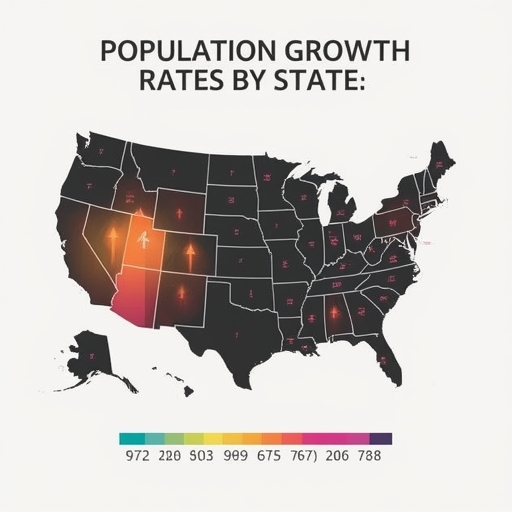
Newly released Census Bureau statistics from the period between July 2024 and July 2025 reveal a striking pattern of demographic transformation across the United States. Among all fifty states, South Carolina emerges as the nation’s clear leader in population growth, recording the fastest rate of expansion during this one-year span. This development not only underscores the state’s increasing appeal but also reflects broader national migration dynamics that continue to reshape the American landscape.
The surge in South Carolina’s population illustrates how economic vitality, lifestyle amenities, and affordable living are continuously influencing where people choose to settle. Many individuals have been drawn by the promise of strong job markets—particularly in technology, manufacturing, and logistics—alongside the state’s relatively moderate cost of living and temperate climate. Coastal cities such as Charleston and Myrtle Beach, as well as the rapidly growing metropolitan areas of Greenville and Columbia, exemplify how urban expansion and suburban development coexist with the region’s natural beauty and cultural warmth.
At a national level, the new Census data highlights a trend that has been gaining momentum over several consecutive years: the population center of gravity continues to shift toward the South and the Sun Belt. States boasting lower taxes, business-friendly environments, and abundant outdoor recreation—like Texas, Florida, and Georgia—also experienced notable increases, though none matched South Carolina’s pace. In contrast, certain northern and western states, including some in the Midwest and New England, faced slower growth or even slight declines, often linked to rising housing costs and evolving employment opportunities.
These population shifts have far-reaching implications for policymakers, real estate developers, and economic strategists. Expanding communities must adapt to the demands of accelerating growth—ranging from infrastructure improvement and housing construction to environmental management and public service enhancement. Simultaneously, regions experiencing out-migration confront new challenges in revitalizing local economies and maintaining essential services despite dwindling populations.
Ultimately, the latest Census findings reveal more than just statistical change; they tell a human story of aspiration, adaptation, and renewal. As Americans reconsider where and how they want to live, South Carolina’s remarkable rise serves as a vivid testament to the ongoing reconfiguration of the nation’s demographic and economic future.
Sourse: https://www.businessinsider.com/how-population-changed-by-state-in-2025-mapped-2026-1