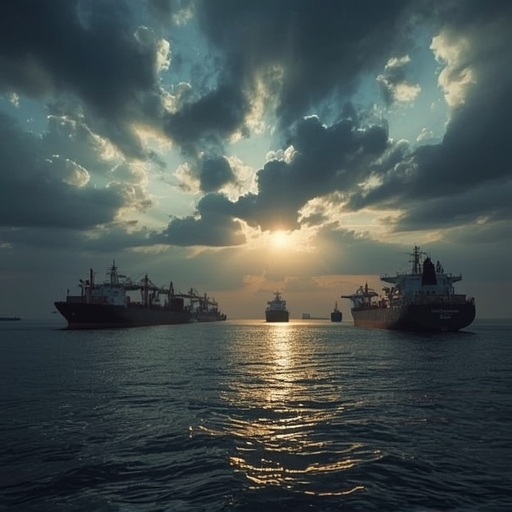
In an unexpected and unsettling turn of events, global financial markets experienced dramatic turbulence following the complete stoppage of traffic through the Strait of Hormuz — one of the world’s most vital maritime corridors for energy and trade. On April 13, reports of a blockade rapidly reverberated through economic centers across continents, triggering immediate and profound consequences. Oil prices, already sensitive to geopolitical instability, soared upward as investors anticipated possible supply disruptions. Simultaneously, equity markets around the globe responded with pronounced volatility, reflecting the fragile equilibrium that underpins modern finance whenever a key trade artery is interrupted.
The Strait of Hormuz, positioned strategically between the Persian Gulf and the Gulf of Oman, serves as a critical conduit for a substantial portion of the world’s crude oil exports. When traffic through this narrow passage halts, it is not merely a regional disturbance—it becomes a catalyst for global economic recalibration. The sudden blockade underscored the extent to which political events and security developments in one location can instantaneously reshape the outlook for industries far beyond its geographic borders. In New York and London, energy stocks spiked, while shipping and manufacturing equities wavered under uncertainty. Commodity traders saw heightened activity as oil futures surged, pricing in the risk of prolonged disruption in maritime logistics.
Beyond the raw numbers and sharp fluctuations, this incident illuminated the intricate interdependencies connecting energy production, transportation, and financial confidence. Each vessel idled in the calm waters of the Strait symbolized both physical and economic stasis—an emblem of how delicate the global system remains when faced with geopolitical tension. Analysts quickly drew parallels to past maritime crises that rippled across supply chains, reminding observers that even transient blockages can have enduring aftershocks on international markets, consumer prices, and diplomatic relations.
Professionals and policy makers alike are now confronted with urgent questions: How resilient are existing trade routes? Can diversification in energy logistics mitigate such risks in the future? As oil continues to surge and markets adjust to shifting narratives, businesses in the shipping, logistics, and energy sectors are bracing for renewed unpredictability. The episode serves as a vivid testament to the profound interconnectedness of our global economy, where the closing of one strategic passage can disrupt not only the flow of goods but also the rhythm of confidence that fuels commerce and growth worldwide.
Sourse: https://www.businessinsider.com/traffic-appears-to-halt-in-the-strait-of-hormuz-2026-4