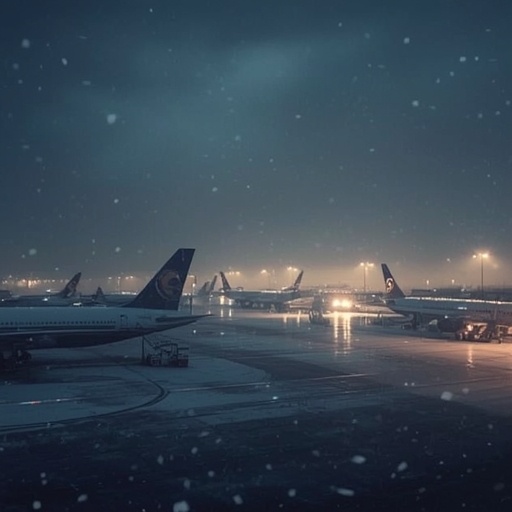
Across the vast expanse of the American Midwest, air travel has come to an abrupt halt as an immense snowstorm sweeps through the region. Thousands of flights have been grounded or canceled, leaving airports eerily silent and passengers stranded amid drifting snow and subfreezing winds. This severe winter event has not only blanketed runways and terminals with ice and snow but has also compounded the challenges already facing the nation’s aviation network.
The timing of this storm could hardly be less opportune. The ongoing partial government shutdown has left many essential departments functioning with limited personnel, exacerbating the strain on critical travel operations. Transportation Security Administration (TSA) staff shortages, resulting from widespread absenteeism among employees who are working without pay, have deepened the sense of disruption. With checkpoint wait times climbing and exhausted personnel covering multiple shifts, the storm’s sweeping impact has extended far beyond the immediate weather conditions.
Scenes from airports across Chicago, Minneapolis, and St. Louis vividly capture the magnitude of this moment: glowing runway lights flicker through dense flurries, fleets of aircraft sit motionless under blankets of white, and travelers huddle inside terminals seeking warmth and information. Airline representatives, stretched thin, scramble to rebook passengers while maintenance crews battle relentless snowfall to clear taxiways and de-ice planes that may not take off for days.
The storm has underscored the vulnerabilities of the nation’s transportation grid — how weather events can rapidly expose weaknesses when infrastructure and staffing are under duress. It also highlights the interplay between natural forces and political-economic pressures, where something as fundamental as a government funding lapse can ripple through the systems that people rely upon for safety and mobility. Experts are using this moment to remind policymakers of the critical importance of resilient transport networks that can withstand environmental and administrative shocks alike.
For now, officials urge travelers to remain patient, to check with airlines for ongoing updates, and to exercise caution on winter roads that mirror the chaos of the skies. As snowdrifts pile along airport perimeters and visibility continues to drop, the Midwest braces itself for another long night of grounded planes and delayed journeys — a stark reminder of the fragility of movement in the face of nature’s power and bureaucratic strain. ❄️✈️ #TravelAlert #MidwestStorm #WinterWeather #Resilience
Sourse: https://www.businessinsider.com/thousands-flights-midwest-canceled-snowstorm-2026-3