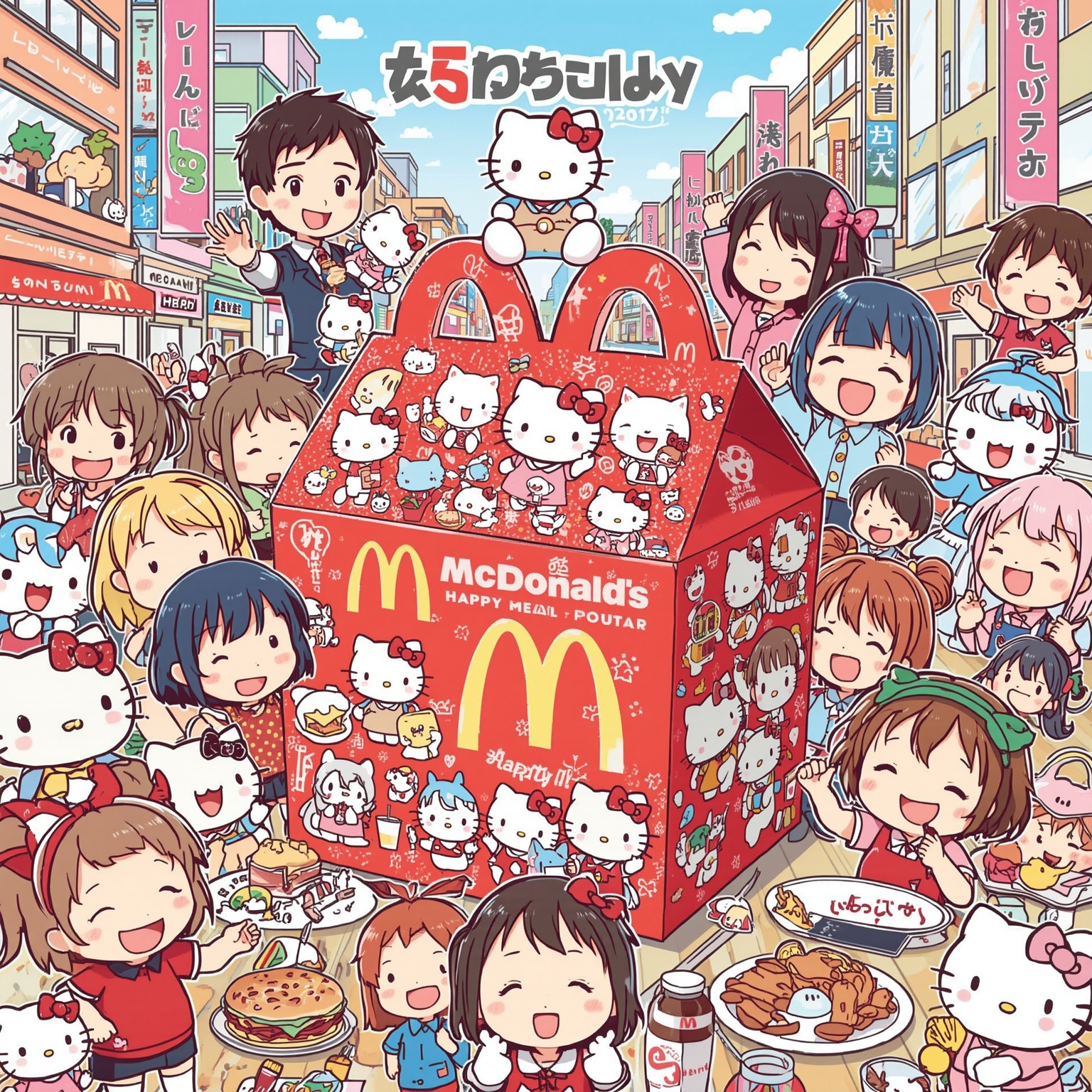
McDonald’s Japan appears determined to ensure that the frenzied turmoil surrounding last year’s Pokémon Happy Meal promotion is never repeated. In a calculated move to safeguard both the customer experience and the company’s reputation, the fast‑food giant unveiled its latest collaboration on Friday: a Sanrio‑themed Happy Meal featuring an assortment of highly desirable collectibles. The package introduces beloved Sanrio characters such as “My Melody & Kuromi” as figurines, alongside a Plarail toy and even a specially designed picture book themed around the character “Cinnamoroll.” While the release itself may sound like a straightforward continuation of McDonald’s tradition of partnering with culturally iconic brands, the company’s actions clearly suggest that it has internalized the lessons from the Pokémon mishap of August and is keen to take preemptive measures this time.
The incident that McDonald’s wishes to avoid repeating took place during the release of the Pokémon Happy Meal last summer, particularly on the weekend of August 9. At that time, immense demand from Pokémon enthusiasts—coupled with the opportunism of resellers hoping to profit from scarcity—caused logistical and social chaos throughout stores in Japan. Customers queued in extraordinarily long lines, which in some locations wound well beyond the physical limits of the restaurants. The focus of the mania was a set of limited‑edition McDonald’s–Pokémon trading cards, items that quickly escalated into sought‑after commodities. The overwhelming rush spiraled out of control: instances of arguments and even physical altercations occurred, meals were ordered in vast numbers and then discarded simply to obtain the collectible cards, and scalpers immediately turned to online platforms to sell the coveted items at exorbitant prices.
Having seen how quickly excitement could devolve into disorder, McDonald’s Japan carefully devised strict controls for the Sanrio release in order to preserve fairness and discourage bulk reselling. In a formal announcement, the chain clarified that these new rules were implemented explicitly to prevent mass purchases, profiteering, and the irresponsible abandonment of food. Customers hoping to acquire Sanrio Happy Meals are now required to visit physical outlets in person; the meals cannot be obtained by placing mobile orders, using drive‑through lanes, or relying on delivery services. Additionally, the company introduced an unprecedented purchasing limit: a group of customers may buy no more than three meals at once, and repeat purchases by the same party are explicitly forbidden. This represents a sharp departure from McDonald’s more lenient approach during the Pokémon release, when buyers openly admitted to Business Insider that unlimited purchases were permitted, resulting in individuals securing as many as twenty meals without restriction.
The disparity in potential profit also helps to explain the previous frenzy. At that time, each Pokémon Happy Meal was sold at the accessible price of 500 yen, roughly equivalent to $3.50, yet within days the accompanying cards were appearing on Mercari—Japan’s most popular resale marketplace—at prices up to 3,000 yen, nearly ten times the retail cost. Such profit margins created fertile ground for unscrupulous resellers. Predictably, the same trend has already appeared, albeit more modestly, with Friday’s Sanrio launch; within hours, users spotted listings for at least two of the “My Melody & Kuromi” toys being resold on Mercari.
Further underlining its commitment to protecting both the consumer and public image, McDonald’s reiterated that it maintains a zero‑tolerance stance toward food wastage. The company’s official statement declared that the abandonment or improper disposal of food products is not acceptable under any circumstances. Moreover, it stressed that the resale of Happy Meal items, attempts to purchase them for commercial gain, or any behavior undermining proper etiquette at restaurants would not be tolerated.
It is worth noting that the Pokémon Happy Meal episode is not an isolated aberration in McDonald’s promotional history. The corporation has faced similar challenges when popular limited‑edition collaborations have ignited overwhelming demand. For example, the BTS‑branded meals of 2021 and the Hello Kitty plush toy giveaway in Singapore in 2015 both triggered enormous interest, leading to unprecedented congestion at outlets and surging queues of eager fans. Collectible promotions, while effective at drawing attention and sales, can thus create reputational risks if mismanaged.
Marketing experts have already warned about such pitfalls. Kieran Gibb, founder of the Hong Kong–based food and beverage consultancy Monogic, remarked in August that the Pokémon debacle risked alienating McDonald’s Japanese clientele. In a culture where social order, politeness, and conscientious behavior—including the minimization of waste—are highly valued, the company’s inability at that time to control the situation might have left what he described as a “sour taste” among customers.
Despite those temporary stumbles, McDonald’s as a global corporation has continued to enjoy stability. Its stock price has increased by roughly six percent over the past year, perhaps reflecting resilience in the face of localized controversies. However, clear as the recent developments make, the company is striving to ensure that in Japan—where consumer trust and respect for etiquette play such central roles—its efforts to balance promotional excitement with responsible consumer management are not taken lightly. In doing so, McDonald’s demonstrates that it views the maintenance of customer goodwill as inseparable from the pursuit of profitability and brand prestige.
Sourse: https://www.businessinsider.com/mcdonalds-japan-sanrio-happy-meal-scalpers-toys-resale-pokemon-lines-2025-9