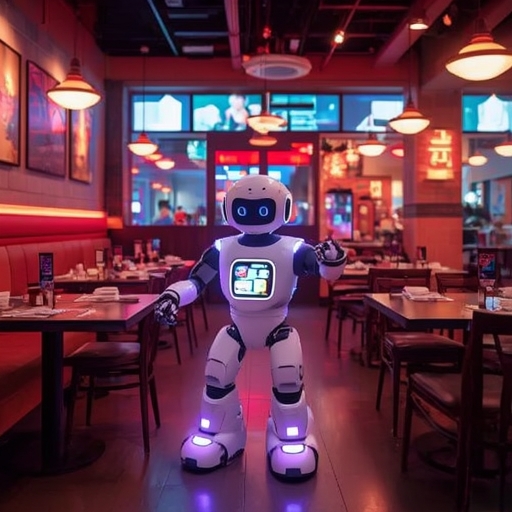
McKinsey & Company has reached a turning point that signals both rapid technological evolution and a redefinition of the modern workplace. Out of its 60,000 total workforce members, an astonishing 25,000 are now AI-driven agents—sophisticated systems designed not merely as tools but as collaborative partners in consulting and strategic decision‑making. According to CEO Bob Sternfels, the firm’s vision is even more ambitious: within the next year and a half, every human consultant and employee will be paired with an intelligent digital counterpart capable of processing data, generating insights, and accelerating innovation at unprecedented speeds.
This development represents far more than a numerical milestone; it embodies the transition toward a future in which human ingenuity and algorithmic precision are fully intertwined. In practical terms, such integration allows professionals to delegate repetitive analytical tasks to AI, thereby focusing their cognitive energy on creativity, empathy, and judgment—those inherently human dimensions that remain indispensable to leadership and strategy. For example, an AI partner might instantly synthesize complex market data, freeing consultants to interpret patterns and craft nuanced recommendations for clients. The resulting synergy between man and machine promises not only to enhance efficiency but also to expand the scope of what organizations can accomplish.
Sternfels’s initiative also underscores a philosophical shift within the corporate world: the idea that artificial intelligence is no longer a distant support mechanism but an embedded colleague, seamlessly contributing to collaborative ecosystems. By envisioning every team member—human or machine—operating in concert, McKinsey projects a new model of teamwork defined by continuous learning, adaptive communication, and scalable intelligence.
Beyond the internal transformation, this move carries profound implications for the consulting industry at large. It raises questions about workforce reskilling, ethical oversight, and the evolving definition of expertise when analytical brilliance can be digitally replicated. Yet it also points to enormous potential in driving problem‑solving and decision‑making capabilities that transcend human limits.
Ultimately, McKinsey’s embrace of AI partnerships reaffirms a timeless truth in a modern form: technology achieves its highest value not in replacing people, but in amplifying what they can achieve together. The firm’s experiment may soon become the blueprint for a global paradigm in which the most powerful teams are those uniting human curiosity with the limitless capacity of intelligent systems.
Sourse: https://www.businessinsider.com/mckinsey-workforce-ai-agents-consulting-industry-bob-sternfels-2026-1