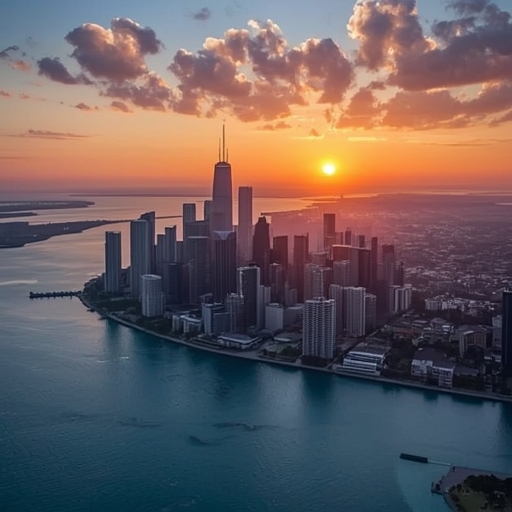
For years, New York City has reigned supreme as the undisputed icon of American wealth, sophistication, and real estate prestige. Towering penthouses overlooking Central Park, landmark brownstones in Manhattan, and skyline views that define urban aspiration have long embodied the ultimate symbol of prosperity. Yet, a dramatic and unexpected transformation in the real estate landscape has quietly unfolded across the nation — one that challenges the dominance of the Big Apple and reveals an entirely new chapter in U.S. housing trends.
According to recent market data, Miami has now surged past New York City as the U.S. leader in luxury residential properties priced above one million dollars. This paradigm shift is not merely a geographic curiosity; it signifies deep structural changes in the country’s wealth distribution, migration patterns, and cultural identity. The coastal metropolis — once known primarily for its beaches, nightlife, and cosmopolitan atmosphere — has evolved into a cornerstone of high-end living and financial affluence. The rise of Miami reflects a broader phenomenon: the decentralization of luxury and the redefinition of what exclusivity means in modern America.
Several interconnected factors contribute to this evolution. The pandemic catalyzed a wave of domestic migration, with remote professionals and high-income earners seeking warmer climates, access to outdoor lifestyles, and favorable tax environments. As residents departed traditional financial hubs like New York and San Francisco, Miami’s combination of tropical allure, international influence, and lucrative investment opportunities became increasingly irresistible. Developers stood ready to meet this demand, rapidly expanding waterfront condominiums and opulent residential communities that cater to a growing class of global elites.
Beneath the surface of this glamorous ascent, however, lies a profound economic contrast. The proliferation of million-dollar properties underscores widening disparities between average households and the top-tier luxury segment. While Miami dazzles with record-breaking sales and architectural innovation, many residents face escalating housing costs and reduced accessibility to moderate or affordable housing options. The same narrative echoes across other major metropolitan areas, yet Miami’s rapid surge makes the pattern particularly vivid and emblematic.
The implications of this shift extend well beyond the realm of real estate marketing. They touch on issues of social stratification, regional competitiveness, and lifestyle transformation. The concept of “high-end” living, once synonymous with proximity to legacy cities and established cultural centers, now adapts to a faster, more fluid model of wealth. In a digital age where location no longer dictates success in the same way, affluent buyers prioritize comfort, climate, and personal experience over traditional notions of prestige. A luxury waterfront residence in South Florida, complete with private marinas and panoramic ocean views, now rivals — and often surpasses — the allure of Manhattan’s storied skyline.
Ultimately, the story of Miami overtaking New York City is not simply a matter of statistical supremacy. It encapsulates the evolution of aspiration itself: how Americans define success, community, and belonging in the twenty-first century. As the high-end housing market continues to expand and diversify, it also serves as a mirror reflecting larger questions about equity and access in modern society. The opulence of Miami’s real estate boom, while breathtaking in scope, invites a deeper reflection on who benefits from this prosperity — and who may be left behind.
In this new era of luxury real estate, Miami stands as both a beacon of innovation and a case study in transformation. It symbolizes how adaptability, global connectivity, and visionary urban design are reshaping the American dream of home ownership — and how that dream now shines brightest beneath the tropical sun.
Sourse: https://www.businessinsider.com/top-cities-wealth-gap-real-estate-2026-1