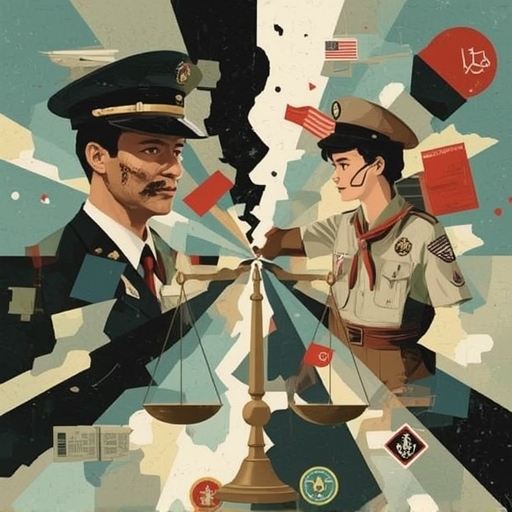
The ongoing discourse surrounding Defense Secretary Pete Hegseth’s controversial announcement—linking continued military support for a major youth scouting organization with the proposed elimination of certain so-called ‘woke’ merit badges—has rapidly evolved into a substantive reflection on the intersection of national defense policy, civic tradition, and cultural identity. This seemingly narrow administrative decision has, in truth, illuminated a broader ideological struggle: one where the boundaries between patriotic values, institutional inclusivity, and political symbolism have become increasingly blurred.
Critics argue that this conflation of defense authority with sociocultural critique risks politicizing institutions historically dedicated to nonpartisan service and youth development. By suggesting that military cooperation should hinge on the ideological alignment of merit badge programs, detractors fear that such a stance erodes the principle of neutrality expected of federal defense partnerships. Supporters, however, interpret Hegseth’s move as a reaffirmation of traditional virtues—discipline, self-reliance, and national pride—that they believe have been diluted by modernized, socially driven curricula. For them, reinstating focus on conventional merit standards symbolizes a necessary corrective against cultural drift.
Moreover, this debate’s resonance far exceeds the mechanics of scouting. It has become emblematic of a larger national conversation over how public institutions—ranging from education and civic groups to governmental bodies—should navigate the delicate balance between honoring historical values and embracing contemporary social awareness. Proponents of reform maintain that inclusivity and adaptive learning are core to preparing young citizens for leadership in an increasingly globalized society. Opponents caution that the more these programs engage with evolving cultural issues, the more vulnerable they become to political manipulation or public division.
Within the halls of policy-making, this controversy also hints at evolving definitions of defense leadership itself. In equating cultural positions with institutional priorities, decision-makers may inadvertently transform defense support from a matter of strategic partnership into one of ideological endorsement. Such a development prompts renewed reflection on the purpose of national institutions: Are they to preserve legacy frameworks untouched by social change, or to participate actively in shaping a new civic narrative responsive to current generations?
Ultimately, the situation underscores a paradox intrinsic to democratic societies: the desire to uphold timeless principles while adapting to the moral and cultural realities of a shifting world. Whether this episode will produce meaningful reform, or merely reinforce polarization, remains to be seen. Yet what is abundantly clear is that the intersection between defense, youth education, and social philosophy has become a defining frontier in America’s ongoing dialogue about who it is—and who it aspires to be.
Sourse: https://www.businessinsider.com/defense-secretary-says-scouts-america-must-end-woke-merit-badges-2026-2