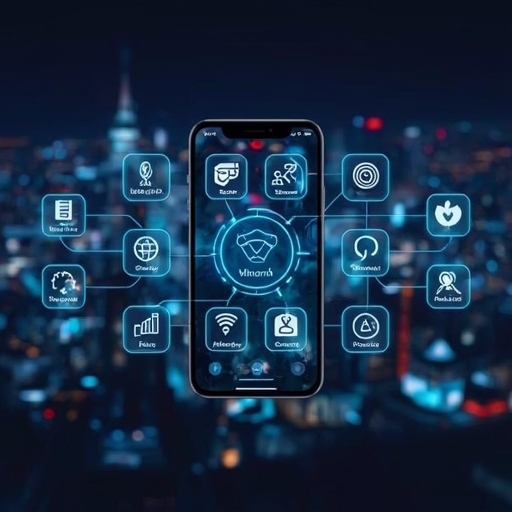
For a brief moment, prediction markets captivated the imagination of the tech world, drawing in futurists and innovators who saw them as the next frontier of digital transformation. Yet, as so often happens in technology, attention has shifted rapidly toward a more encompassing and transformative paradigm — the era of the ‘super app’. These platforms are not merely applications in the traditional sense, but expansive digital ecosystems that seek to integrate every essential aspect of modern life into a single, fluid interface.
To understand the magnitude of this shift, consider the convergence of multiple services—financial transactions, social networking, e-commerce, entertainment, and personal utilities—within one unified digital environment. Users are increasingly drawn to systems that minimize friction and maximize efficiency. Through a super app, individuals can order a meal, transfer money, message colleagues, schedule a delivery, and even secure travel arrangements without ever closing the application. The boundaries between industries blur, allowing for a seamless flow between consumption, communication, and coordination.
The success of this model lies in its capacity to anticipate user needs before they are consciously expressed. By analyzing digital behaviors and contextual clues, a super app can adapt dynamically, providing personalized features that align with each user’s unique lifestyle. This adaptive intelligence, combined with a deep integration of services, ensures that the user experience feels not only intuitive but also indispensable.
For businesses, the ascent of super apps heralds both opportunity and disruption. On one hand, corporations that partner within these powerful ecosystems gain immediate access to vast user bases and data-driven insights. On the other hand, traditional applications that remain siloed risk obsolescence, unable to compete with the speed, cohesion, and convenience offered by multipurpose platforms. As boundaries between sectors dissolve, the competitive landscape is being re-engineered, demanding innovation at the intersection of technology, strategy, and user engagement.
Consumers, too, stand to benefit from the unprecedented convenience. Gone are the days of toggling between dozens of separate apps for distinct functions; the future consolidates them all under one digital roof. This condensation of experience saves time, reduces decision fatigue, and heightens the sense of effortless control over one’s digital environment. However, it also invites reflection on questions of privacy, autonomy, and digital dependency, as the same integrations that foster convenience also consolidate massive amounts of behavioral data into the hands of a few dominant entities.
Ultimately, the emergence of super apps signals a fundamental evolution in how humans interact with digital technology. This is not simply a new category of software but a redefinition of connectivity itself—an interconnected matrix where daily life and digital infrastructure merge seamlessly. From Asia’s trailblazing platforms to the growing interest of Western markets, the trajectory points unmistakably toward an integrated future. As prediction markets fade into the background, the rise of super apps represents the dawning of an era in which convenience, commerce, and connection coalesce into a single, intelligent digital universe.
Sourse: https://www.businessinsider.com/next-summit-prediction-markets-super-apps-2026-3