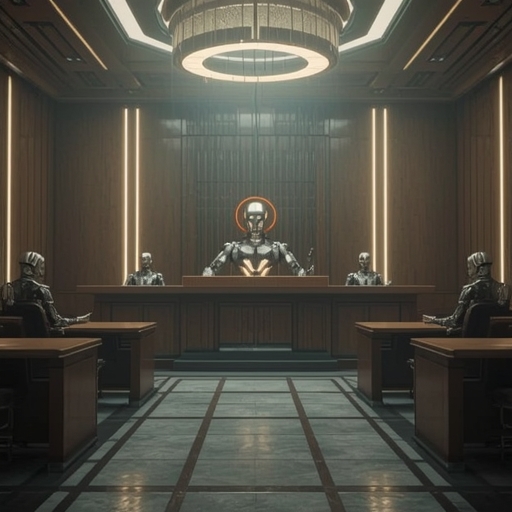
Elon Musk’s recent courtroom testimony concerning OpenAI offers an unexpectedly revealing glimpse into the mindset of one of the world’s most influential innovators. In his statements, Musk did far more than recount the chronological sequence of events that led to his association—and eventual divergence—from the organization he helped establish. Instead, he candidly analyzed the psychological and emotional dimensions that shaped his decisions, specifically addressing what he termed a ‘halo effect,’ along with a remarkable admission that, in retrospect, he “literally was a fool.” These expressions of self-critique stand out in a field often characterized by confidence, projection, and forward-looking optimism.
By referring to the ‘halo effect,’ Musk acknowledged the powerful influence of initial idealism and collective enthusiasm that can surround ambitious technological ventures. The term captures the tendency of innovators, investors, and observers alike to be swept up by the promise of transformative ideas, allowing admiration to cloud judgment. Musk’s recognition of that dynamic illustrates a rare degree of self-awareness from someone who is deeply accustomed to bold risk-taking and visionary pursuits. His reflection thus transforms a simple testimony into a nuanced study of human psychology within the high-stakes, rapidly evolving world of artificial intelligence.
When he described himself as having “felt like a fool,” Musk went beyond the surface language of regret. The phrase encapsulates both humility and growth—the realization that intellect and ambition can sometimes coexist with oversight or miscalculation. In that sense, his testimony serves as both a confession and a cautionary reflection on the inherent unpredictability of innovation. It reminds us that even those at the forefront of scientific and entrepreneurial breakthroughs are subject to the same biases, misjudgments, and emotional complexities that define the broader human experience.
The implications of his statements extend beyond personal narrative. They underscore an essential theme in leadership: the importance of acknowledging vulnerability and error as integral components of development. In an industry that prizes disruption and relentless momentum, Musk’s openness about past missteps signals a willingness to interrogate his own motivations—a trait that may, paradoxically, strengthen rather than diminish his authority. His testimony thereby bridges the technical and the personal, combining lessons in ethical responsibility, introspective analysis, and strategic recalibration.
Ultimately, Musk’s remarks about OpenAI resonate far beyond the courtroom. They prompt reflection on how intellect, ego, and aspiration intertwine in shaping the trajectory of technological innovation. To admit folly in public, particularly within a domain where pride often overshadows self-questioning, is an exercise in leadership grounded in self-knowledge. His words invite ongoing dialogue about how innovation should be guided—not merely by ambition or competition, but by clarity, accountability, and an evolving understanding of human limitation. In this way, his testimony becomes not simply a recounting of the past, but an enduring lesson in both humility and vision.
Sourse: https://gizmodo.com/in-clarifying-testimony-about-openai-elon-musk-says-i-literally-was-a-fool-2000752455


