When I decided, on a spontaneous whim, to arrange a last-minute family journey to Jordan through Intrepid Travel, I found myself anxiously contemplating the potential cost of airfare purchased so close to departure. My lifelong passion for exploration is both exhilarating and expensive, and as someone who strives to sustain that travel habit responsibly, I have learned to place far greater emphasis on value than on luxury. For me, practicality consistently outweighs opulence; I would much rather secure reasonably priced economy seats than splurge on upgraded ones. This philosophy becomes particularly vital when traveling with my entire family, as airfare for multiple passengers multiplies swiftly and can push even a modest budget to its limit.
Because of this conscious focus on affordability, I’ve trained myself to lower my expectations when booking such trips. I approach each flight prepared for basic service rather than indulgent comfort. That attitude proved useful while I scoured flight options and, luckily, discovered a fairly priced nonstop route operated by Royal Jordanian, recently launched from my home airport in Washington, DC, directly to the Jordanian capital of Amman. Although I knew little about the airline itself—Jordan’s national carrier—the fare stood out immediately: hundreds of dollars less than the comparable itineraries offered by competitors. The price differential alone convinced me it was a deal worth taking, so I reserved four seats to transport my family from DC to Amman.
Because our itinerary also included a visit to Egypt to view the legendary pyramids, I extended the bookings to include connecting flights: Amman to Cairo, Cairo back to Amman, and finally, our return leg from Amman home to Washington, DC. In total, these four flights for three adults and one child amounted to $3,968. We offset this cost by redeeming nearly 400,000 credit-card reward points, bringing the trip within manageable budgetary limits. Altogether, the journey involved approximately 27 hours in the air aboard Royal Jordanian aircraft, giving me ample time to form a detailed impression of the airline. What follows is an honest account of that first experience.
Initially, I felt hopeful—perhaps even optimistic—about the long-haul leg of the trip. Although the seating wasn’t visually elegant, the chairs themselves struck me as decently cushioned and reasonably comfortable. In my personal experience, long-haul international flights often provide a noticeably better in-flight environment than shorter domestic routes, largely due to the use of larger aircraft designed for endurance and passenger comfort. Thus, I boarded expecting that Royal Jordanian’s transcontinental service might pleasantly surprise me, much like some other budget-friendly airlines occasionally have.
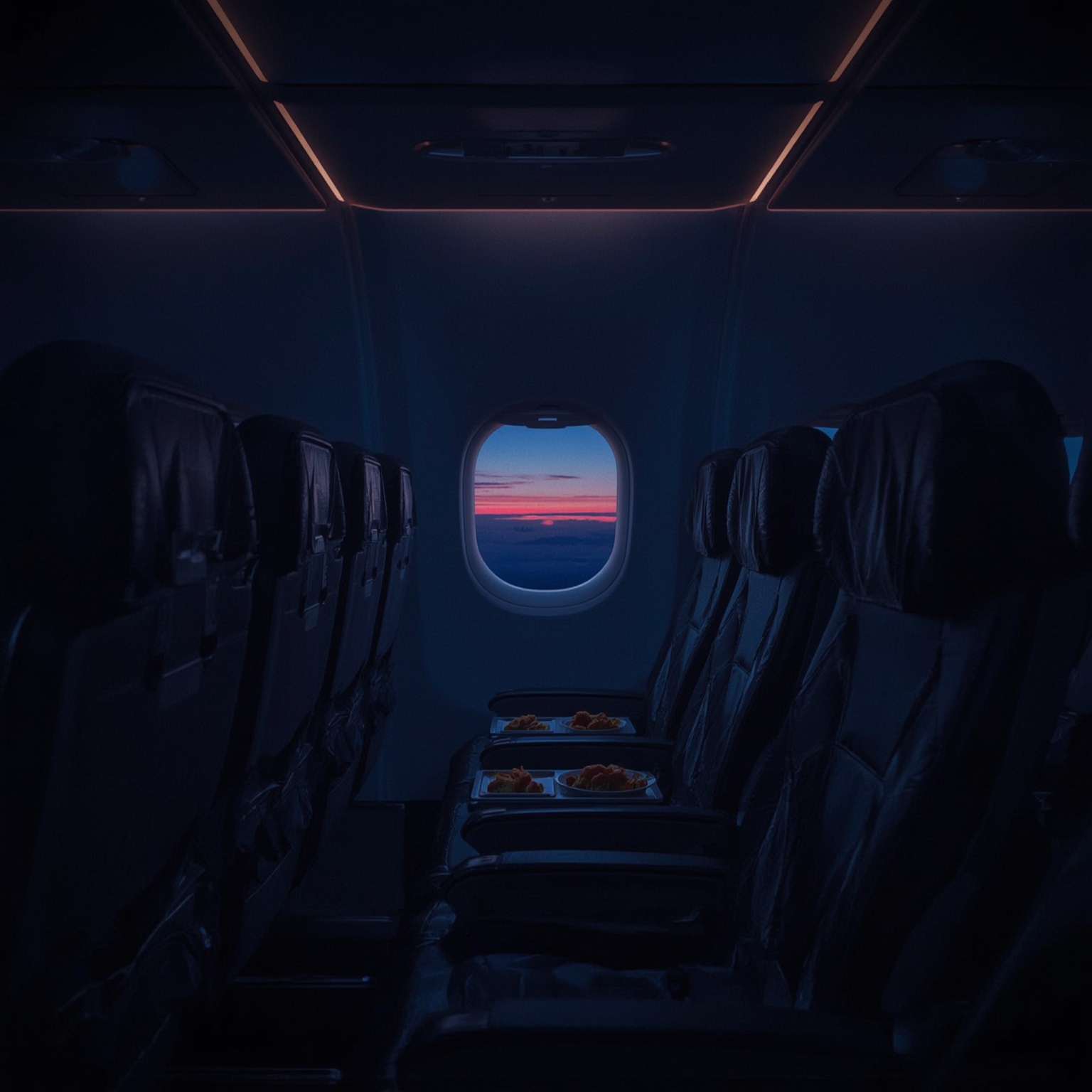
However, my enthusiasm dimmed upon entering the plane. The cabins, though functional, appeared somewhat dated; the upholstery showed signs of time and wear. Still, there were small touches that lent a hint of warmth—for instance, the bright scarlet blankets, each neatly bound with a ribbon, added a festive splash of color that softened my first impression. Despite the older appearance, the physical comfort level exceeded expectations: the seats, roughly seventeen inches wide, reclined generously and provided sufficient legroom for an economy-class experience. I appreciated the inclusion of a pillow and blanket, but quickly noticed the absence of an amenity kit. On many long-haul international flights, even those in economy, travelers receive small pouches containing essentials such as socks, eye masks, lip balm, or hand lotion—tokens that, though inexpensive, can lend an air of thoughtful hospitality.
Having flown with carriers like Turkish Airlines and Etihad Airways, both of which provided notably well-stocked amenity kits even in coach, I felt slightly disappointed that Royal Jordanian did not offer the same. While such conveniences might be minor in cost, they contribute significantly to the feeling of being cared for. The omission, therefore, seemed symbolic of a broader minimalist approach and hinted that this flight might deliver a fairly no-frills experience for the next eleven hours across the Atlantic.
When meal service began, my moderate expectations proved justified. Airplane cuisine typically suffers from an unfortunate reputation, yet I tend to enjoy sampling the offerings—it’s all part of the travel ritual. In this case, however, the quality was middling at best. The vegetarian sandwich I received tasted somewhat dry and stale, though the accompanying side dishes—salad, fresh fruit, and a warm roll—made the meal complete enough that I didn’t go hungry. What surprised me more than the underwhelming taste was the lack of complimentary mid-flight snacks. On long flights, most airlines distribute at least small bites—bags of pretzels, cookies, or crackers—to stave off hunger and maintain passenger comfort between meals. Even on short domestic routes, such gestures are common. Here, the total absence of snack service felt particularly noticeable because snacks are a reliable way to uplift spirits and, in my case, keep my children happily distracted during long stretches of air travel.
Nevertheless, not all aspects of the experience were disappointing. The in-flight entertainment system, though modest in scale with relatively small seatback screens, pleasantly surprised me with an ample selection of movies, television programs, and interactive games. Having once endured a first-class flight on another carrier that offered no seatback screens whatsoever, I was genuinely grateful for these digital diversions. They transformed idle hours into an opportunity to relax and unwind. For a family juggling fatigue and restless energy, access to films proved invaluable.
Upon arriving at Royal Jordanian’s principal hub, the Queen Alia International Airport in Amman, my impression improved further. The terminal’s atmosphere felt bright, contemporary, and welcoming—qualities that made layovers far more tolerable. Although the airport itself serves multiple airlines, it reflects the efficiency and hospitality associated with Jordanian culture. Because of my Priority Pass membership, obtained through one of my travel credit cards, I gained access to the airport lounge, which offered quiet seating, refreshments, and a selection of hot dishes. The lounge provided a restful pause between flights, and I found myself genuinely enjoying the experience.
In retrospect, while the journey with Royal Jordanian may not have ranked among my favorites, it certainly fulfilled its fundamental purpose: transporting my family safely and punctually across continents. The trip reminded me of an enduring truth about budget travel—when you purchase a ticket primarily for its cost, you should expect an experience calibrated to that same value point. Occasionally, affordable flights deliver delightful surprises, such as when Delta offers complimentary Wi-Fi or Turkish Airlines serves exceptional cuisine in economy. But this particular trip fell more squarely within the predictable boundaries of paying less for fewer luxuries.
Still, I cannot overlook that Royal Jordanian succeeded in its essential mission. The planes were reliable, the routes direct, and the staff professional enough to ensure a secure journey. Safety and efficiency matter more than embellishment, particularly when managing family travel logistics. While the airline would not be my first choice for future long-haul journeys, I remain open to reconsidering it—perhaps in business class—if an appealing fare presents itself. My pragmatic side often overrules my longing for comfort. Should I find myself booking with Royal Jordanian again, I will simply come better prepared: a carry-on stocked with snacks, personal comfort items, and a mindset balanced between thrift and realism. That blend of practicality and optimism, after all, defines most of my travel adventures.
Sourse: https://www.businessinsider.com/flew-royal-jordanian-long-flight-economy-review-2025-10