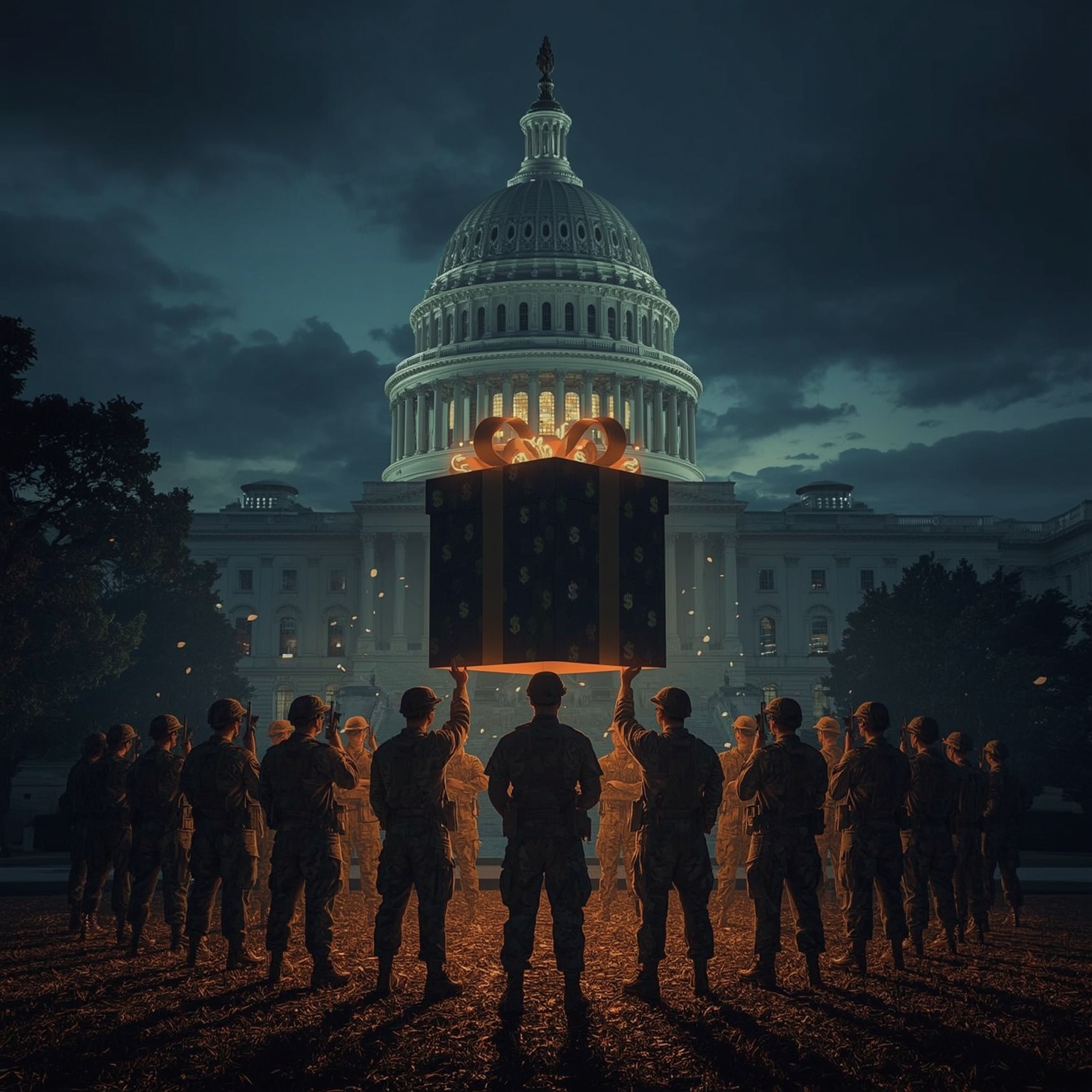
On the evening of October 24, 2025, a story circulated that immediately captured both public intrigue and governmental attention. According to statements made by former President Donald Trump, one of his acquaintances—whose identity remains undisclosed—had decided to offer an extraordinary personal contribution of $130 million to the United States Department of Defense, commonly referred to as the Pentagon. The motivation, as described by Trump, stemmed from this individual’s deep admiration for and commitment to the American military, combined with a desire to assist during a critical period of financial uncertainty brought about by the government shutdown.
Speaking on a Thursday, Trump recounted that his friend reached out directly with the intention of providing urgent assistance, explaining that the donor wished to ensure that those serving in uniform would not bear the financial consequences of the congressional impasse. The former president added that the sizable check was received by the Pentagon that same day, while emphasizing the donor’s express wish to remain anonymous. Out of respect for that discretion, Trump declined to reveal the person’s name, remarking instead that such quiet generosity, motivated not by personal gain but by patriotic devotion, represented the truest form of national service. “That’s what I call a patriot,” he concluded, underscoring both pride and admiration.
The Department of Defense later confirmed the veracity of Trump’s account through an official statement issued to *Business Insider* the following day. According to Pentagon spokesperson Sean Parnell, the Department of War—operating under its established “general gift acceptance authority,” which allows it to receive voluntary private contributions—had indeed accepted an anonymous donation amounting to $130 million. Parnell clarified that the funds came with a specific stipulation: they were to be used exclusively to offset expenses related to the payment of servicemembers’ salaries and benefits, thereby helping maintain essential financial stability for military personnel during the period when ordinary appropriations were unavailable.
This unprecedented act of personal philanthropy occurred against the backdrop of the federal government shutdown that commenced on October 1, following Congress’s failure to reach consensus on a funding bill. The cessation of typical budgetary operations temporarily jeopardized the flow of federal wages across multiple agencies, including the armed forces. In response to this pressing situation, Trump had previously authorized the use of remaining balances from the current fiscal year to guarantee that members of the military received their paychecks by mid-October. The private donation, therefore, was not only emblematic of patriotic generosity but also served as a symbolic reassurance of support for the nation’s servicemembers at a time when political gridlock threatened to disrupt their livelihoods.
Overall, the revelation of this $130 million gift—unprecedented in both magnitude and timing—sparked widespread discussion about the intersection of personal wealth, civic duty, and national governance. Though the benefactor’s name remains undisclosed, the gesture itself was presented as a testament to enduring loyalty toward the armed forces and as a reminder of how individuals, acting out of conviction and respect, sometimes seek to fill the void left by institutional delay. The Pentagon’s confirmation provided legitimacy to the claim, while leaving the public to contemplate the broader implications of private citizens financing segments of government responsibility during moments of crisis.
Sourse: https://www.businessinsider.com/trump-friend-pentagon-donation-130-million-military-government-shutdown-2025-10


