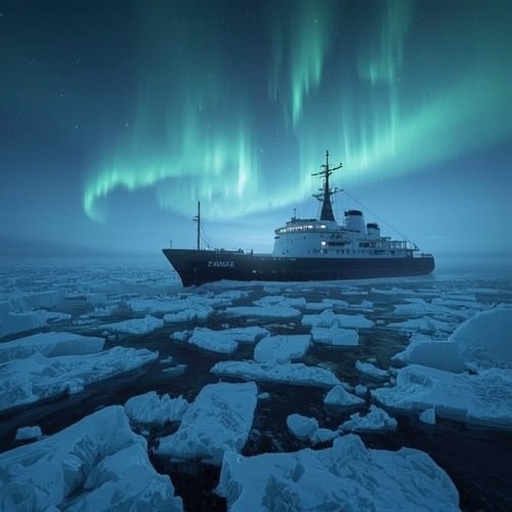
Tensions in the Arctic region continue to escalate, and NATO finds itself confronting not only geopolitical competition but also a very tangible, physical challenge — the scarcity of operational icebreakers. This underappreciated logistical shortfall carries profound strategic consequences, as it could produce critical vulnerabilities in the alliance’s northern defense posture, especially when contrasted with the expanding capabilities of both Russia and China in these ice-covered waters. ❄️🌍
According to recent warnings from a senior Norwegian military leader, the alliance risks ceding vital ground—both literally and figuratively—because it lacks sufficient vessels capable of navigating the world’s most treacherous and strategically valuable routes. Icebreakers, though seldom associated with high-profile combat or deterrence operations, are in fact the indispensable enablers of sovereignty, mobility, and projection of power in polar environments. Without them, even the most sophisticated naval fleets and surveillance systems risk being immobilized by nature’s frozen fortress.
Across the polar landscape, Russia maintains an extensive fleet of nuclear and diesel-powered icebreakers, instruments that allow continuous access to Arctic sea lanes and enable the protection of its growing network of northern outposts and resource extraction sites. Meanwhile, China’s long-term interest in developing a ‘Polar Silk Road’ signals its intent to secure logistical routes and scientific presence in the region. NATO, however, with relatively few ice-capable vessels shared among its member states, may find itself unable to respond rapidly to crises or to ensure freedom of navigation where strategic competition is intensifying most.
As the climate warms and the once-permanent Arctic sea ice retreats, new maritime corridors are forming—shorter, more direct trade routes that circumvent traditional choke points. This transformation, far from diminishing the region’s importance, has made it an emerging theater of strategic rivalry and environmental uncertainty. The ability to navigate these unpredictable waters, conduct search and rescue missions, deliver humanitarian assistance, or assert military presence now depends on a kind of vessel that most NATO members have neglected to prioritize.
The Norwegian warning underscores the urgent need for renewed investment, inter-allied coordination, and technological innovation in polar logistics. Icebreakers are no longer peripheral assets; they are strategic platforms that bridge the line between civil infrastructure, environmental stewardship, and hard power projection. In the evolving Arctic contest—where natural barriers meet geopolitical ambition—control may not be decided by firepower alone, but by who can move, sustain, and endure in the world’s coldest waters.
NATO must now ask itself: can it afford to overlook this frigid frontier much longer, or will the next global race for influence be won by those who command the ice?
Sourse: https://www.businessinsider.com/nato-falling-behind-russia-china-icebreaker-race-critical-arctic-war-2026-2