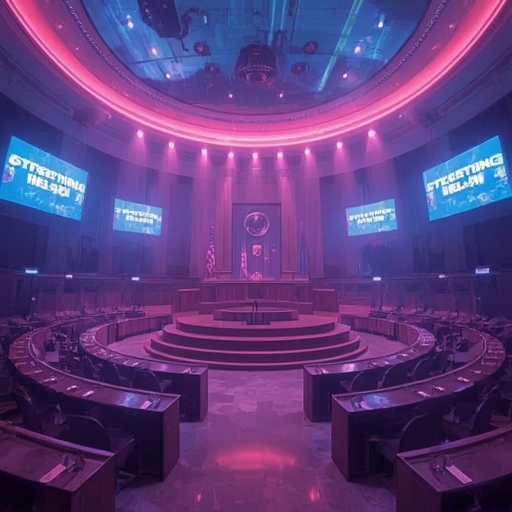
The congressional hearing involving Netflix marked a striking moment in the intersection of media, politics, and business. Lawmakers convened not merely to assess the company’s proposed acquisition of certain Warner Bros Discovery assets, but to scrutinize a broader cultural question about the direction of corporate values in entertainment. What emerged was not simply a discussion of economics or consolidation, but an intricate debate over how creative industries reflect and shape the ideological climate of the nation.
During the session, members of Congress pressed Netflix executives on multiple fronts. On one hand, they examined traditional regulatory matters—such as concerns that the merger could limit competition, centralize media control, and reduce consumer choice. These lines of inquiry echoed classic antitrust scrutiny designed to maintain market balance and safeguard public interest. Yet the conversation went well beyond financial or structural implications. Lawmakers from both sides of the aisle used the opportunity to engage the company on what they described as its cultural footprint, interrogating whether its programming and corporate practices embody an ideological leaning deemed by critics as ‘too woke.’
The result was an unusual convergence of corporate policy and sociopolitical philosophy on the public stage. Congress, typically focused on legislation and oversight, became the forum where content strategy collided with identity politics, drawing attention to the increasingly porous boundaries between art, commerce, and governance. For Netflix, this was more than a regulatory examination—it was a referendum on how entertainment companies wield cultural influence in a rapidly polarizing society. Executives found themselves defending creative freedom and diversity of expression as not political stances but as essential business principles in a global marketplace that serves audiences of divergent backgrounds and beliefs.
The hearing’s tone underscored a broader trend: the politicization of creativity and the expectation that major corporations publicly justify the values that underpin their operations. As Netflix navigates both competitive pressures from rival platforms and ideological scrutiny from elected officials, the company stands at a crossroads emblematic of its entire industry. The line between storytelling and societal messaging has never been thinner. What happens in such congressional hearings may ultimately shape not only the future of streaming but the cultural conversation that defines modern media in the years to come.
Sourse: https://www.theverge.com/policy/873533/netflix-warner-bros-discovery-senate-antitrust-hearing