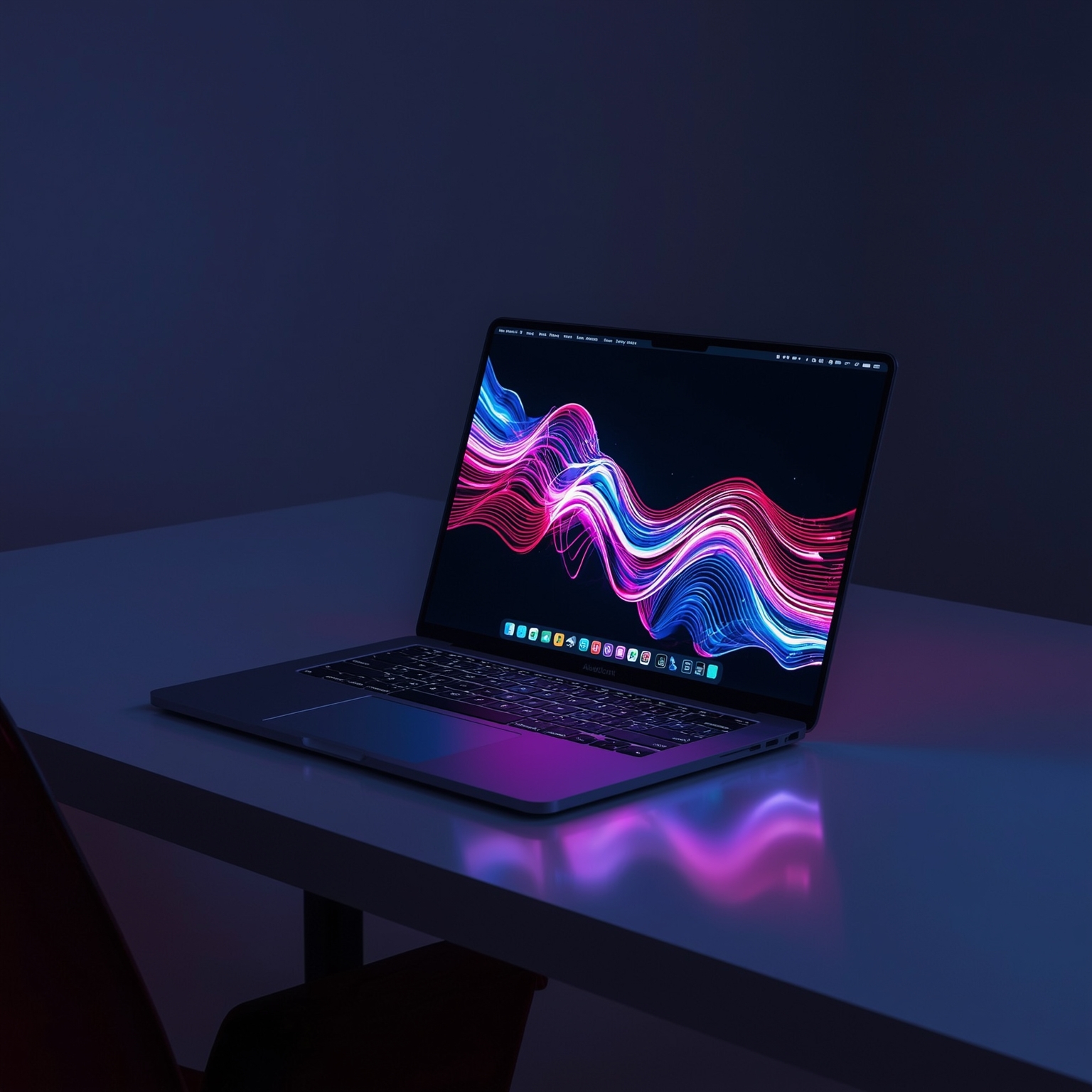
Apple has recently unveiled significant updates to its 14‑inch MacBook Pro line, introducing a new generation M5 processor, substantially improved data storage speeds, and an impressive claim of up to twenty‑four hours of continuous battery life. While these advancements already represent a meaningful step forward for Apple’s professional laptops, Bloomberg’s technology journalist Mark Gurman has shared new information suggesting that the next round of MacBook Pro revisions — currently expected to arrive in the following year — will be far more comprehensive in scope and ambition.
According to Gurman, who has spent several years cultivating reliable industry sources within Apple’s hardware division, the company’s future overhaul of the MacBook Pro will not simply offer iterative hardware improvements, but instead deliver an extensive redesign that reimagines both the external form and the user interface experience. Earlier reports from him outlined features such as a touchscreen interface for direct on‑screen interaction, higher‑contrast OLED display panels capable of deeper blacks and richer color saturation, and a body that would be noticeably lighter and thinner than existing models. The latest insight indicates that although Apple originally planned to release this major update by the end of 2025, the timeline has been postponed due to ongoing challenges in securing sufficient supply of OLED panels. Gurman’s newest notes go further, revealing internal development codenames — K114 and K116 — as well as additional technical specifications that are still under consideration.
For years, Windows laptop manufacturers have integrated touch functionality as a standard feature, appealing to users who value flexibility between tablet‑style interaction and traditional keyboard input. Apple, however, has long resisted that approach, preferring to maintain clear boundaries between macOS and iPadOS. Instead of embracing a full touchscreen, Apple introduced the Touch Bar — a narrow, contextual display strip above the keyboard — but ultimately reversed that design decision in 2021, acknowledging that professional creators and developers favored conventional function keys. Gurman’s report hints that the company may again reconsider long‑standing traditions, this time by eventually transitioning from the familiar Touch ID fingerprint sensor to a more advanced Face ID recognition system. Yet, he clarifies that this move remains several years away and is not expected in the immediate hardware cycle.
Before that more transformative redesign arrives, Apple is said to be preparing incremental updates to its existing models. Consumers can expect the introduction of upgraded M5 Pro and M5 Max chip versions early next year, preserving the current exterior design while improving internal performance. Parallel updates across the broader Mac lineup — including the MacBook Air, Mac Studio, and Mac mini — as well as refreshed versions of Apple’s two standalone monitors, are reportedly also in development, ensuring that the entire ecosystem benefits from Apple’s advancing silicon architecture.
Looking farther ahead, the next generation of MacBook Pros, which are projected to incorporate Apple’s M6 series processors, may introduce a number of striking design enhancements. Among them are rumors of a hole‑punch‑style front camera embedded directly into the display, reminiscent of the Dynamic Island design found on modern iPhones. Reinforced hinge mechanisms are also being tested to ensure the screen remains steady and secure when users interact directly with the touchscreen — a structural necessity for devices that will prioritize both durability and tactile responsiveness.
However, these ambitious innovations come with a trade‑off. Gurman reports that the pricing for the forthcoming MacBook Pro models will likely rise by several hundred dollars, reflecting both the cost of new components and the premium positioning of this redesigned lineup. Additionally, these features are expected to debut only on the higher‑end MacBook Pro configurations, leaving Apple’s more affordable laptops unaffected — at least during the initial rollout period.
In short, while Apple’s most recent 14‑inch MacBook Pro update refines what already exists, the upcoming generation promises to redefine what a professional notebook can be, blending cutting‑edge hardware engineering with a reinvigorated design philosophy that brings macOS devices closer to the tactile future long embraced by their competitors.
Sourse: https://www.theverge.com/news/801363/apple-macbook-pro-2026-rumor-oled-touchscreen